Balfron Tower

You could easily be excused for mistaking – as many people do – Erno Goldfinger’s Balfron Tower for its (slightly) taller, and certainly more famous, younger sibling the Trellick Tower. Balfron Tower essentially became Goldfinger’s dry run for West London’s Trellick, and the two share a number of distinctive features. National Trust’s 2 Willow Road, Goldfinger’s Hampstead home, organised a tour to Balfron last week, so the Londonphile headed off to visit another of London’s brutalist gems.
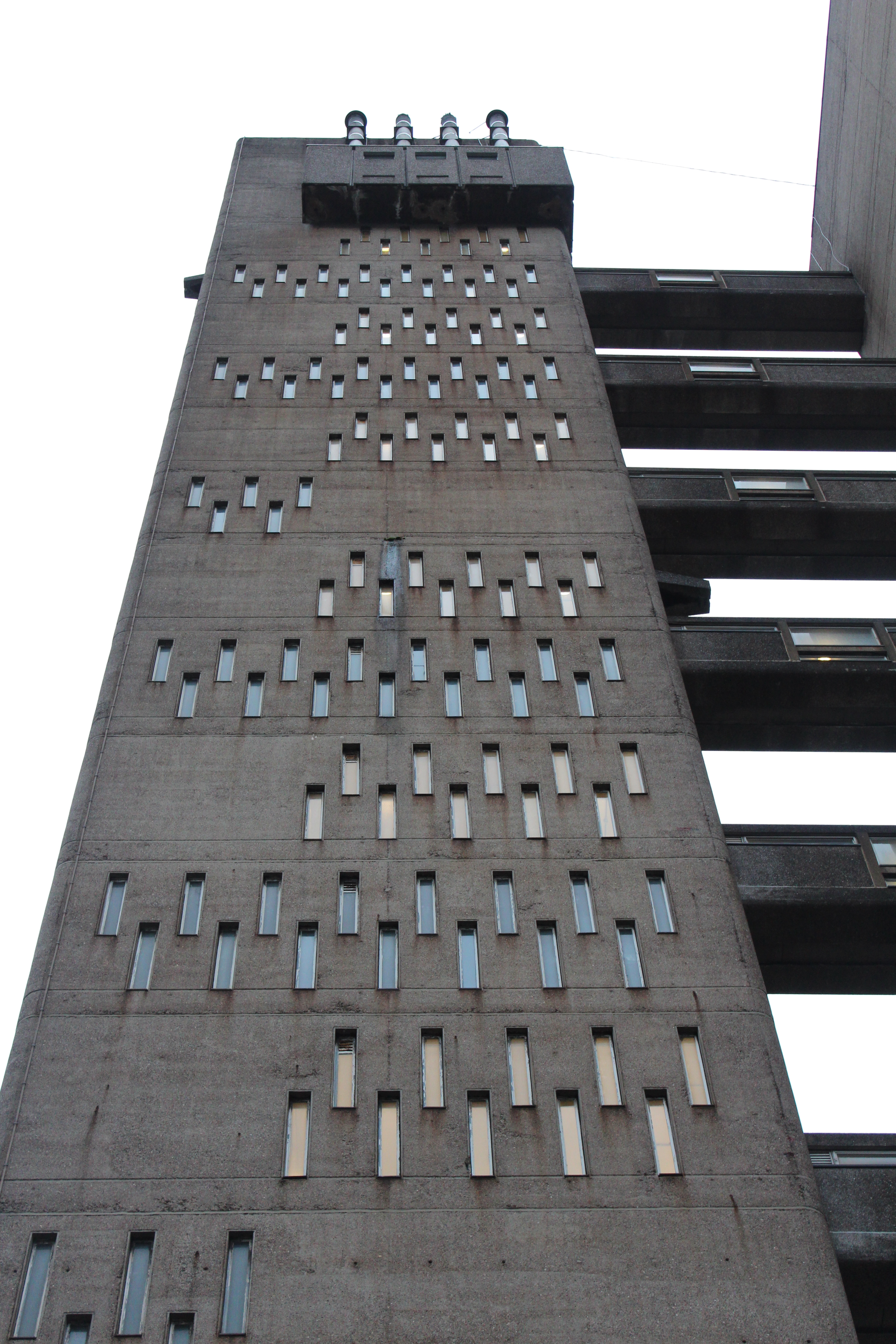
Balfron was Goldfinger’s first foray into large scale social housing. He’d long had a hankering to design taller buildings, and at 27-storeys Balfron must have really hit the spot. So high was it in fact that for years it was exceedingly popular with pirate radio stations and other illicit communicators, who would place radio masts on its rooftop. Designed in 1963 and built between 1965 and 1967, it forms part of the Brownfield Estate in East London’s Poplar. This is something of a Goldfinger fan’s vision of heaven, composed as it is of not one but two of the architect’s buildings (Balfron and Carradale House) and a third (Glenkerry House) designed slightly later by his studio. All three were named after Scottish villages, in what was apparently a homage to the area’s Scottish connections. The long, low form of Carradale House is currently under wraps (quite literally) as it is being refurbished.

Glenkerry House

Balfron is about to undergo a similar refurbishment and is currently – and somewhat controversially – slowly being “decanted” of its residents by its management group, Poplar HARCA. In the meantime, a number of artists had been invited to live and work in Balfron. One of these artists, Simon Terrill, also created an installation featuring Balfron Tower – now on show at 2 Willow Road – and organised our visit to flat 122 on the 21st floor, whose former residents had left behind more than a little of the detritus of their lives (in addition to leaving on the heating).

Balfron is entered via a concrete bridge – which has been compared to a drawbridge – to the distinctive separate service tower. This detached tower was to become a favourite design element of Goldfinger’s and one which he used again at Carradale (but placed in the middle of the building) and at Trellick (also to one side, but at a 90 degree angle). This service tower contains “all the noisy stuff”, including stairs, rubbish chutes and the two lifts that service the entire structure. One family were moving out when we visited – item by item in one of these narrow lifts; happily, Goldfinger later included an extra lift when designing Trellick. The boiler room can be seen jutting out at the very top of Balfron’s service tower (with its metal boilers reaching for the sky). Balfron has often been compared to a fortress and  – like its brutalist counterpart the Barbican Estate – contains a number of martial and castle references.

The service tower is attached to the main section of the building by seven walkways. This means that lifts do not service each floor, and entry to the flats is via every third floor. So for example, you would travel to the 12th floor to access floors 11, 12 and 13. This feature is also repeated at Carradale and Trellick. The lift foyers contain narrow rectangular windows – which have been likened to arrow slits – that create the interesting pattern on the outside of the tower and afford tantalising glimpses of Balfron’s spectacular views. The flats themselves also have three styles of entry; you might encounter a staircase going up or down immediately upon entering, or you might just enter directly on that level. Those with a staircase down to the flats, like the one we visited, once had a door in one of the bedrooms that led directly to the fire escape (these are now kept locked).

Goldfinger and his wife Ursula rather famously left the leafy confines of Hampstead and moved into Balfron for two months in 1968, primarily for Goldfinger to get feedback on his design from other residents and to give it a test run for himself. They even paid rent! They held parties in their flat – number 130 on the 25th floor – during which Goldfinger would ply his neighbours in the sky with champagne while eliciting their views on Balfron. This feedback was then applied to his design for the Trellick Tower.

Just one of the superb views – possibly to be encroached upon by the new towers in front.

The rooms within the Balfron flats (in number 122 a kitchen, lounge, two bedrooms and bathroom) are quite small and narrow. Not many of the original features survive in number 122 – with the exception of the all-metal light switches and the built-in window boxes – making the interior nothing much to write home about. But the beauty of Balfron is in its exterior, which Simon Terrill likened to a sculpture – although beauty is obviously very much the wrong term for this reinforced concrete jungle. Goldfinger’s colleague James Dunnett spoke of “delicate sense of terror” when referring to Balfron, which seems a far better phrase to apply to it.

P.S. Dear Poplar HARCA,
I have turned down some of the heaters, but I think the one in the kitchen is still on.
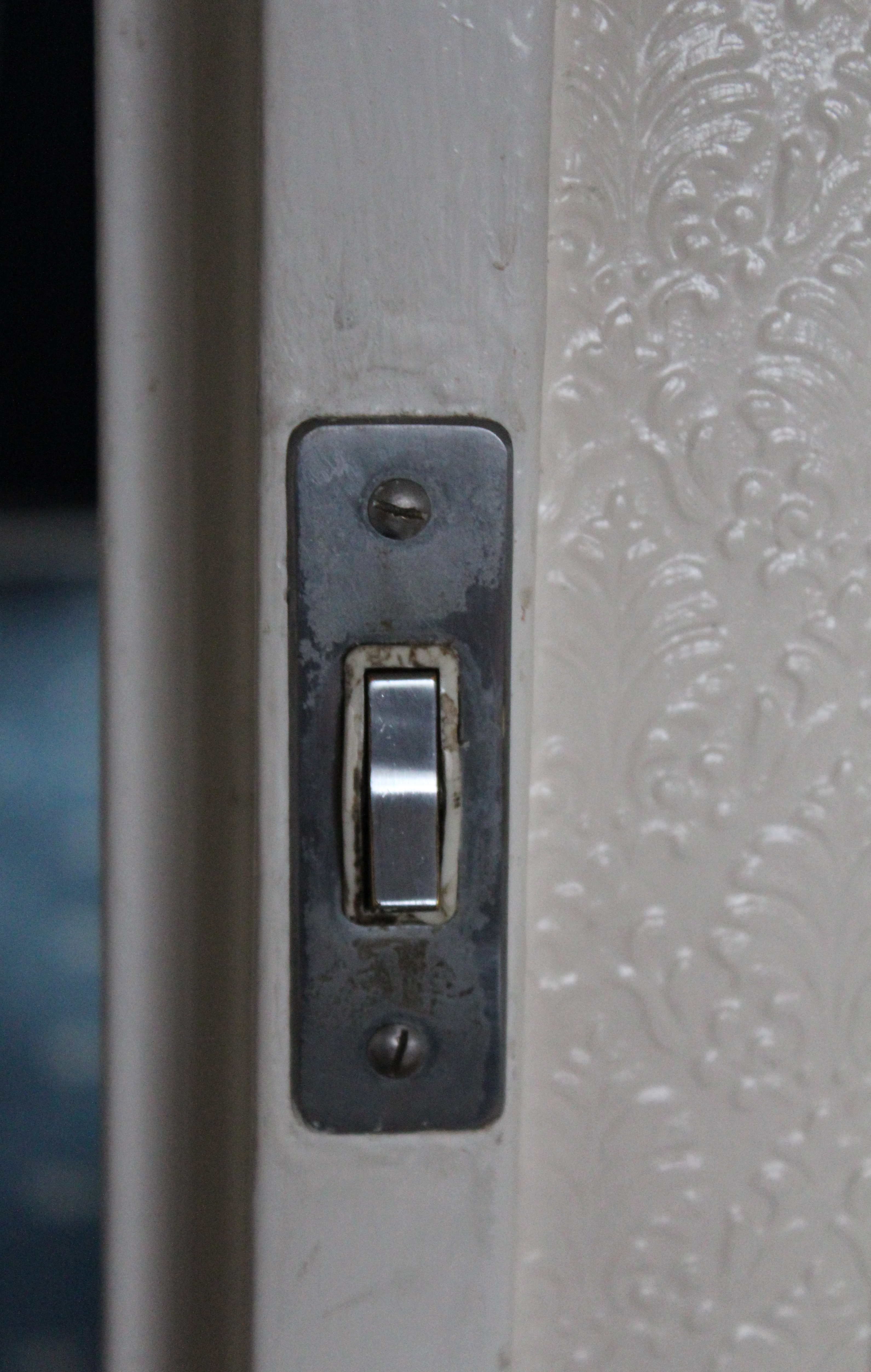
Original metal light switch

Should you wish to visit Balfron’s exterior the closest station is Langdon Park on the DLR line. Balfron Tower is often open as part of the Open House Weekend.

2 Willow Road
2 Willow Road are also holding a series of lates on the last Thursday of each month until October (except August). The 25th October late will feature Simon Terrill talking about his Balfron Project. 6.30-9pm, £9.

Simon Terrill

Door entry phone, thought not to be original.
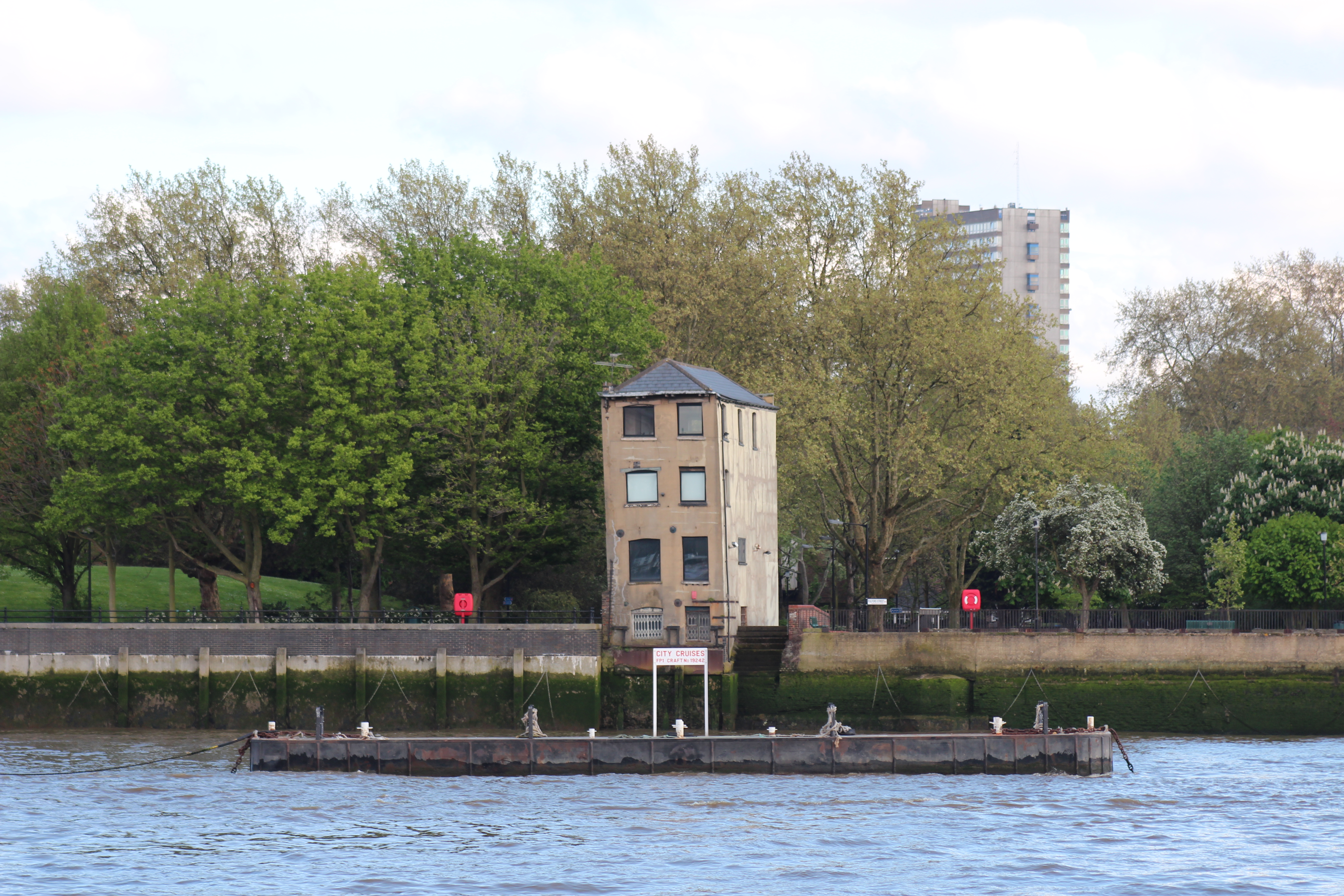
The Leaning Tower of Rotherhithe

It stands in supreme isolation, alone along this little stretch of the river, like a mouth with but a single tooth. How many travellers along the Thames must have wondered about this funny, narrow little building in Rotherhithe? In fact, the Leaning Tower of Rotherhithe – as it is apparently known locally – was one of several buildings in the area owned by Braithwaite & Dean, a barge company. They were a lighterage firm – lighters being flat-bottomed barges – and their lightermen moved goods between ships and quays (not to be confused with watermen, who carried passengers). This building was their office – and already tilting back in those days – where lightermen would pull up in their boats to collect their wages.

Once this whole stretch of the riverside was covered with buildings, mostly related to shipping, with a few public houses thrown in for good measure. You can see a Museum of London photograph of the area (commissioned by the Port of London Authority as part of their ten-mile panoramic documentation of the river) from 1937 here. The buildings to the west of our leaning tower were purchased in 1939 by Bermondsey Council, who planned to demolish them to build a garden. The Blitz then finished off any work that they had begun to this end.

To the east of the building stood what has been described as ‘a once absurdly picturesque row of largely wooden tenements…seedy in the extreme but vibrantly populated in the 1950s by a bohemian set of artists and writers’. Lord Snowdon lived along this row in a former coal store and is said to have met with Princess Margaret here, as well as hosting celebrities such as Marlene Dietrich and Noel Coward (who entertained him on the piano in his studio flat). In around 1960 he lent his room to John Betjeman (as you do) when his house burnt down.

Betjeman described his time here as ‘the most restful few months I had ever spent in London’, during which he enjoyed the ‘tremendous view’, including that of ‘the wharves and Georgian brick buildings of Wapping’ across the way. He moved the bed to the river-side of the room, going ‘to sleep to the solacing sounds of water’. At low tide he would listen to the sound of the waves rippling over the pebbles below, and described how at high tide ‘after a tug had passed the water made a plopping sound right against my bedroom wall as thought I were in a ship’s hold’. Until the Thames Barrier was built this whole area was of course subject to the risk of flooding; Braithwaite & Dean’s offices were flooded in 1953.

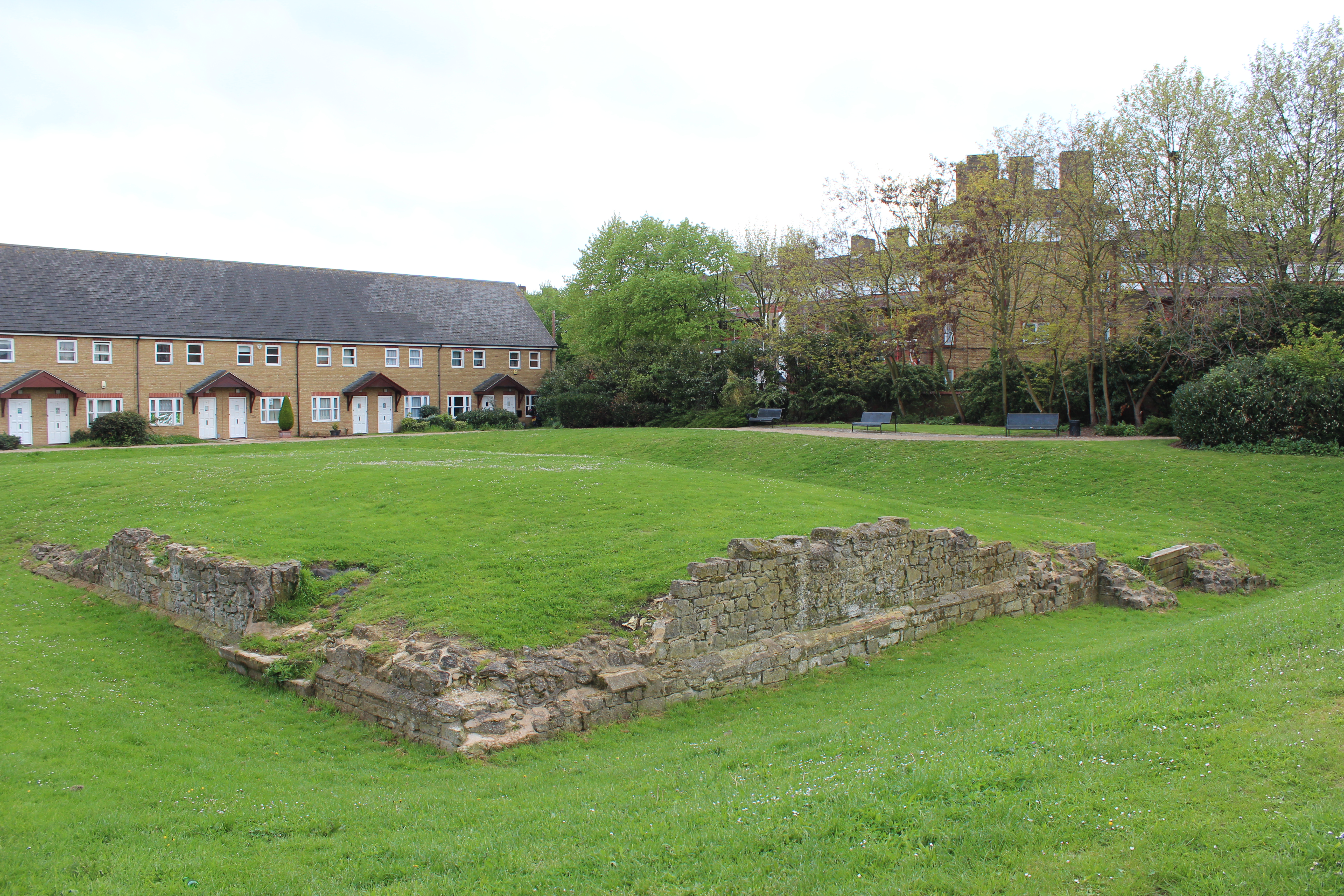
The remains of Edward III’s manor house nearby.

Despite a campaign by both Betjeman and Snowdon, the rather romantic-sounding row of buildings to the east was also pulled down by the local council after being condemned as a health hazard during the 1960s. It’s not known exactly why this particular structure was allowed to remain. It is not of any particular architectural value, though perhaps it was its brickwork that saved it, as many of the other buildings were wooden so arguably less sound structures. The King’s Stairs Gardens were then created here, and contain the remains of what is thought to be King Edward III’s manor house, circa 1353, uncovered by a Museum of London dig in the 1980s. Braithwaite & Dean stayed on in the leaning tower until the early 1990s, and it is now a (very) private residence.

The house is located at the very end of Fulford Street (you can’t miss it!), roughly equidistant between Bermondsey tube station and Rotherhithe overground station. The photograph taken from across the river was shot (with a zoom lens) from Wapping’s Waterside Gardens.

Prince Albert’s Model Cottages

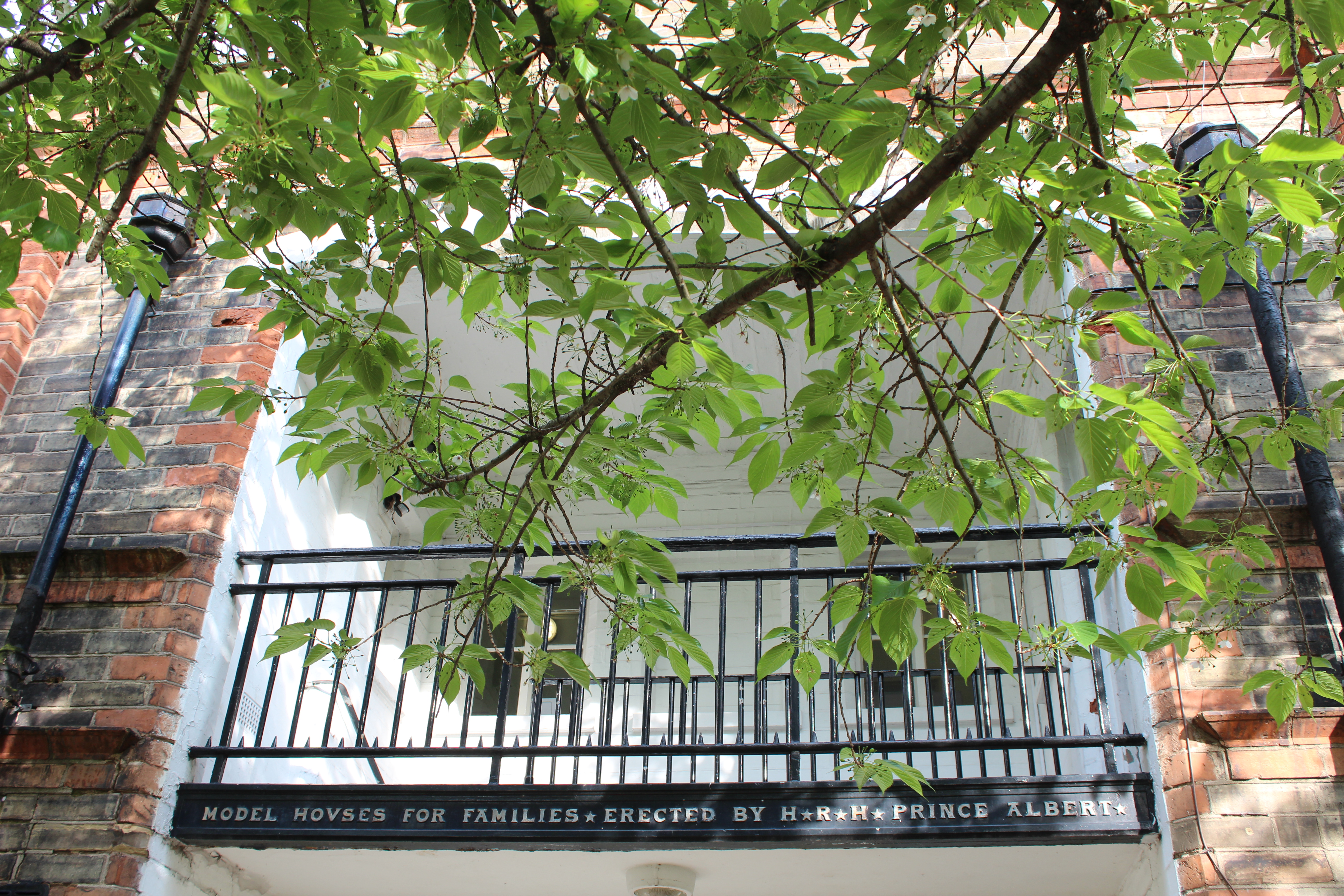
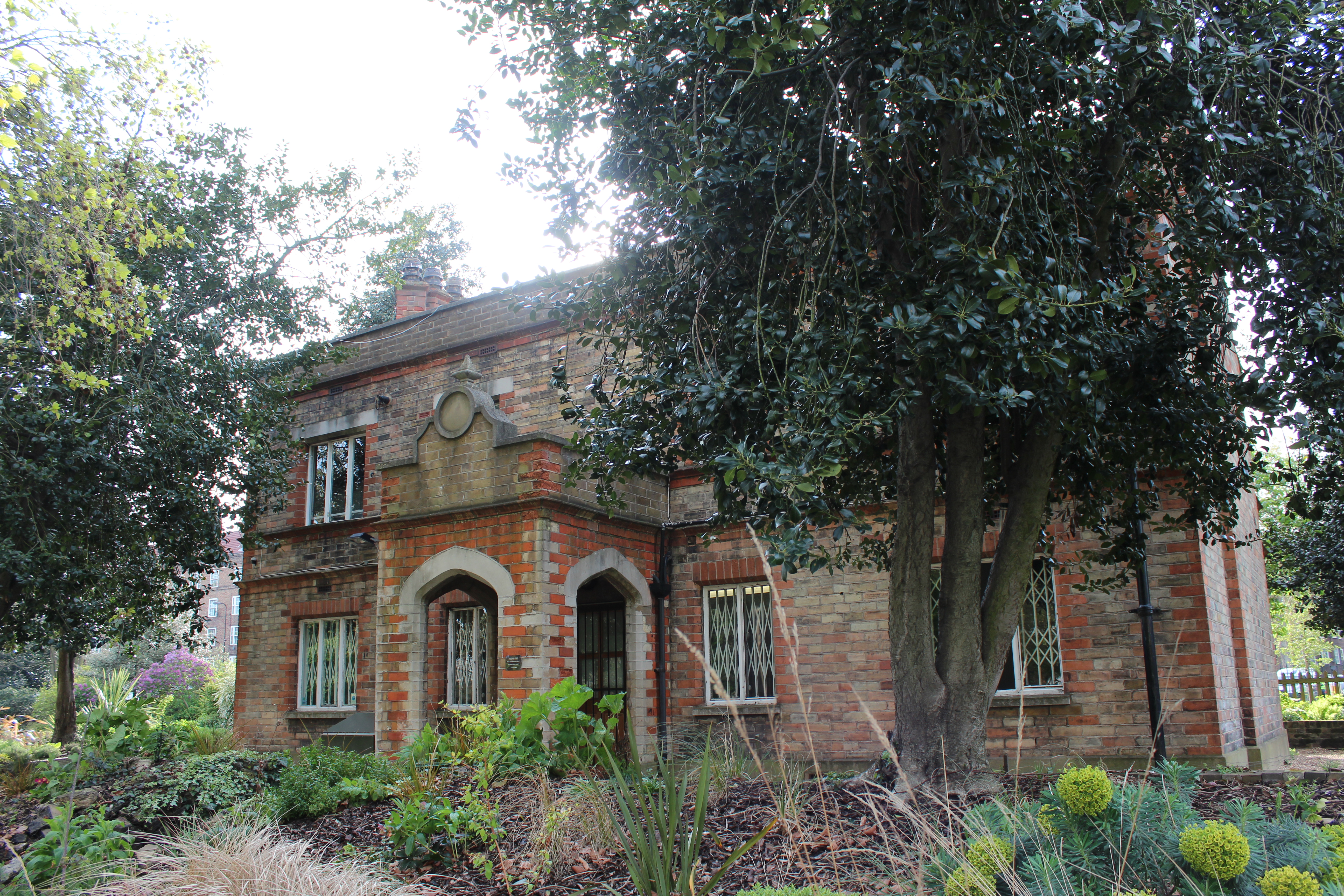
Ever wondered why there is a house in Kennington Park bearing the inscription ‘Model Houses for Families Erected by HRH Prince Albert’? This 2-storey structure was actually one of what has become known as Prince Albert’s Model Cottages or the Prince Consort Model Lodge. Built by the Society for Improving the Conditions of the Labouring Classes (SICLC) – whose name pretty much speaks for itself and of whom Prince Albert was president – for display at the 1851 Great Exhibition in Hyde Park.

The cottage was placed outside of the exhibition’s Crystal Palace so that all could enter for free – and over 250,000 people did so. After the exhibition it was dismantled and re-assembled on the edge of Kennington Park in 1853. At this point, the park was yet to open to the public (after Kennington Common had been fenced off in 1852 following the massive gathering of Chartists seeking electoral reforms there in 1848), and the cottage was the only publicly accessible part. This all changed the following year, when Kennington Park became South London’s first public park in 1854. The gardens around the house were laid out in 1861.

The back of the house - with the added porch.

The back of the house – with the added porch.

The model cottages were designed by Henry Roberts to house four families, with two flats on each level. He envisioned that the cottages would provide suitable accommodation for people from “the class of mechanical and manufacturing operatives who usually reside in towns or in their immediate vicinity”. Each family was designated a living room, kitchen/scullery, three bedrooms and a toilet – but no bathroom, as was still generally the case in houses built in the U.K. at this time.

Source: ‘Plans and Suggestions for Dwellings Adapted to the Working Classes, Including the Model Houses for Families’ (London: the Society for Improving the Condition of the Labouring Classes).

The open staircase provided access to the flats on the upper level – this has since been enclosed, and the doors on the left-hand side side bricked in. A porch had also been added to the back of the cottage when it was moved to Kennington. Along the front of the house, mosaic tiles on the cornices spell out Victoria and Albert’s initials intertwined (and the date 1851), whilst the brickwork on either side of the cottage also features a similar pattern. The house has been the headquarters of Trees for Cities since 2003.

Prince Albert’s Model Cottage is located along the Kennington Park Road side of Kennington Park, between Oval and Kennington tube stations.

http://www.kenningtonpark.org/

Rossetti’s fountain

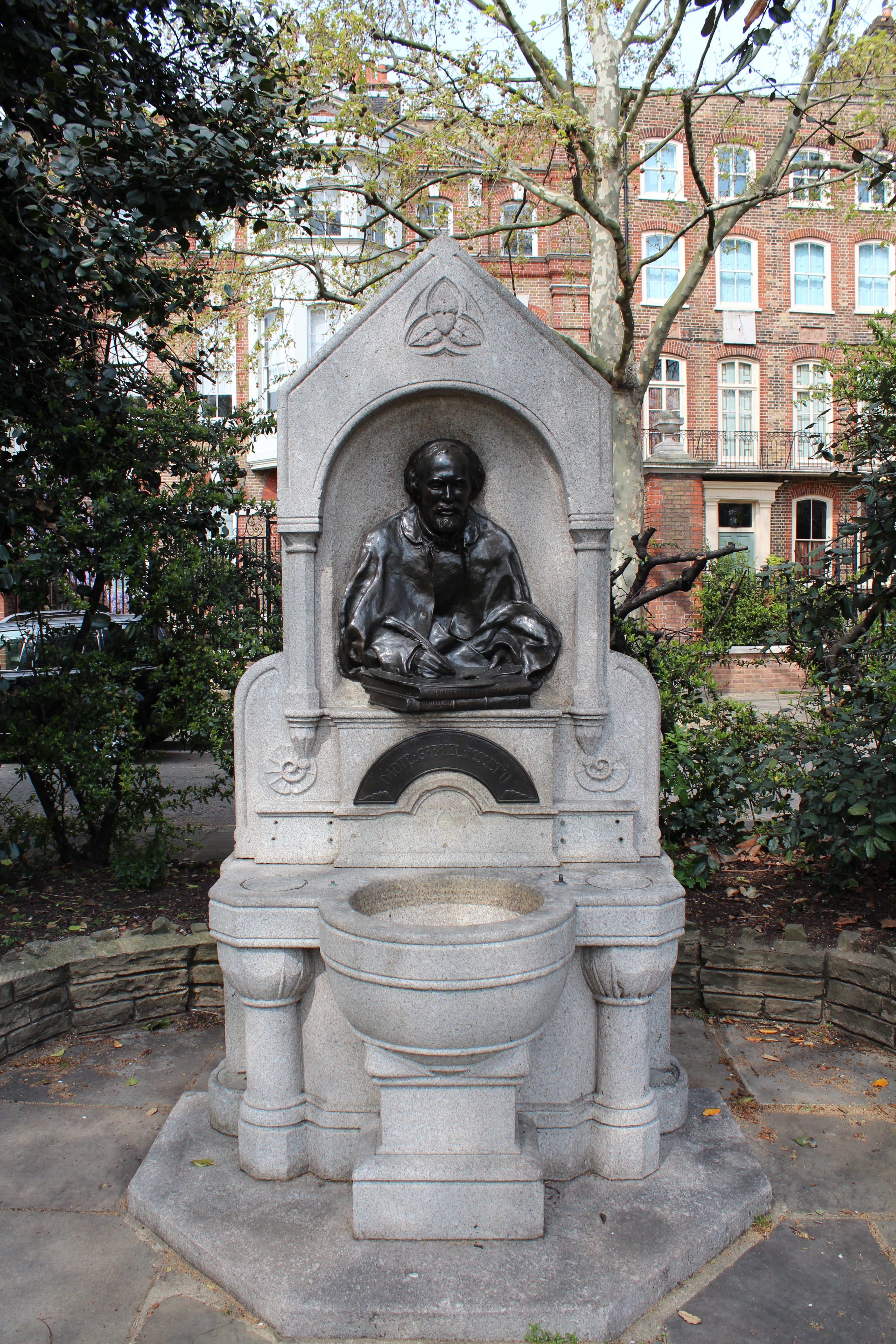
While earlier drinking fountains were often extremely practical in design – such as the drinking troughs explored in an earlier post – they became increasingly more elaborate over time. This was especially the case once the trend of fountains as memorials to individuals (either living or dead) took off, with architects often being employed to provide the design. An interesting example of a memorial drinking fountain is the one in Chelsea that commemorates Dante Gabriel Rossetti, one of the founders of the Pre-Raphaelite Brotherhood.

Rossetti's home at 16 Cheyne Walk

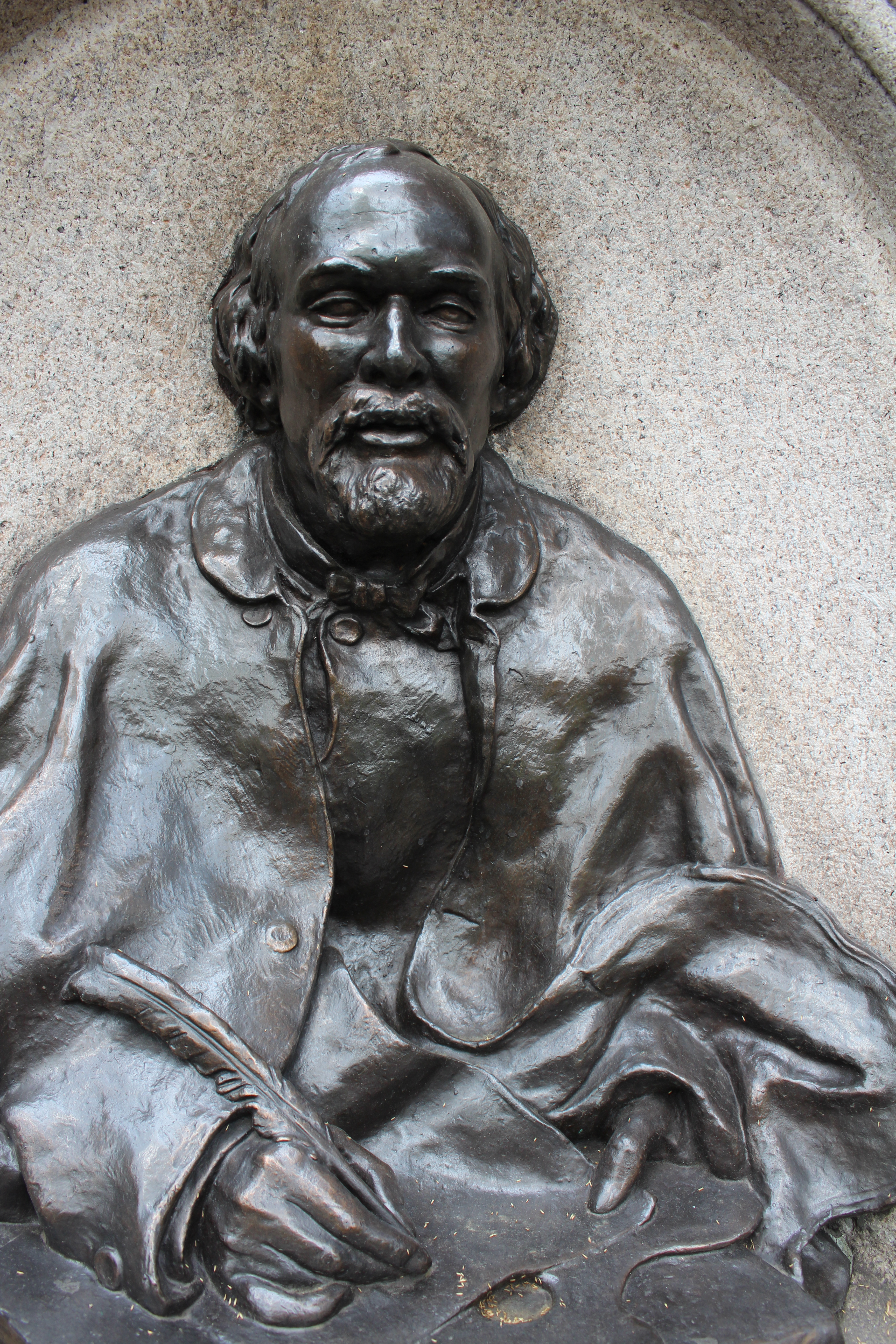
Designed by architect John Pollard Seddon, it features a sculpture in bronze of Rossetti (with writing quill in hand and poised for action) created by no less than Ford Madox Brown. The books Rossetti is depicted with are his own Dante’s Circle and Sonnets and Ballads. The white stone fountain stands in the Chelsea Embankment Gardens, directly in front of number 16 Cheyne Walk, where Rossetti lived between 1862 – after the death of his wife and model Elizabeth Siddal – and his own death in 1882. A fan of exotic furnishings, birds and animals, Rossetti kept a number of unusual pets whilst living at Cheyne Walk, including wombats, a llama and a toucan. After leading a somewhat tumultuous life, he was said to have spent his final years living here in a rather reclusive fashion.

The fountain, with number 16 in the background.

A very impressive list of sponsors is found on a bronze plaque on the back of the fountain. These include fellow Pre-Raphaelite founders William Holman Hunt and John Everett Millais. Although Hunt was asked to give a speech at the unveiling of the fountain in 1887, he had in fact not been in contact with Rossetti for some time. However, for Madox Brown – who also designed Rossetti’s gravestone – the sculpting of his friend’s likeness was said to be a labour of love. He stated poignantly of Rossetti’s death:

“I cannot make out how things are to go on, in so many directions things must be changed”.

Vintage postcards: Franco-British Exhibition

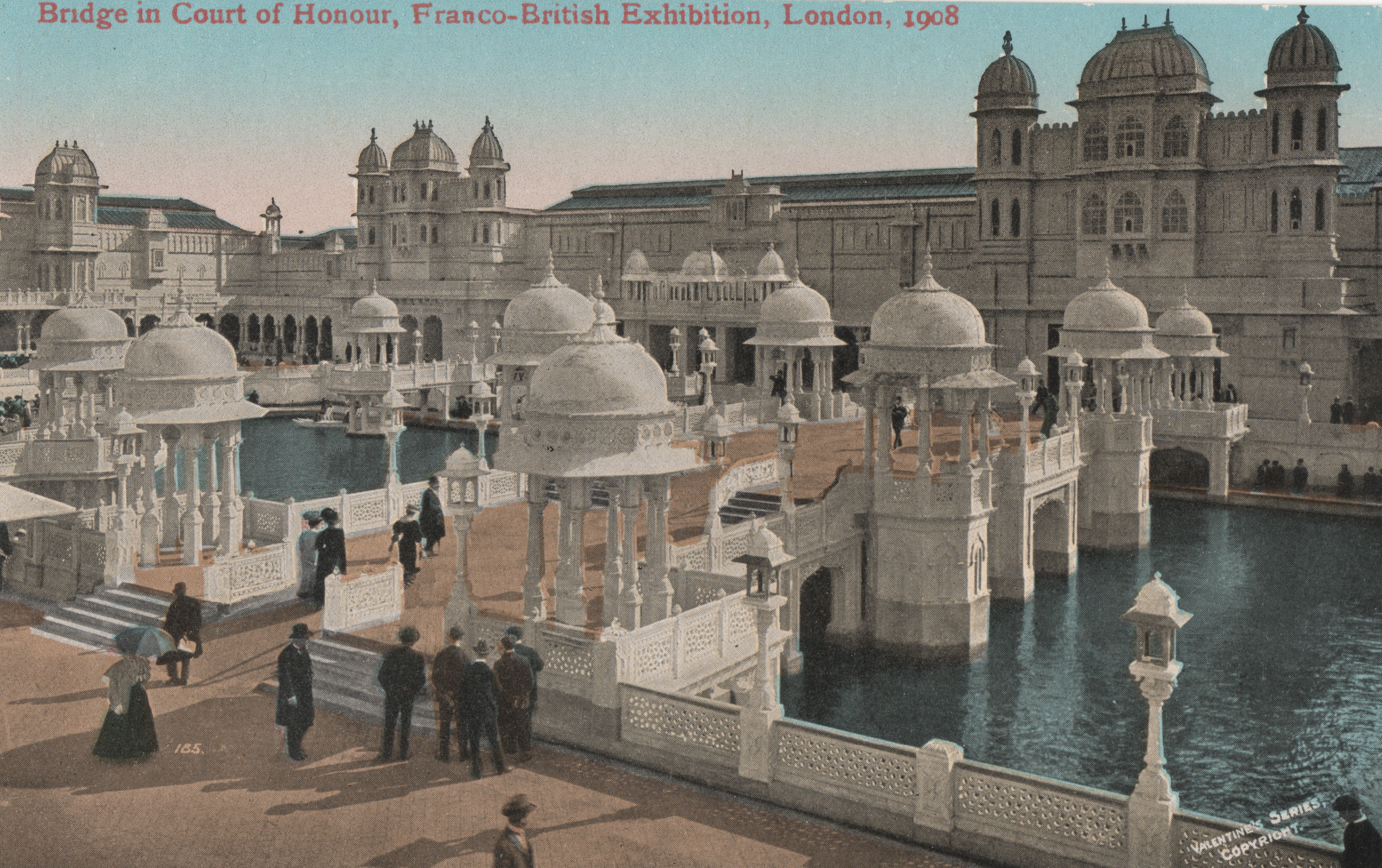
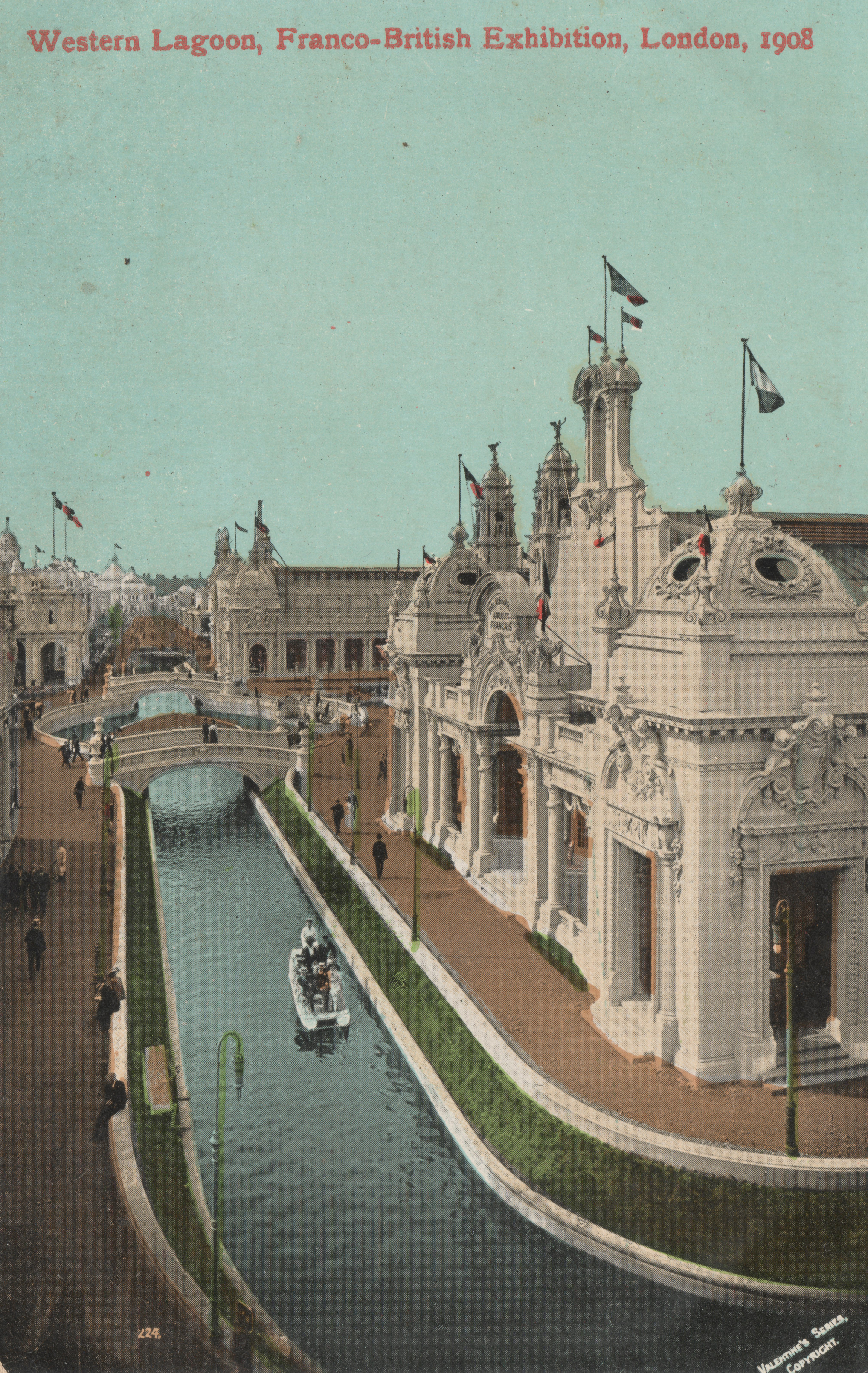
The choice of the 1908 Franco-British Exhibition as the next in the vintage postcard series is particularly apt given that it was the cards themselves – and their wonderfully evocative images – that prompted me to learn more about the event in the first place. The Londonphile is not alone in finding them to be inspiring – Donald R. Knight, author of The Exhibitions: Great White City, first became interested in the topic after receiving a vintage postcard featuring the exhibition.

Knight notes that most people who visited the exhibition would have bought postcards to send to friends and family and to add to their own collection. The hobby of postcard collecting had really started to catch on at the start of the new century; twenty-two different postcard manufacturers produced cards featuring the exhibition to satisfy the high demand, with over 1,000 different cards on offer to an enthusiastic public. Valentine & Sons Ltd (Dundee, London and New York!) were the official postcard providers, and the three cards featured in this post all hail from this company. A post office was located within the exhibition in the British Industries Palace and a special handstamp created for the event; no less than four daily collections took outgoing mail to the Paddington sorting office.

It's official: Valentine & Sons Ltd Official Franco-British Exhibition series.

So just what was the Franco-British Exhibition? It was the first bi-lateral international exhibition, commemorating the Entente Cordiale between the two nations – essentially a large expo or trade fair to promote the products and cultures of France and Britain. Running from May to  October 1908, it was the first of five major international exhibitions to be held in West London at the White City complex, which later gave its name to the area. Over 8 million people attended over the course of the exhibition, including 123,000 people on the first day (and yes it did rain at the opening ceremony!).

As the delightful images on the cards show, the exhibition contained a number of ornate buildings in the ‘Oriental’ style, complete with plenty of domes and arches. These buildings were covered with fibrous plaster and painted painted white – hence the name White City – to protect them from the weather. Visitors could take boat rides along a central artificial lagoon, while a number of waterways, roads and bridges linked the 120 exhibition buildings and twenty pavilions that were constructed across the 140-acre site – a remarkable transformation of what was formerly farmland.

The entertainment on offer for patrons included a scenic railway (featuring fake mountain scenery), fun-fair style rides (including the famous Flip Flap and a toboggan ride), musical events, food outlets and some rather non-PC model villages (in which people became the exhibits). A Tudor house was uprooted from Ipswich and re-built on the site, and scale models of London from the Middle Ages erected so that visitors could experience ‘Old London’. Spectators could also thrill to the sight of an entire town being suddenly swept away in ‘The Johnstown Flood’ – over 715,000 visited this model alone, which required 54 tonnes of machinery to operate.

Interestingly, many of the buildings were put to use again for the 1910 Japan-British Exhibition, making for a strikingly similar set of postcards. A future edition of the vintage postcard series will feature that exhibition and discuss what remains of the site and its exhibits. In short, this was sadly very little, but at least the postcards remain to tell the story.

7 Hammersmith Terrace

Seventeen houses make up the row in which Walker lived - his is the second of the taller houses.

Ever wondered exactly how William Morris and his ilk decorated their own homes? A visit to 7 Hammersmith Terrace will give you your answer, as it’s the (almost) perfect time capsule of Arts and Crafts London translated into the domestic sphere. The former home of Emery Walker – a printer who was a leading light of that particular movement and a close friend and colleague of William Morris – its interiors have been preserved from his day down. So while there are other properties that belonged to Morris and friends that you can visit, Walker’s house is truly one of a kind.

Emery Walker actually started married life down the road at number three, before relocating to number 7 in 1903. Although the house itself is a Georgian terrace (one of seventeen built along the Thames in Hammersmith in the 1750s), it is decorated in a style typical of the homes of the movement’s main proponents – right down to the William Morris lino in the hall (thought to be the only surviving in situ example of this). The eclectic style they favoured is very much on show here, with Morris’s wallpaper and hangings happily sharing space with colourful imported ceramics, seventeenth and eighteenth century furniture and metalwork.

Philip Webb – the Arts and Crafts architect – bequeathed his possessions to Walker and many of these are on display, including a rather fine wooden Regency wine cooler (cunningly disguised as an oddly-shaped side table). Your guide will also show you a poignant collection of mementoes of Morris that Walker kept, including several pairs of glasses and a lock of his hair. The dining room furnishings are a real highlight, as is the surprisingly modern suntrap conservatory, with its lovely collection of ceramics.

Walker’s daughter Dorothy inherited the house on her father’s death in 1933 and changed very little over time – the main exception being the addition of a bathroom in the back drawing room. This has now been removed, though the scars remain on the Morris wallpaper, adding yet another layer to this story. Even the garden, which backs straight onto the Thames, still retains the same layout as it did in Walker’s time. Dorothy left the house to her long-time companion Elizabeth de Haas, who – luckily for us – also maintained its original state, and was instrumental in setting up the Emery Walker Trust that has enabled the house to be preserved and opened to the public.

As photography is not permitted inside, this really is one place that you will have to visit to see for yourself. Three tours are held on Saturdays from April until the end of September, by advance booking only (see website below). They last just over an hour and cost £10.

http://emerywalker.org.uk/index.php

Nearby: William Morris fans might also like to visit his former home Kelmscott House, part of which is now home to the William Morris Society. It’s just down the road and also open on Saturday (and Thursday) afternoons (but that’s another blog post…).

The sedate Georgian exterior belies the eclectic Arts and Crafts furnishings that lie within.

Shell huts, Grosvenor Gardens

Hazelle Jackson’s lovely little book on Shell Houses and Grottoes inspired me to discover more about the two unusual shell huts in Lower Grosvenor Gardens, just across the way from Victoria Station. With more than a little help from Westminster City Archives and one of the current gardeners, the Londonphile has pieced together the story of these intriguing little structures.

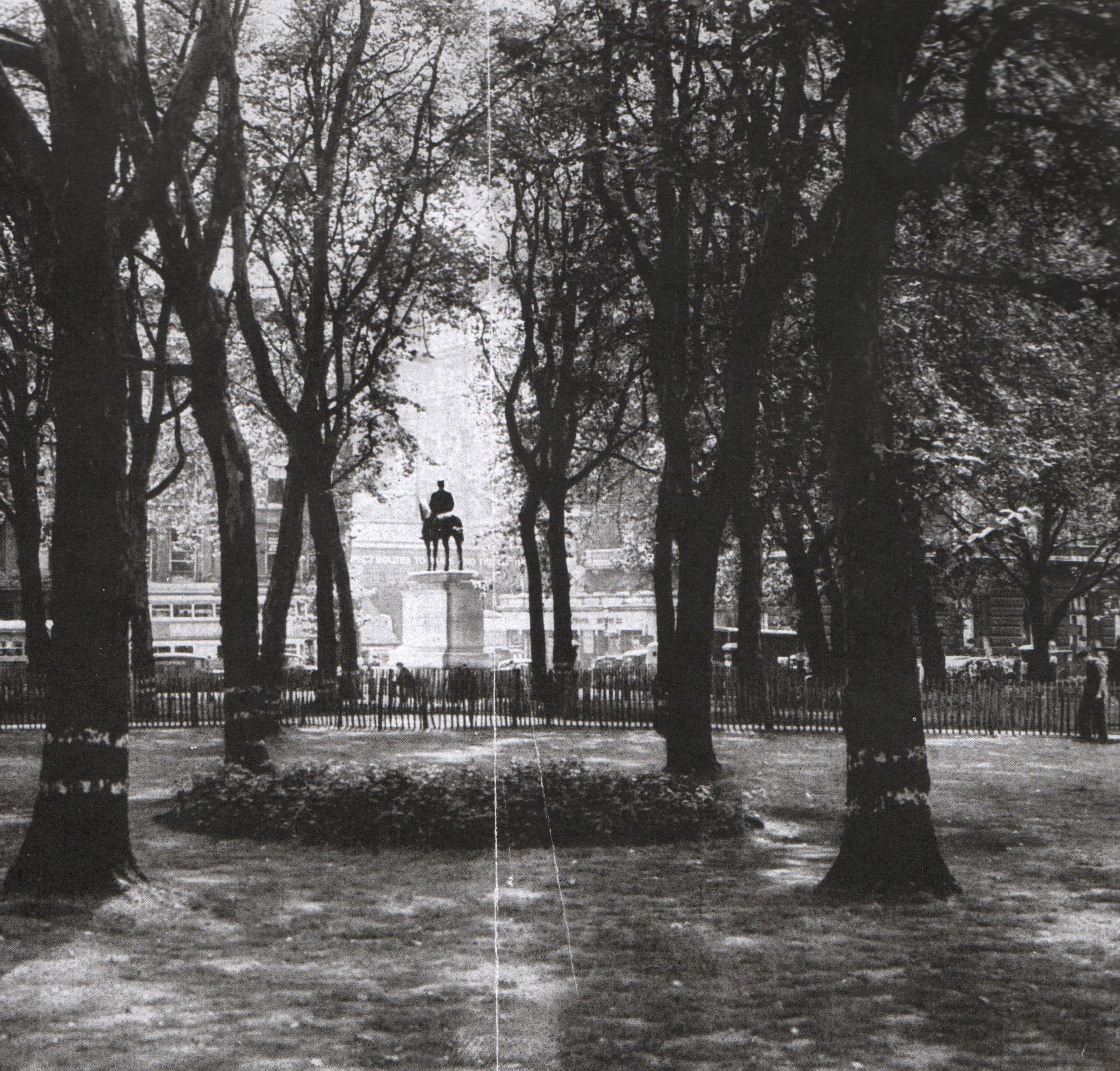
The shell huts were built in 1952 as part of a re-landscaping of the Lower Grosvenor Gardens in a French style to commemorate Marshal Foch and Anglo-French understanding. The gardens already had a statue (by Georges Malissard) of Foch – the French hero of the First World War – which was erected in 1930. During the Second World War, Grosvenor Gardens was covered with air raid shelters and littered with dust and debris, so a clean-up was in order. An initial one took place in 1948, at which time the photograph below was taken, giving us some idea of how the gardens looked at this point.

1948 view. Source: 'The Sphere', 4 September 1948.

As part of the new French look, a number of the existing large trees were removed, a large arabesque pathway formed with gravel, and a fleur-de-lis centre-piece composed with flowering plants. These changes were not to everyone’s liking, and it’s amusing to read newspaper accounts from the time, some of whose comments (‘inexplicable’, ‘completely useless’, ‘perhaps they are going to stand the thing on end’, ‘wallpaper patterns turned into paths’) seem to express a certain lack of regard towards French design and certainly a sense of loss about the shady, grassy areas that were no more. The official opening ceremony for ‘London’s French garden’ was held on 18th July 1952, when the French Ambassador dedicated it to Foch’s memory.

1952 view. Source: 'The Builder', 1 August 1952.

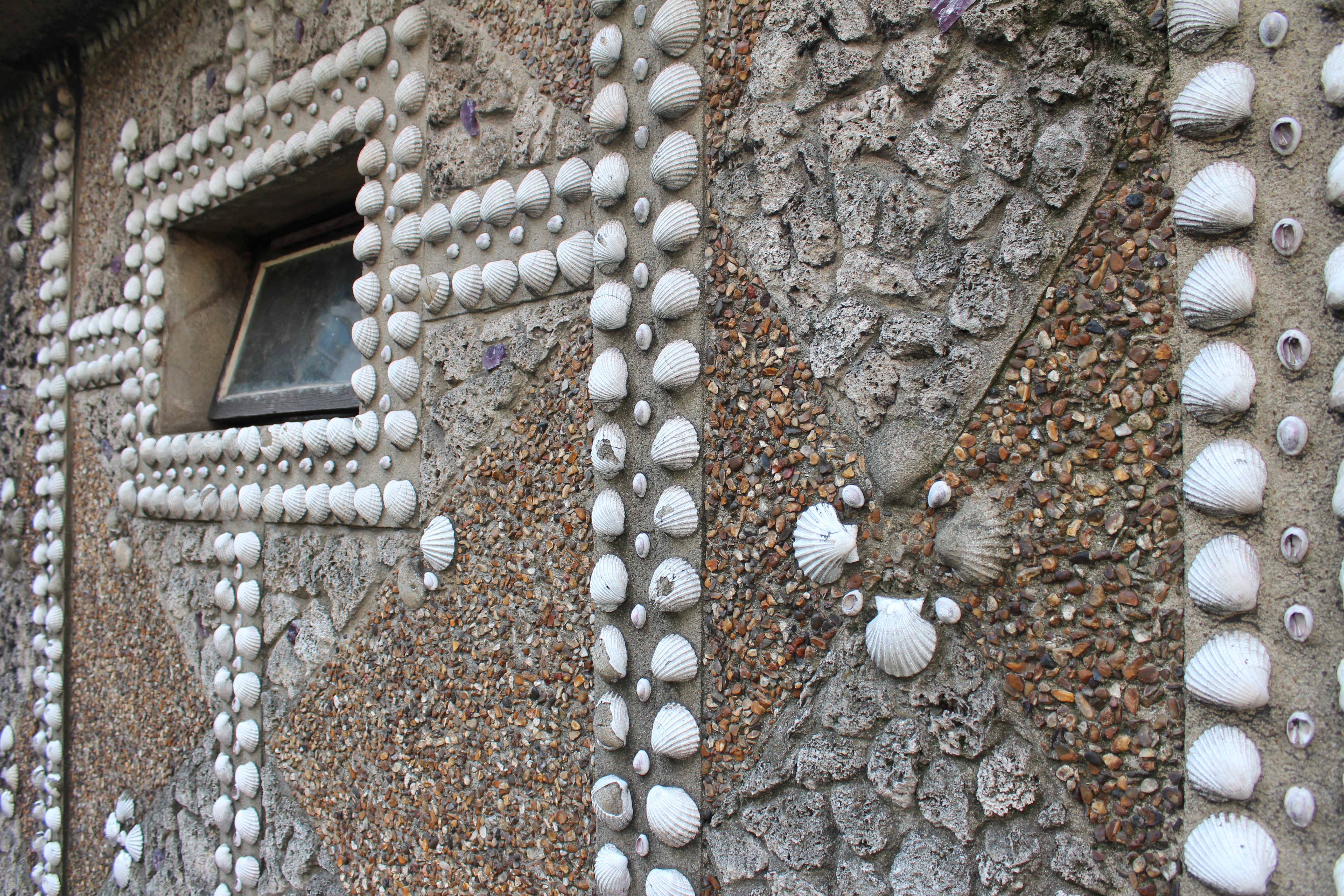
The two shell huts – and indeed the rest of the park – were designed by the then architect-in-chief of the National Monuments and Palaces of France, Jean Moreux, who also designed the Institut Francais library in South Kensington. Some of the shells adorning the huts were brought over from France, while it was thought that others would also be sourced from English beaches – making for a very cross-cultural construction indeed. The huts were said to be ‘in the style of those small pavilions that were known as fabriques in eighteenth-century France’  – the old French term for what is known as a folly in the U.K.

Under construction. Source: 'The Sphere', 24 May 1952.

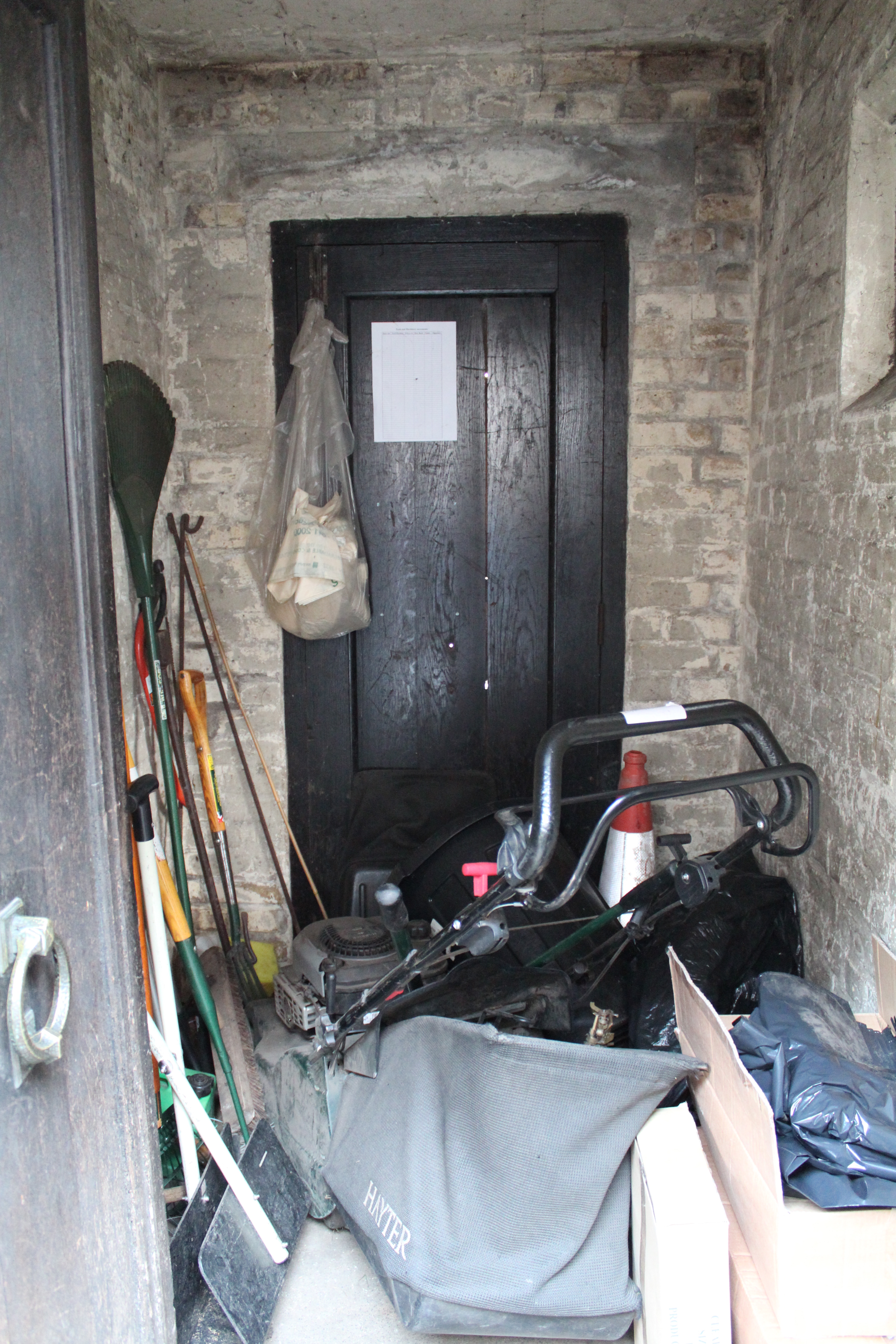
Despite their whimsical decorations, the huts were in fact designed with a practical purpose in mind: they were for the use of the park’s gardeners, with one designated for the storage of tools and the other ‘for the attendant’. However, a very helpful current garder told me that they now only have access to the western hut – the eastern hut is kept locked. He was kind enough to unlock the hut still in use – and as the photo below shows, it is still used for garden storage today, including a lawnmower.

Inside the hut.

Intriguingly, the park seems to have changed yet again over time. The central fleur-de-lis motif has disappeared, and the curving arabesque gravel paths have been replaced by asphalt ones, still following circular lines but with a central path. This has meant that more of the grassy zones have been able to re-colonise the garden – which no doubt would have greatly pleased the aforementioned writer who bemoaned their loss. But the huts still remain – one has some graffiti on its door but otherwise they seem in remarkably good condition, with most of their cross-cultural shells still attached.

Westminster Council’s Lower and Upper Grosvenor Gardens page

Westminster City Archives’ website

At risk: Cross Bones

This post marks the first in a new series for the Londonphile, featuring London sites that are at risk. These may be facing closure due to financial problems, demolition due to development or simply decaying before our eyes. These posts will advise how you can best register your support – perhaps by signing an online petition, or boosting attendance figures by paying a visit.

Cross Bones Graveyard has long been an at risk heritage site – it was rejected as unsuitable as a building site as far back as 1883 – and it has been featured in the media of late as it is again being marketed for development. Although much of the Cross Bones site is at first glance a concrete wasteland – owned by Transport for London and currently used for storage – it is in fact the last resting place of over 15,000 people. And while anyone who has read Catharine Arnold’s Necropolis will know that the dead can be found all across London, Cross Bones’ unique history makes the site a particularly significant one.

As the plaque on its gate advises, Cross Bones was home to the ‘outcast dead’, an unconsecrated ground used for the burial of prostitues or, as they were known locally, ‘Winchester Geese’ – so-called because they were licensed to ply their trade within the Liberty of the Clink in Southwark by the Bishop of Winchester. Despite this protection, these women were not deemed fit for Christian burial, and their graveyard was appointed ‘far from the parish church’. Although the exact age of the burial ground is not known, it was mentioned in John Stow’s 1598 A Survey of London. It later became a pauper’s cemetery – tellingly in 1665, the year of the Great Plague – in an area with no shortage of slums (and body-snatchers). It closed to burials in 1853 when it was declared over-full and a risk to public health and decency.

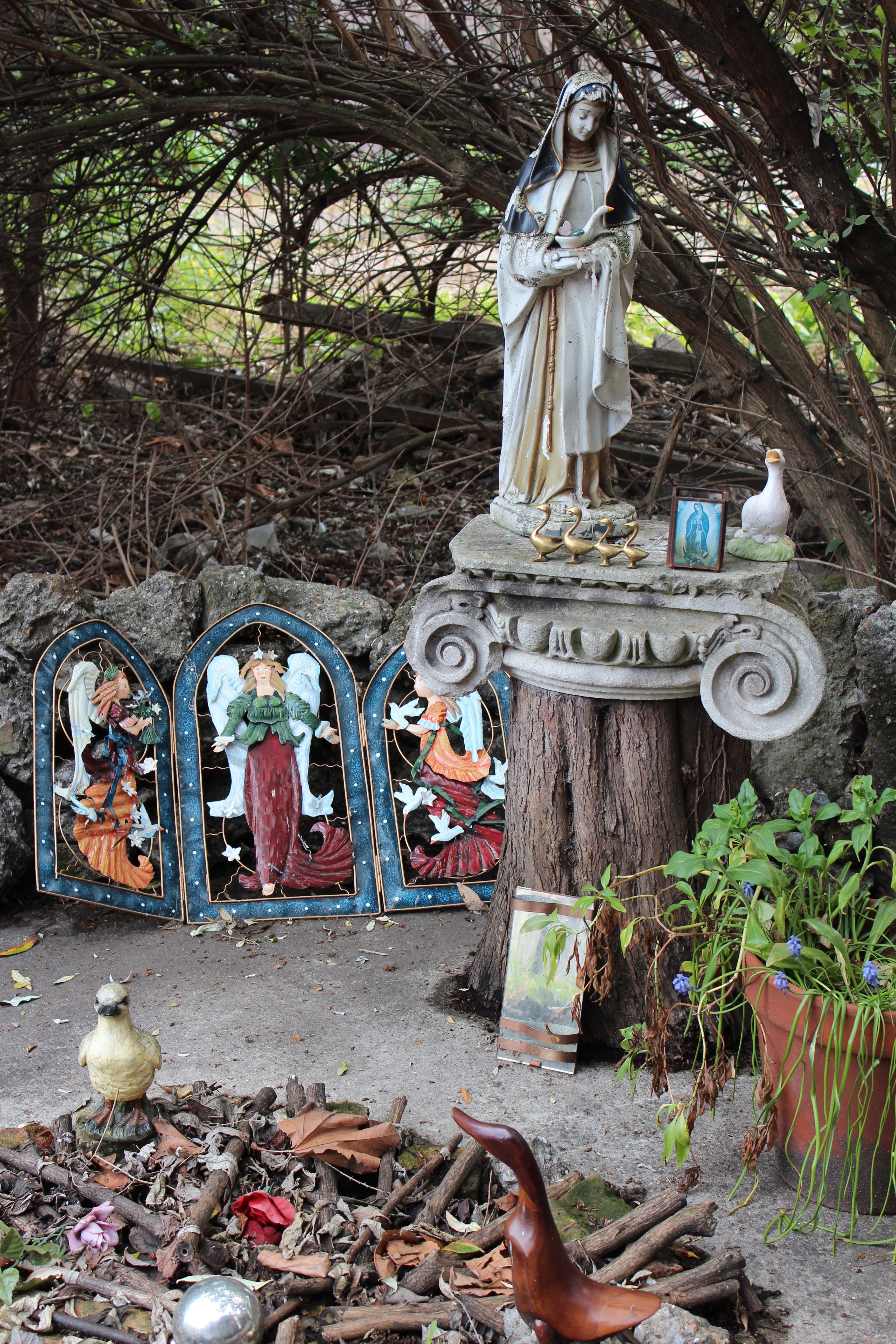
Today the Memorial Gates are festooned with ribbons, cards and flowers – a tradition which started at the 1998 Halloween ceremony – and small shrines have been placed on the site. The colourful, celebratory nature of these offerings adds greatly to Cross Bones’ atmosphere, and is also what makes it so very different – appropriately enough, given its outcast nature – to most English graveyards. A closer look inside the site reveals a statue of Mary in an almost grotto-like setting amongst trees, accompanied by a number of ornamental geese. These days, the Shard is also a constant presence, looming high above the site.

Local writer John Constable, who has long been a leading campaigner in the fight to protect Cross Bones, now hopes that at least part of the site can be retained as a Garden of Remembrance and a public park, and the Memorial Gates preserved.

What you can do: sign the online petition here
Vigils are also held at the site at 7pm on the 23rd of each month, as is an annual Halloween festival. At 7pm on Monday 23rd April there will be a special vigil to mark St George’s Day and the coming of spring.
Cross Bones is located on Redcross Way SE1, opposite the Boot and Flogger pub.

http://www.crossbones.org.uk/

Out of Sync, Somerset House

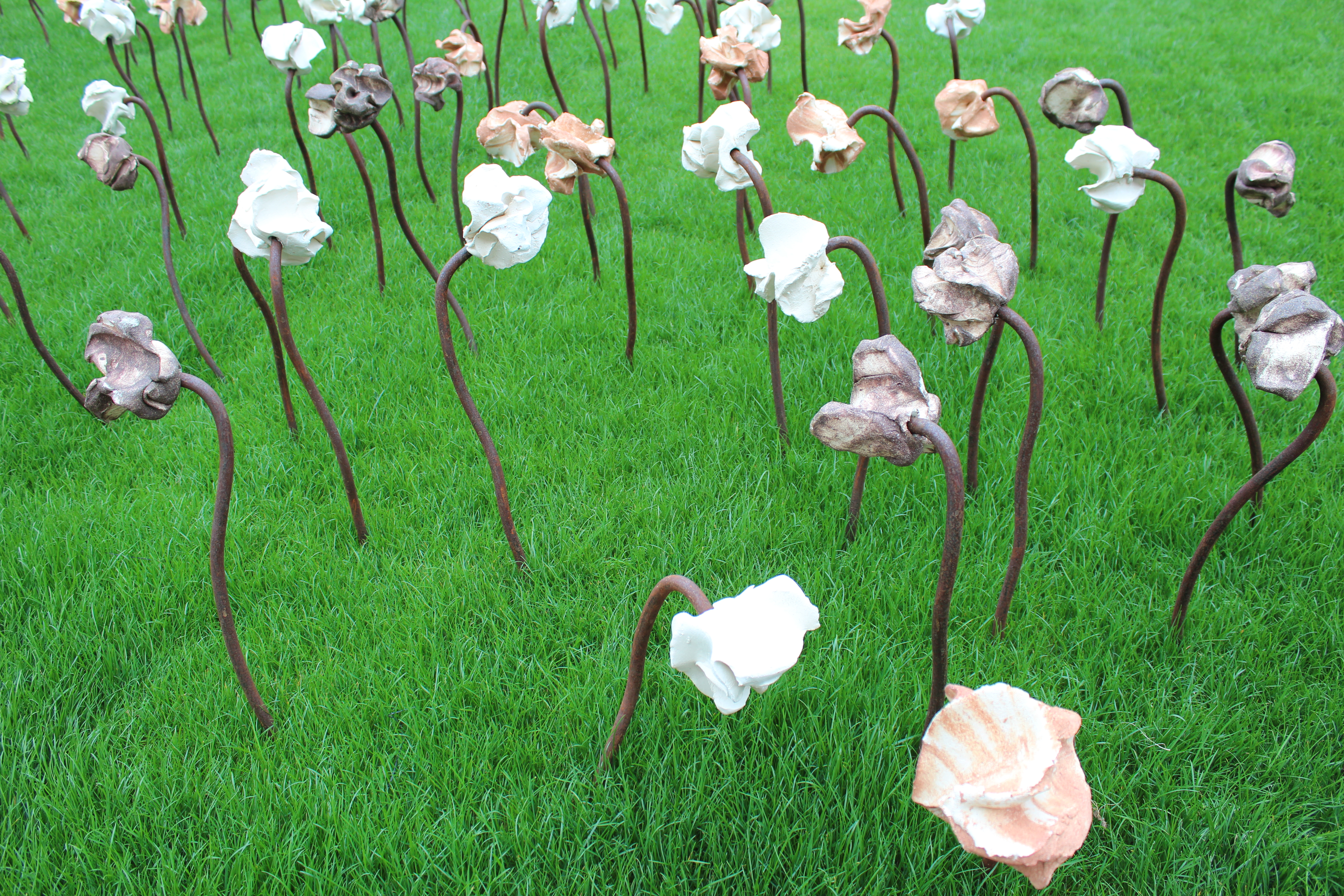
Given that for much of winter Somerset House’s courtyard is covered in an ice skating rink, it seems only appropriate that this spring it’s full of flowers. 10,000 of them in fact – made of clay – have colonised the Edmond J. Safra Fountain Court, replacing the fountains and forming sculptor Fernando Casasempere’s latest installation Out of Sync.

Casasempere, who was born in Santaigo and studied both ceramics and sculpture in Barcelona, has called London home since 1997. He works with clay left over from industrial processes and was so fond of his own special mixtures that he brought twelve tonnes of them with him when he moved to the UK. The confection of hand-painted pink and white blooms creates an unexpectedly pretty garden among the stately buildings, while both the flowers and buildings provide a striking contrast to the fresh green turf that has been laid out across the courtyard for the installation.

The piece is meant to celebrate the start of spring and the feelings of happiness associated with this change in season, but despite getting off to an excellent start it would seem that it is the weather itself that is now a little out of sync. However as the installation will be up until the 27th of April it has until then to get back on message.

http://www.somersethouse.org.uk/visual-arts/out-of-sync

http://www.fernandocasasempere.com/index.html

London’s troughs and fountains

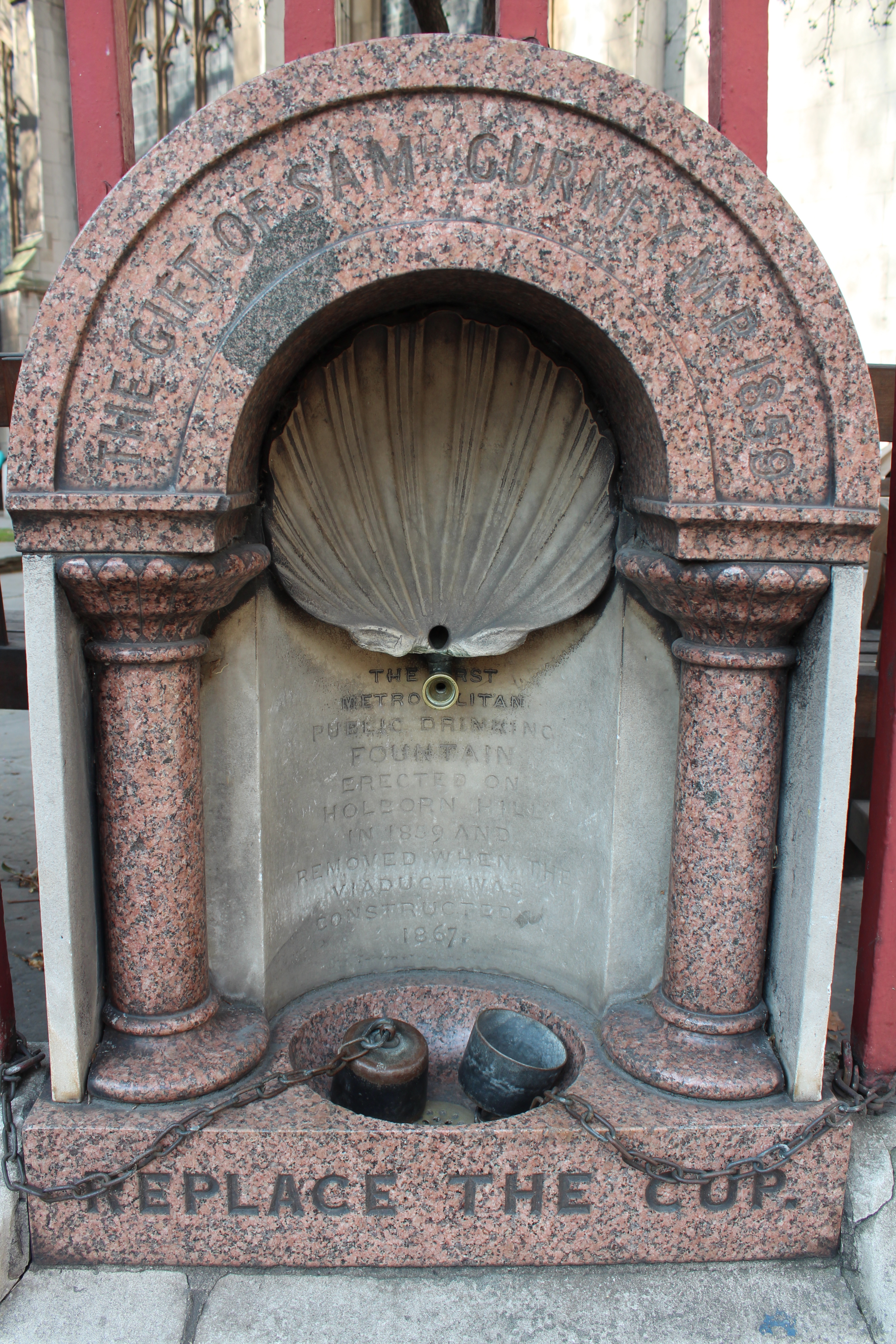
The Londonphile wandered past this (former) drinking trough positively overflowing with spring blooms on Surrey Quays Road last week and set out to learn more about its history. The Metropolitan Free Drinking Fountain Association (as it was originally known) was formed in 1859 to provide free, clean drinking water to Londoners at a time when the Thames carried water-borne cholera and beer was cheaper than fresh water.

The first fountain - complete with drinking cups.

The first drinking fountain to be provided by the Association was set along the wall of St Sepulchre’s Church on Snow Hill (EC1) in April 1859, and was soon quenching the thirst of around 7,000 citizens each day. It still exists today, although it is now located on the other side of the church, on the corner of Newgate and Giltspur Streets. Originally, fountains such as this one generally featured somewhat unhygienic drinking cups, attached on chains. These were later replaced with upward jets of water, not surprisingly due to health concerns.

Within eleven years 140 fountains and 153 cattle troughs had been provided by the Association. They had been quick to realise the desperate need for refreshment faced by the many animals both living in and visiting London – many of whom were driven into the capital for days on end, often without water. By 1865 most fountains also featured a trough for dogs, and in 1867 the group officially changed its name to the Metropolitan Drinking Fountain and Cattle Trough Association.

The Surrey Quays Road trough is a typical granite cattle trough (circa 1900), which incorporates a drinking fountain on one end. Like a number of old troughs, it now serves as a flower bed, and features an inscription of the Association’s old address, 10 Victoria Street London S.W. It has a rather colourful recent history with the original trough having been stolen (you can see a photo of its rather bereft-looking stand here). It was replaced with the current trough – which possibly hails from Kent – in 2010.

The Drinking Fountain Association (as it is now known) is still very much active today, especially in the provision of drinking fountains at playing fields and schools, and still receives requests to help thirsty animals. They have long conducted work overseas, especially in developing countries.

Fancy becoming a trough spotter? You can find/report your local London trough to http://www.londontroughs.co.uk/ a site which aims to collate all of the remaining troughs in the capital.

The website of the Drinking Fountain Association can be found at: http://drinkingfountains.org/

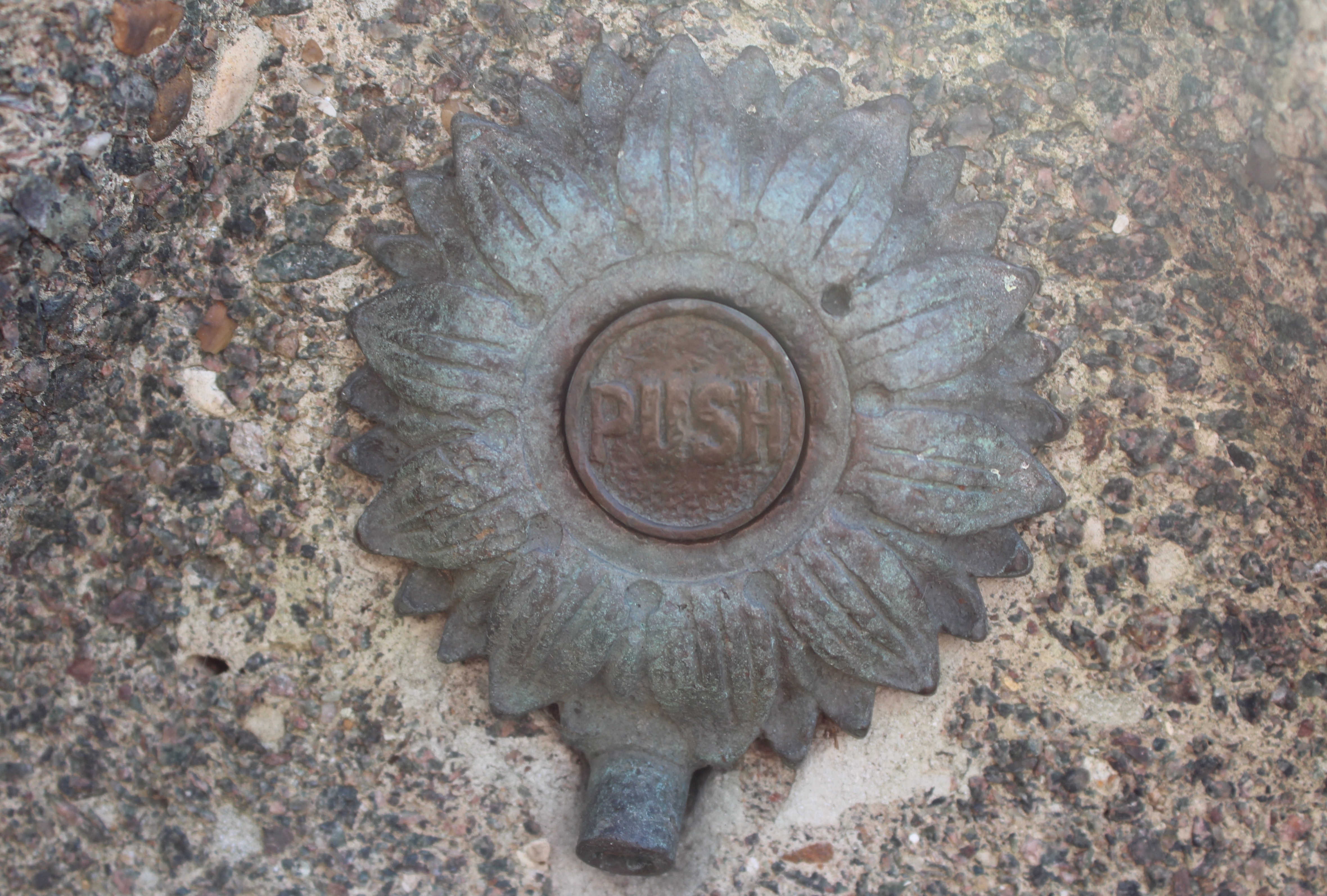
Detail from the drinking fountain on the side of the Surrey Quays Road trough.