Clissold House

As I approached Clissold House around a bend in the river I was met with the delightful vista above. But no, Clissold House is not located in a peaceful little village in the English countryside but in Hackney (Stoke Newington, to be precise), and I think you will agree it makes for a rather pretty – if somewhat unexpected – picture. Clissold House, which dates from 1793 (architect unknown) and is located in Clissold Park, has recently undergone a £4.46 million restoration courtesy of Lottery funds, so the Londonphile popped by for a little look-see and a tour of the property.

Eastern side - the front.

The original owner of Clissold House, Jonathan Hoare, chose the site for its proximity to the New River, an artificial river opened in 1613 to bring fresh water to the capital. This once flowed past the house and continued as far as Clerkenwell, and has now been restored and extended to resemble its original appearance. Another spot of artifice is found in the construction of the grassy knoll that the house appears to sit on; this was built up on the western side of the house on top of a series of vaults, which are still used for storage today. This created an architectural oddity, with the house having two storeys on the western side and three on the east. Also a matter of much confusion is the question of which side is actually the front of the house. While important guests were received on the carriageway at the western side, the more restrained eastern side – which looked across to the village and the church (St Mary’s Old Church, not the larger church in the top picture) – was actually the front of the house.

The story of how Clissold House – originally named Paradise House – came into its new name is another intriguing part of the house’s history. William Crawshay, who bought the property in 1811, forbade his daughter Eliza to marry her beloved curate from across the lawn at St Mary’s. So they simply sat and waited, watching each other from across the way, until William died and Eliza inherited the house and married her man: Reverend Augustus Clissold. As they had no children and their family were not interested in the property after their deaths, it was bought first by the Ecclesiastical Commissioners and later – following a vigorous public campaign to turn it into a public park – by the Metropolitan Board of Works, who opened Clissold Park in 1889.
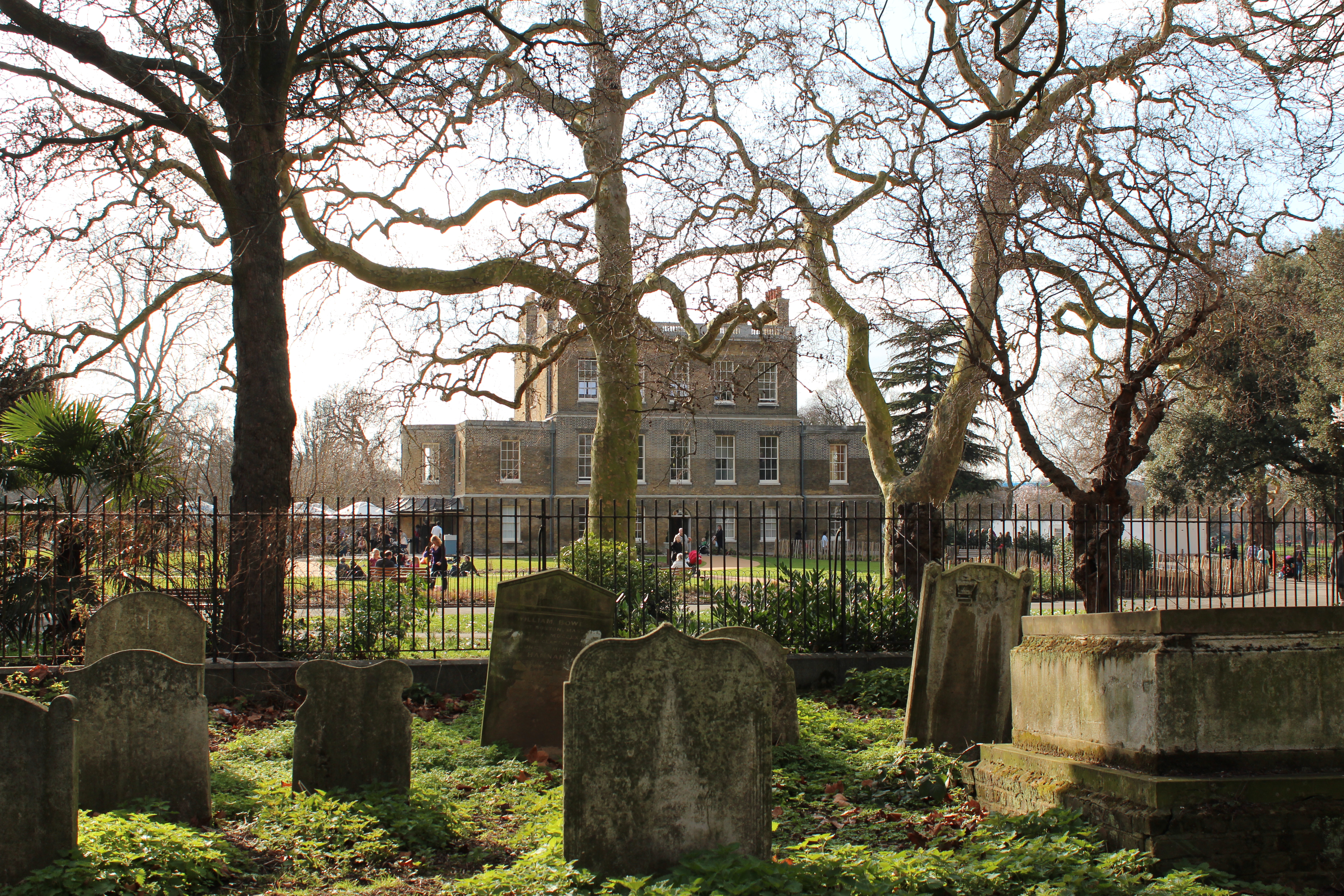
Reverend Clissold's view from St Mary's to the eastern side of the house.

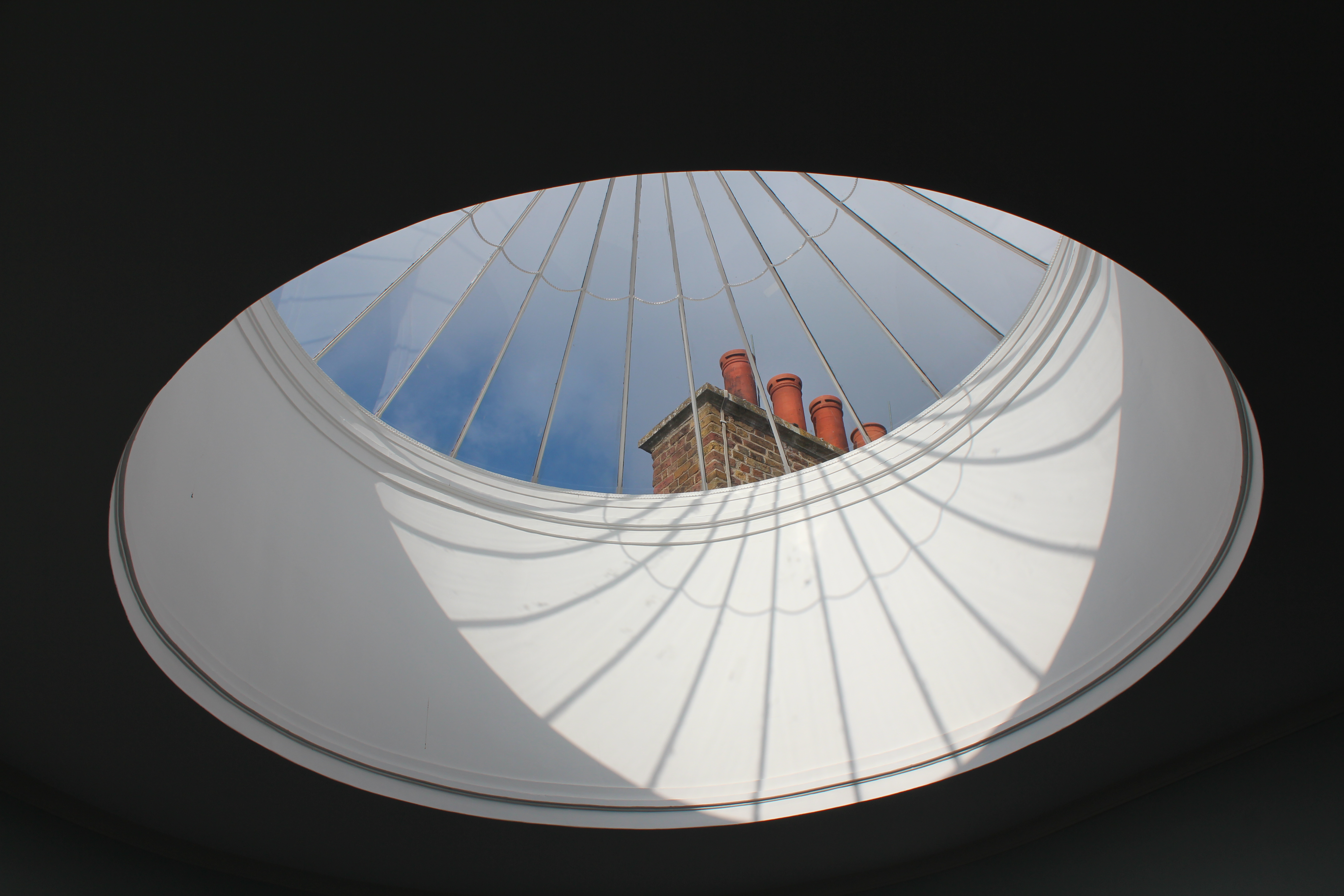
As the original plans for the house have yet to be discovered, the recent restoration took place along best-guess lines with regards to layout. The lovely old oak floorboards have been retained, while the highlight is definitely the spiral staircase, which reaches up towards a glass dome. And take a moment to visit the poignant memorial drinking fountain on the northern side of the house – still in use today, and complete with trough for animals at the base – that a Crawshay family member erected in memory of her three young sisters who had died in infancy almost sixty years previously.

Free 30-minute tours of the house were arranged to mark the re-opening, and although they were originally only intended to run for couple of months have proved so popular that they will continue for the time being. As much of the house is now used as a cafe and a community space you can have a mooch around much of it by yourself, though a tour will get you into a few extra rooms and is also worth it for the fascinating story of the house (although there are some information panels in the western cafe if you’d rather do it yourself). I’m told the people at Clissold House still hope to find out more about the property and its history, so if any historians out there stumble across anything do let them know!

Email clissoldhouse@gll.org to book tours; these are generally held on Tuesday and Saturday afternoons.

http://www.hackney.gov.uk/clissold-house.htm
Tower Bridge Engineering Tour

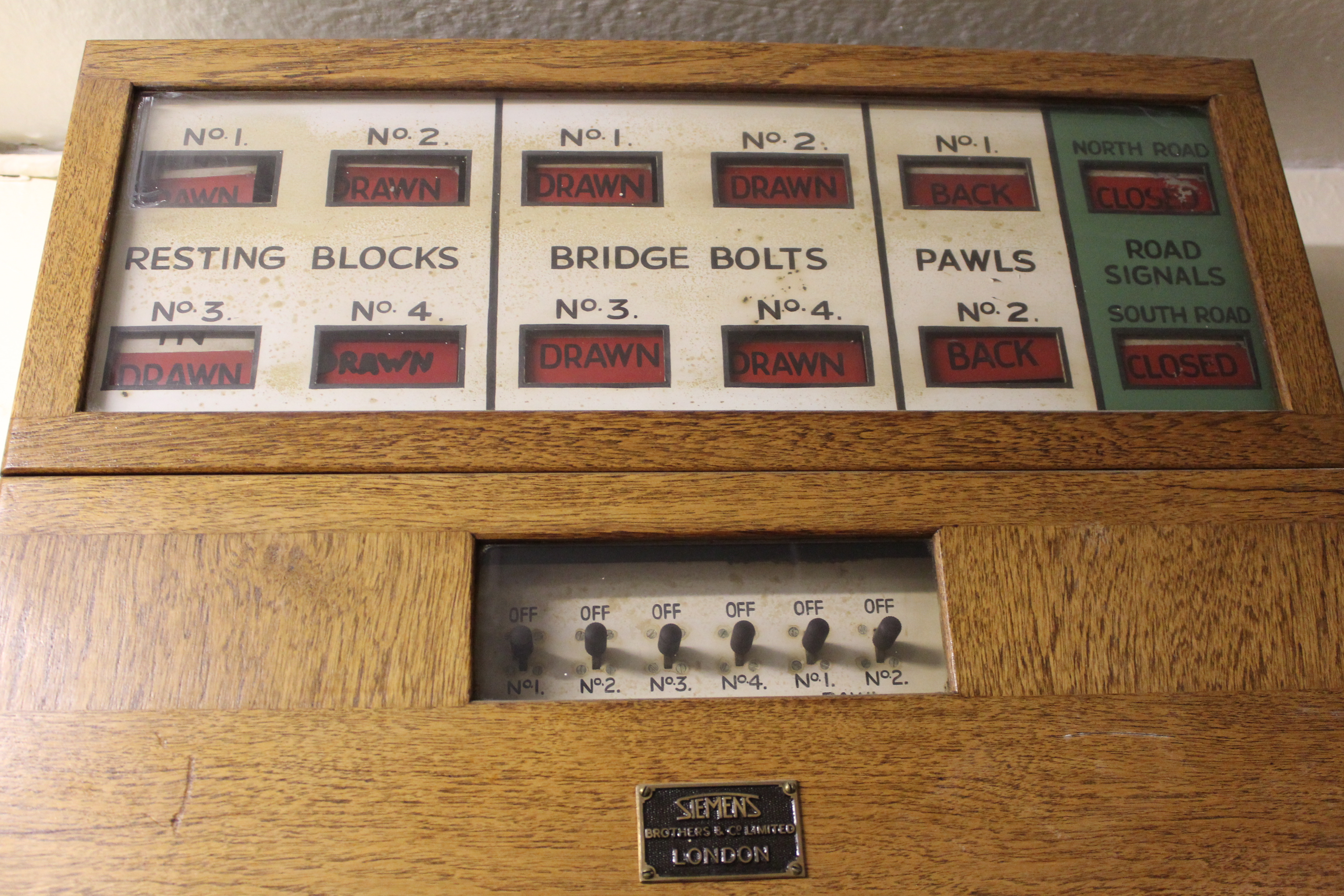
Control cabin

Control cabin

I announced at the start of the year that the Londonphile would be one of the lucky participants on a Tower Bridge behind-the-scenes Engineering Tour. Well just last Sunday was my day to enter the belly of the beast that is London’s prettiest bridge and, as promised, here are some pictures from the big day. Although the tour started and finished like a standard Tower Bridge visit (up on the walkways and down in the engine rooms), we had our own guide and gained access into off-limits areas, where a Senior Technical Officer was subjected to much grilling about the bridge’s mechanics.

It turns out that Tower Bridge is also a fine spot for a bit of photography, especially if your tastes run to taking pictures of industrial/Victorian settings. I took plenty of pictures on the day, but will focus on ones from the restricted areas in this post. If you’d like to see the whole set you can find them on the Londonphile’s Flickr stream at: http://www.flickr.com/photos/thelondonphile/sets/72157629529321039/

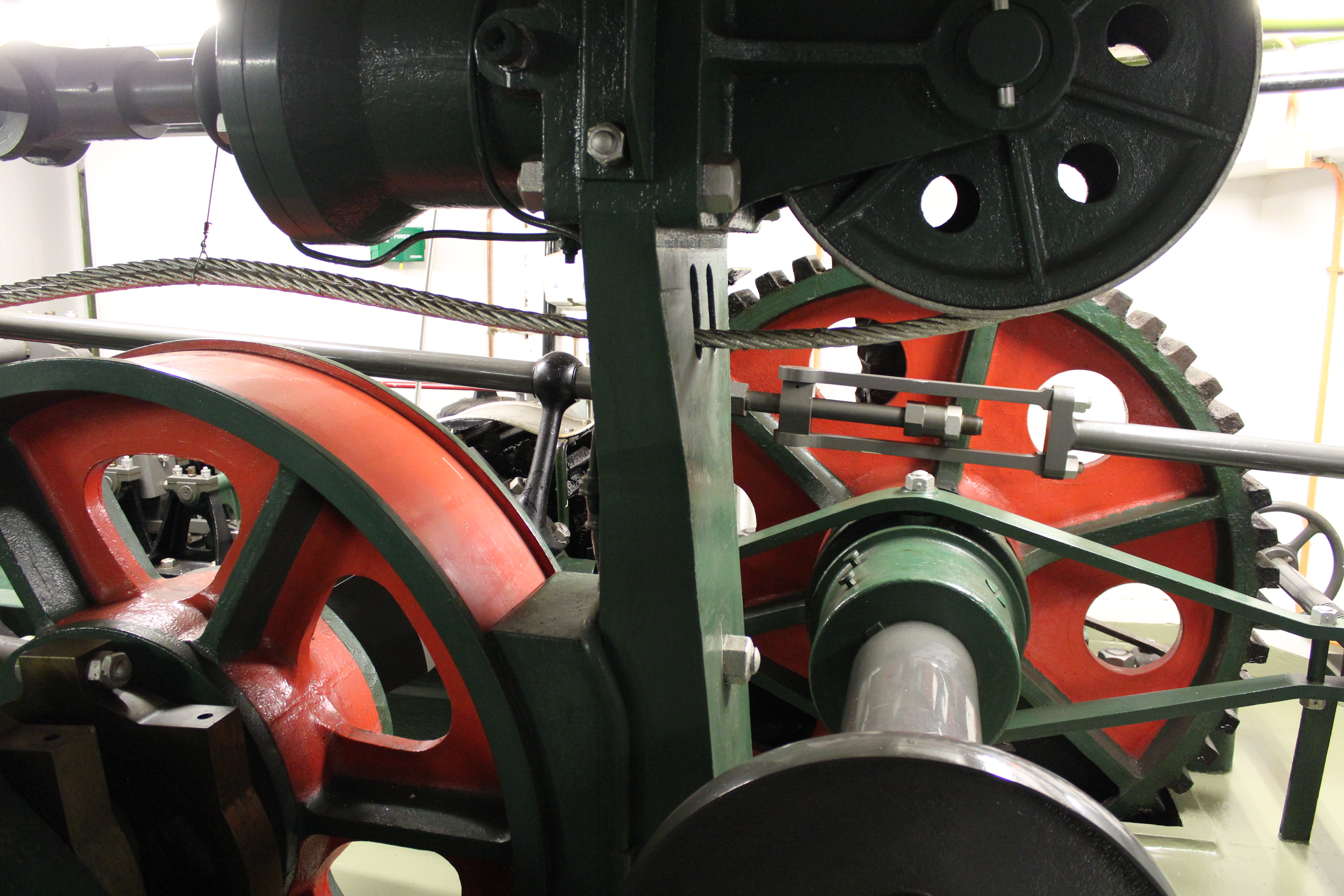
The old steam hydraulic machinery

The old hydraulic machinery - powered by steam.

Accumulator

The image at the very top of this post was taken in the first of the off-limits areas we visited: the south east Control Cabin (no longer in use), where the levers for lifting the bridge were once activated. These days it’s all done at the touch of a button. Next stop was the machinery rooms, where the old steam hydraulic machinery (pictured above) sits literally side by side with the modern oil and electric hydraulic machinery now used to lift the bridge. A frighteningly high staircase then took us past one of the accumulators (pictured right), where the steam used to lift the bascules would collect until it was required for use.

Next was the highlight of the tour: we visited one of the huge bascule chambers underneath the river bed – where the counterweights that balance the bridge swing down when the bascules are opened. We first viewed it from above through a doorway from the machinery room, before descending into the chamber itself. It is truly massive in size  – so large it’s hard to capture it in the one photograph. It’s also a little awe inspiring – truly an amazing feat of Victorian engineering – though not surprisingly also a little cold and damp.

Bascule chamber - viewed from above.

In the year Tower Bridge first opened – 1894 – there were 6,160 bridge lifts. Traffic on the Thames has reduced dramatically since then, and although the promotional material still states that there are around 900 lifts a year, the Senior Technical Officer advised us that more recently that figure is closer to 700. All bridge lifts require 24 hours written notice, and the timetable of when lifts will occur can be found on the Tower Bridge website. The bridge has had a fresh paint job to pretty itself up for this year’s Diamond Jubilee. One Tower Bridge fact which you may not be aware of is that its metalwork was originally painted in a chocolate brown colour – and was re-painted red, white and blue to mark the Silver Jubilee back in 1977. You can see examples of the original brown colour – as used on internal metalwork – in the first two photos in the Flickr set.

Competition for tickets for the Engineering Tours was fierce – as predicted – and they are now sold out. You can put your name down on a waiting list for any future tours by contacting 020 7407 9191. Alternatively, you can always view the walkways and engine rooms by attending the Tower Bridge Exhibition, which is open daily.

Tower Bridge website

The Londonphile’s Tower Bridge Flickr set

In the machinery room.

In the machinery room.

The Old Operating Theatre Museum

I’m willing to wager that the Old Operating Theatre Museum and Herb Garret is the only museum in the world that you enter via a 32-step spiral staircase designed for bell-ringers, and which features a main attraction that was hidden for almost a century in the roof of a church. Two things are for certain: what you will be seeing here is Europe’s oldest surviving operating theatre and one of London’s most unusual museums.

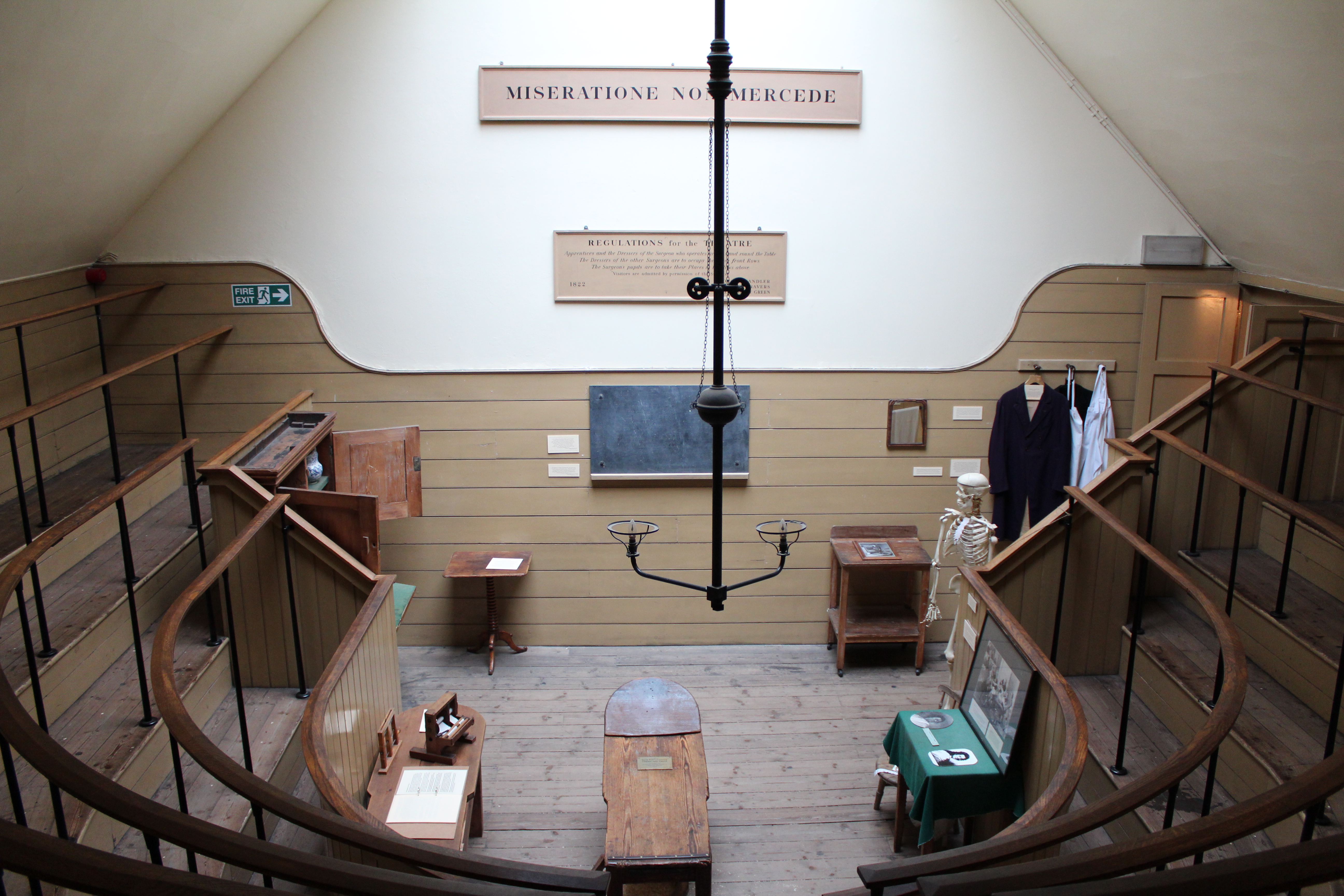
The operating theatre was built in the garret of St Thomas’ Church, itself constructed in 1703 by Thomas Cartwright, and was attached (both literally and figuratively) to St Thomas’ Hospital. The theatre was created in 1822 – before the advent of anaethetics and antiseptic surgery – and contained tiered viewing areas for students of surgery to watch and learn. It was closed in 1862 when the hospital moved to Lambeth and was promptly forgotten about until researcher Raymond Russell rediscovered it in 1956 via a mention in the hospital archives. It’s rather horrifying to learn that prior to its creation, operations were carried out on patients in the ward directly next to the garret  – yes, in their own beds (although this was in fact common in the era, and more wealthy people had their surgeries conducted at home).

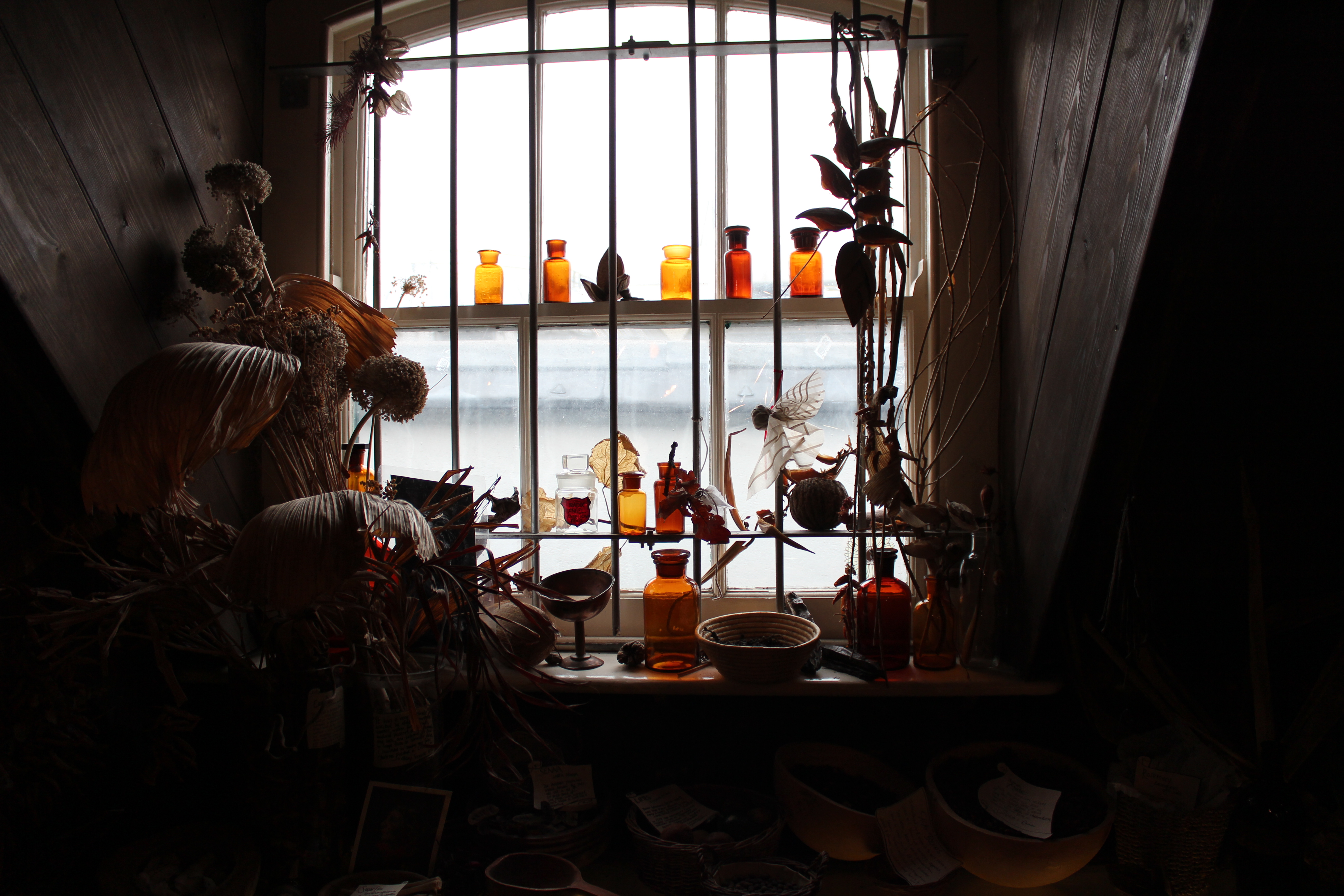
This is essentially a museum of two main spaces: the operating theatre and the herb garret, where medicinal herbs were prepared. The herb garret is wonderfully atmospheric; the timber-framed attic is full of old bottles and jars and the delightful smell of herbs. From an olfactory point of view, this part of the museum reminds me of the magical Dennis Severs’ House somewhat. And in case you’re concerned that the museum may be a little too gruesome for you – I think you will cope. While there are indeed organs in jars and some scarily-named surgical implements on display (scarificators! amputation saws! decapitating hook! Smellie’s perforator &c), I have a fairly low tolerance for the more gruesome side of life and was just fine.

If you visit on a Saturday at 2pm you can see a demonstration of speed surgery (maybe not for the fainthearted this), while on Sundays at the same time a talk on the museum’s history and medical heritage is held. The museum is conveniently located just around the corner from London Bridge Station, and is open every day from 10.30am-5pm; adults are £6, concessions £5. And for the record, no the patients were not dragged up the spiral staircase, but simply brought through from the ward which abutted the operating theatre.

http://www.thegarret.org.uk/

The unknown plaque

This little post is a homage of sorts to London Remembers and Open Plaques – who document all of the plaques and memorials in the capital (and across the country in the case of Open Plaques). I’m sure there is an some old adage about it being best to be honest when you don’t know something – which is exactly what this plaque does. I stumbled across it in my own neighbourhood of Surrey Quays – and it has the grace to admit that it does not know what function the small, brick building (dated 1902) to which it is attached had.

However, as the plaque itself notes, the area was formerly part of the large Surrey Docks complex that once covered much of Rotherhithe in an interconnected maze of docks, so it probably had some related function. Given that it also advises that in the year of its construction the nearby Greenland Dock was doubled in length, it was presumably connected to that dock in particular. Described as a ‘yard office’, possibly it was just for storage, or a checkpoint at the junction of the two streets (although of course many of the streets are new). In the same area (but close to the Thames) another building of a similar size has been identified as a gauge house, where the gauge for measuring the Thames’ tide was housed. Feel free to hazard a guess as to this mysterious structure…

If you’d like to visit the plaque in person, you can find it on the corner of Rope Street and Sweden Gate, near the Surrey Docks Watersports Centre (the postcode for which is SE16 7SX).

http://openplaques.org/

http://www.londonremembers.com/

Wilton’s Music Hall

No one does faded grandeur quite like Wilton’s – not just England’s, but the world’s oldest surviving music hall. Its peeling columns, ‘barley sugar’ cast iron pillars and old Indian frieze create an unforgettable atmosphere. Like all special places it’s best seen for yourself. But although the effect is somehow glorious, this isn’t just shabby chic decor – much of the decay is real. Wilton’s has been seeking support and funding for years for much-needed renovations, and has finally just had some success on this front – so this is a story with a happy ending.

The story starts in 1858, when John Wilton had the hall constructed along the back gardens of the terraced houses that form the front area of Wilton’s. A tavern was previously found on the site – and said to be very popular with sailors from around the globe. It was often referred to as the Mahogany Bar due to its fixtures. The bar was retained as the main entrance to the original music hall, and today the name is used for the gloriously cosy drinking establishment you can still patronise at Wilton’s.

Wilton’s great initial success as a music hall was not deterred by a major fire in 1877, and it was rebuilt the following year. Music hall luminaries such as Arthur Lloyd and Champagne Charlie trod the boards here, while its patrons could chose between the ladies of the night waiting at the top of the stairs and the more respectable seats downstairs, suitable for wives and girlfriends. Supper tables were also available, as was a promenade area for standing patrons. Entertainment was of the variety show type, including dancers, magicians, burlesque, comic and a wide range of musical talent.

But the popularity of the music hall genre eventually waned and new fire regulations in 1880s were the final death knell for the hall. Ironically, it was the Methodists who ended up saving Wilton’s. They turned the music hall into a mission hall – and because its almost chapel-like interior suited them perfectly, they simply left it like it was and preached amongst it…and the rest is history. The building also provided shelter for locals during the Blitz and was a rag sorting depot for a time. Today it numbers among its patrons the rather unusual combination of Prince Charles and David Suchet (a.k.a. Poirot).

A wide yet discerning range of entertainment is now on offer, including music, theatre, cinema and comedy. And where else but Wilton’s would you attend a magic show – as the Londonphile did in December – only to discover that Marc Almond was popping by to sing several Christmas songs? It is also a popular venue for filming, and recently played host to the latest instalment in the Sherlock Holmes franchise – although keen eyes will notice that the filmmakers ‘added’ an extra floor to the hall. But Wilton’s is worth a visit in its own right. And you can always just pop by the Mahogany Bar for a drink (it’s open most weeknights – check the website) – the ornate bar itself is a left-over donated after the Sherlock filming. And on Monday nights at 6pm you can learn more about Wilton’s history and architecture on a guided tour for just £6, which I highly recommend.

And so to that happy ending. After years of courting funding and support, Wilton’s recently received £700,000 from the SITA Trust for restorations. This funding means phase 1 of the Capital Project for crucial work on the auditorium can be completed and, importantly, stands Wilton’s in better stead when applying for further money for phases 2 and 3. Another £2.2 million is still required, so pop by, have a drink for charity and check out the glorious surrounds of this magical music hall. After all, Poirot can’t be wrong!

www.wiltons.org.uk

The first red telephone boxes

K2 wooden prototype

Next time you drop past the Royal Academy for an exhibition (or perhaps while you are waiting in vain for Hockney tickets) spare more than a cursory glance at the two red telephone boxes in the entranceway, for these are the original red telephone boxes. The wooden box on the western side (shown above and right) is actually Sir Giles Gilbert Scott’s 1924 winning entry in a competition held by the General Post Office to design a new phone box. The one on the eastern side (seen below) is one of the first cast iron boxes to be created from this design. This style became known as K2 – Kiosk No. 2 (K1 was concrete and originally painted cream, although they have often been re-painted red since).

K2 cast iron first run original

Apparently Scott – an architect perhaps best known as the designer of the equally iconic Battersea Power Station – originally envisioned that his design would be silver and made from steel, but the bright red colour was thought to be most visible, particularly in emergencies. And the rest is history…Scott was also asked to design a cheaper version for the rest of the country, which became the K3. Like many of the old red telephone kiosks, the ones outside the Royal Academy are now listed buildings – and both are still fully operational today. So yes, you can still drop by and put in a call from the first red telephone box…

Vintage postcards: Crystal Palace

So to the second instalment of the Londonphile’s vintage postcard series. This dramatic postcard depicts the events of the night of 30th November 1936 when the Crystal Palace was destroyed by fire. Designed by Joseph Paxton, and made from plate glass and cast iron, this massive greenhouse-esque structure was the former home of the the 1851 Great Exhibition, held in Hyde Park.

At the completion of the Exhibition there was a quite heated debate about what to do with the Palace. Eventually it was decided that it would be relocated and rebuilt on a much larger scale, and to a significantly different design, in Sydenham Hill – a plan that ultimately cost £1,300,000 (that’s £96.5 million in today’s terms). This new version opened in 1854 and was host to numerous concerts, fireworks displays, cat shows and the like.

Sadly, despite the efforts of 89 fire engines and 381 firefighters the Palace was lost to the nation in a matter of hours on that fateful night in 1936. Thousands of people, including Winston Churchill, flocked to Sydenham to watch the massive conflagration, while others gathered on higher ground, such as Hampstead Heath, for a view. The glow from the flames was said to be visible from as far away as Brighton and across eight counties.

The two giant water towers – designed by Isambard Kingdom Brunel to cater for the massive amount of water that the Palace required for its extensive water features – were the only buildings left standing (you can see one at the back of the picture). Brunel had been called in for a re-design after the original towers collapsed under the weight of the water. However, even these were later demolished during the Second World War as it was thought that German aircraft might use them as landmarks. The final sting in the tail was that the entire structure was horrifically under-insured for the sum of just £110,000.

This post serves as a preview of sorts, as I will visit the old Crystal Palace site later in the year and write a more lengthy piece on this fascinating building, its story and what remains today.

The Rose Theatre

Back in Elizabethan days, the Rose Theatre was overshadowed by its newer, larger rival, the Globe. Sound familiar? Some 400 years on the Rose still languishes in its neighbour’s shadow, fighting for survival and public support.

The Rose was Bankside’s first theatre, built in 1587 on land that had been re-claimed from the Thames, pre-dating the Globe by 12 years. Its remains were discovered in 1989 during the development of a new office building. Around two-thirds of the theatre’s ground plan were eventually uncovered by archaeologists. This excavation revealed many details about the design of Elizabethan theatres – knowledge that was used in the reconstruction of the Globe. It is now the only complete Elizabethan theatre site still available for excavation.

The campaign to save the site created one of London’s many oddities – the office complex was eventually built suspended above the remains. Today red rope lights mark out the size (surprisingly small) and shape (that of a 14-sided polygon) of the original theatre, where Shakespeare once trod the boards. Its foundations are covered with a layer of water to prevent cracks developing. The Rose Theatre Trust is seeking funding and donations to complete a full excavation of this unique site.

You can see all of this for yourself as the Rose is open each Saturday from 10am-5pm (entry is free but donations are appreciated). They are about to embark on the 2012 season of plays – kicking off with The Merchant of Venice on 1st February – walks and events. Visit their website for full details:

http://www.rosetheatre.org.uk/

City of London Police Museum

While presenting yourself at a police station may not immediately spring to mind as the precursor to an entertaining day out in London, think again. For the Wood Street police station is home to the little gem that is the City of London Police Museum. As its name would suggest, this museum focuses on the City police, whose remit covers London’s historic Square Mile, as opposed to their counterparts in the Metropolitan Police. And unlike the Met’s private Crime Museum (a.k.a. the Black Museum), anyone can drop by for a visit.

Although the City of London Police Museum is contained in just the one room – I’m told it may eventually be extended, so watch this space – it is richly furnished with memorabilia and historical items, and is well worth a look. My personal favourites include the top hat originally incorporated in the uniform that was so sturdy officers could stand on it to look over high walls, and their collection of seized weapons, which includes a very low-tech sock-in-a-rock.

Events such as the Houndsditch Murders and the Moorgate Tube disaster of 1975 are also covered, and there is a small section on Jack the Ripper as the Mitre Square killing fell within the City’s boundaries. Many of the museum’s volunteers are former officers themselves and as such have a wealth of information to impart (and can even point out former colleagues in more recent photos). This is what really brings the museum – and the stories it contains – alive. For example, did you know that the City Police significantly pre-date the Metropolitan force, and their Roman-style helmet reflects their early origins?

The Museum is currently open Wednesdays from 10am-4pm and Fridays from 2-6pm (and Tuesdays 10am-4pm from 1st February 2012). Just present yourself at the front desk at 37 Wood Street during these hours. Entry is free.

http://www.citypolicemuseum.org.uk/

London Stone

London Stone - note the delightful rubbish accumulating in the grille

Having been meaning to photograph London Stone for the Londonphile for a little while, you can imagine my surprise when I visited recently only to discover a very official poster announcing plans to relocate it. (Obviously I missed Londonist’s article about this last year!). Due to the imminent redevelopment of the 111 Cannon Street site, it is now proposed that London Stone be relocated from where it has resided since 1557, to the front of the Walbrook Building, at 97-101 Cannon Street.

So just what is this London Stone? In short, it is a rather unprepossessing 53cm wide, 43 cm high, 30cm deep (i.e. not really all that big) slab of oolitic limestone. Despite its name, as this particular limestone does not naturally occur in London it clearly originally hailed from elsewhere. London Stone has had numerous myths attached to it over the centuries, and has variously been held to be the remains of Brutus’ temple, the stone which held King Arthur’s sword, a Druid’s altarpiece or a Roman milestone. It is as the remains of Brutus’ temple that the stone acquired its alleged link to the well-being of London: it is said that ‘so long as the stone of Brutus is safe, so long shall London flourish’. The Victorian Society described the stone in their submission to the planning committee as ‘one of the most symbolically important objects in London’.

The first records of the stone place it on the south side of Cannon Street (opposite number 111). It was larger then and eventually became something of an impediment to traffic (apparently traffic was already proving problematic back in 1742!), so was moved to the northern side by St Swithin’s church and later placed into the south wall of the church. Although St Swithin’s was destroyed during the Blitz, the stone survived intact – luckily for London – and has remained outside 111 Cannon Street since, currently in front of a rather grim 1960s office block. Unsurprisingly, all of the objections to the proposal (which can be viewed online – see the links below) centre around the significance of this site to London Stone, which renders any relocation inappropriate.

Having said that, English Heritage do concede in their submission that the stone’s current setting and presentation could do better. On my own visit I found the stone hard to view through both the grille and the glass, and mostly ignored by passers-by; filled with litter, it has the appearance of little more than a random piece of neglected street furniture. The light that normally illuminates the stone somewhat appeared to be out. The low setting of the stone however – while not an aid to viewing – is actually in keeping with its originally low position in the street, and most submissions felt this should also be retained.

Currently the application to relocate the stone is still ‘pending consideration’. Hopefully this story will have a happy ending, with the stone able to remain in situ as part of the new building at 111 Cannon Street, and ideally in a way that also makes it easier to view, more celebrated and more cared for than it currently appears. Clearly, any developers would do well to keep in mind the stone’s link to the city’s safety when considering any plans…

You can view the planning submissions online at:

http://www.planning.cityoflondon.gov.uk:90/WAM/findCaseFile.do?councilName=Corporation+of+London&appNumber=11/00664/LBC