Museum of the Order of St John

IMG_0063

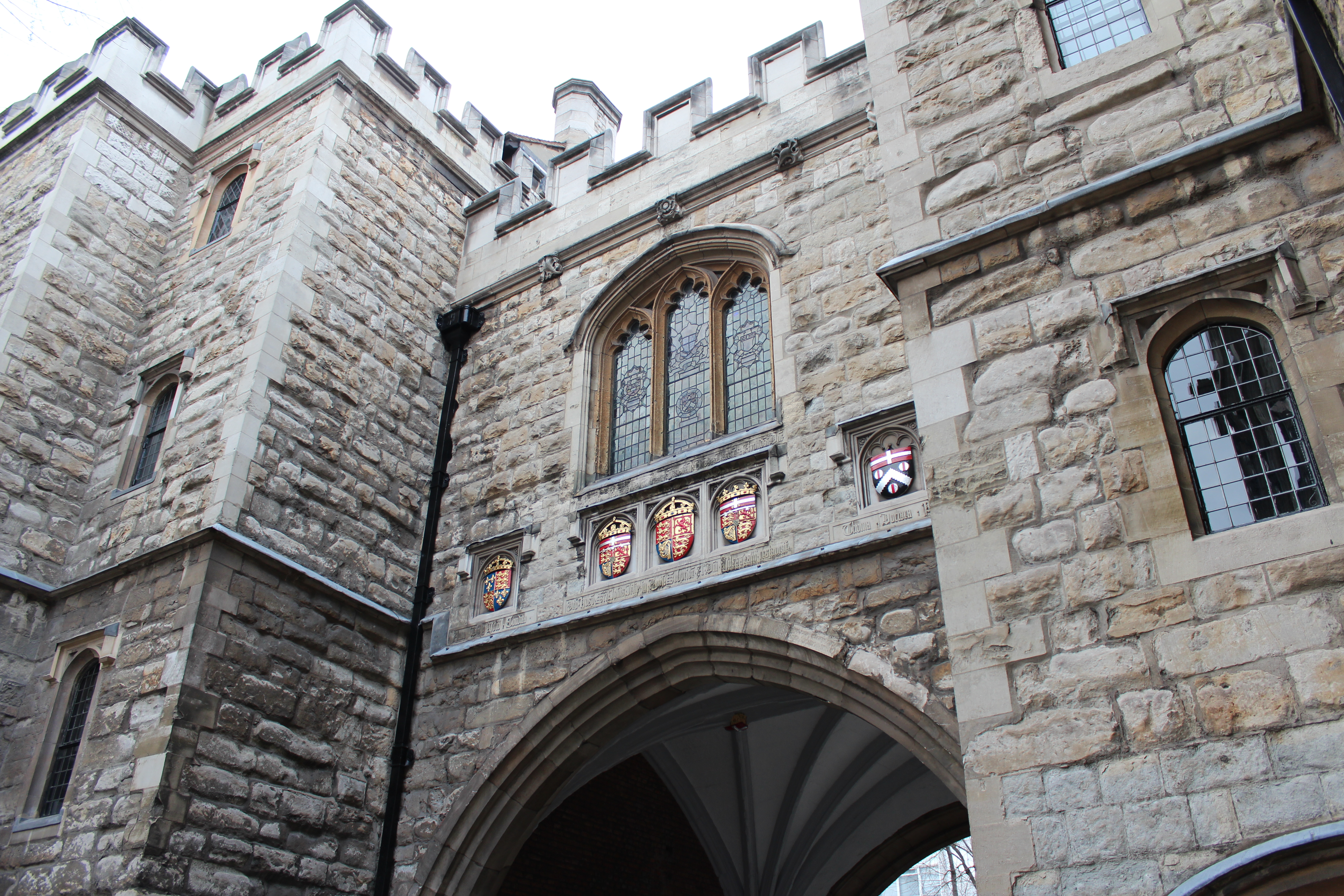
Anyone who has walked through the Tudor gate on St John’s Lane in Clerkenwell must have wondered just what it is and what treasures it might house. The answer is that – following a number of different incarnations over the years – it is now home to the Museum of the Order of St John and is the property of that order, whose history on this site can be traced back to the eleventh century. And if you visit the museum on a Tuesday, Friday or Saturday at 11am or 2:30pm and take a guided tour, you can gain admittance to the upper chambers and see for yourself what lies above.

IMG_0047

The tours are a must as they also gain you entry into the Norman crypt and priory church across Clerkenwell Road – once part of the monastery that was locked away behind this entrance gate. Once upstairs in the gatehouse you get a good look around the Chapter Hall (pictured below), the Old Chancery and the Council Chamber (which sits in the middle of the gate), before descending a lovely Tudor spiral staircase to the Malta Room.

IMG_0023

Not to take anything away from the fascinating history of the Order of St John, but I was personally more interested in the gate’s (relatively) more recent history and its literary connections. Following the dissolution of the monasteries it served time as Henry VIII’s personal storage unit before becoming the office of the Master of the Revels in the sixteenth century. As no less than 30 of Shakespeare’s plays were licensed here it’s likely that the Great Bard himself was a frequent visitor.
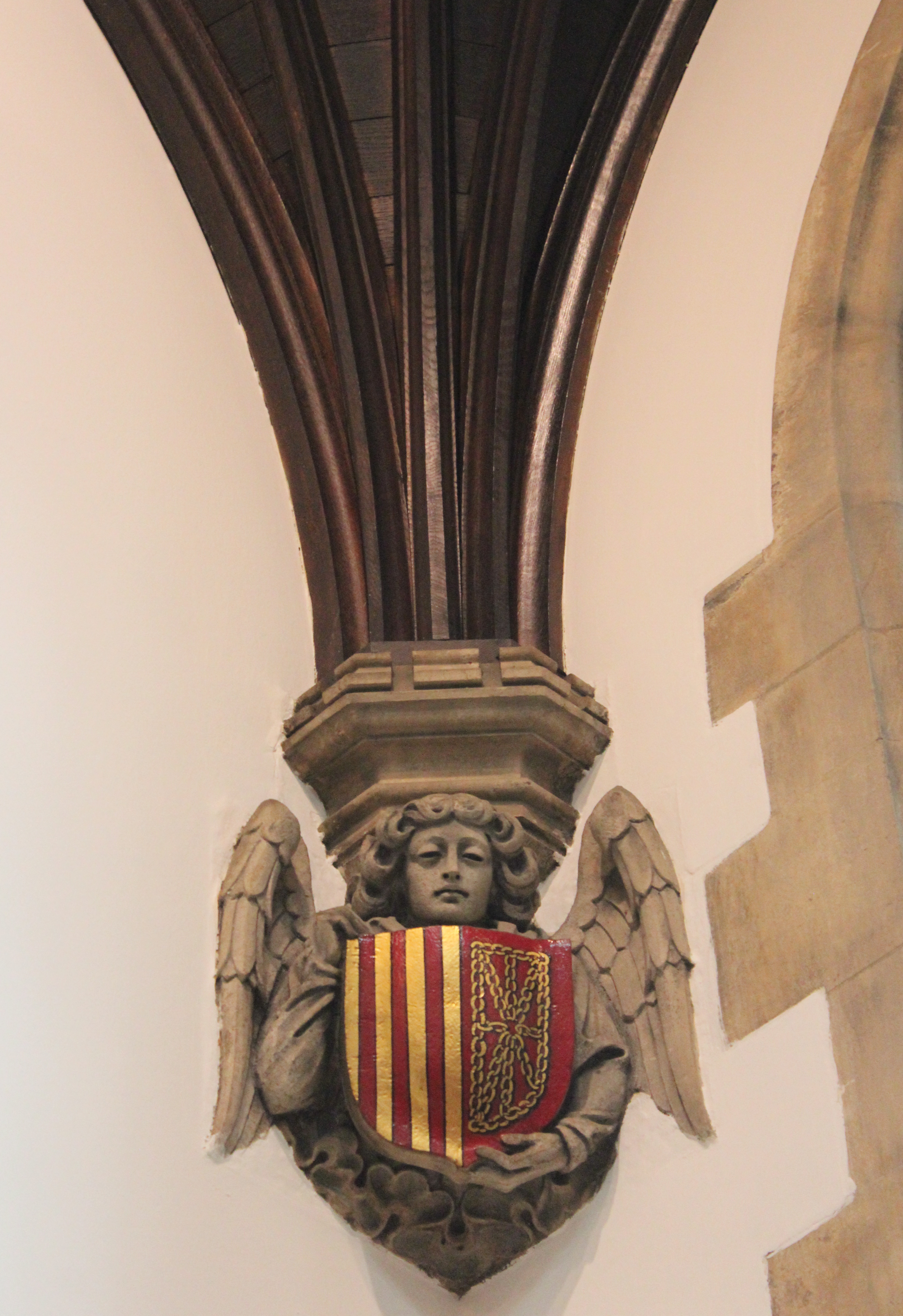
IMG_0050

In the eighteenth century the gatehouse was transformed into a rather idiosyncratic coffee house run by one Richard Hogarth, father of William. His Latin-only rule probably accounts for its fairly swift demise. The gateway also played home to The Gentleman’s Magazine – which gave a young Dr Johnson his first taste of employment – and by the nineteenth century had become the somewhat disreputable Old Jerusalem Tavern, frequented by one Charles Dickens.

IMG_0087

The gateway was bought back by the Order of St John in the late nineteenth century and restored to its former glory. The museum benefitted from a major restoration on 2010. Its new galleries (which are on the ground floor and can be visited for free Monday-Saturday 10am-5pm) are well designed and blend in nicely with the old structure. I highly recommend timing your visit to coincide with one of the guided tours, which are also free though a donation of £5 is suggested.

Museum of the Order of St John
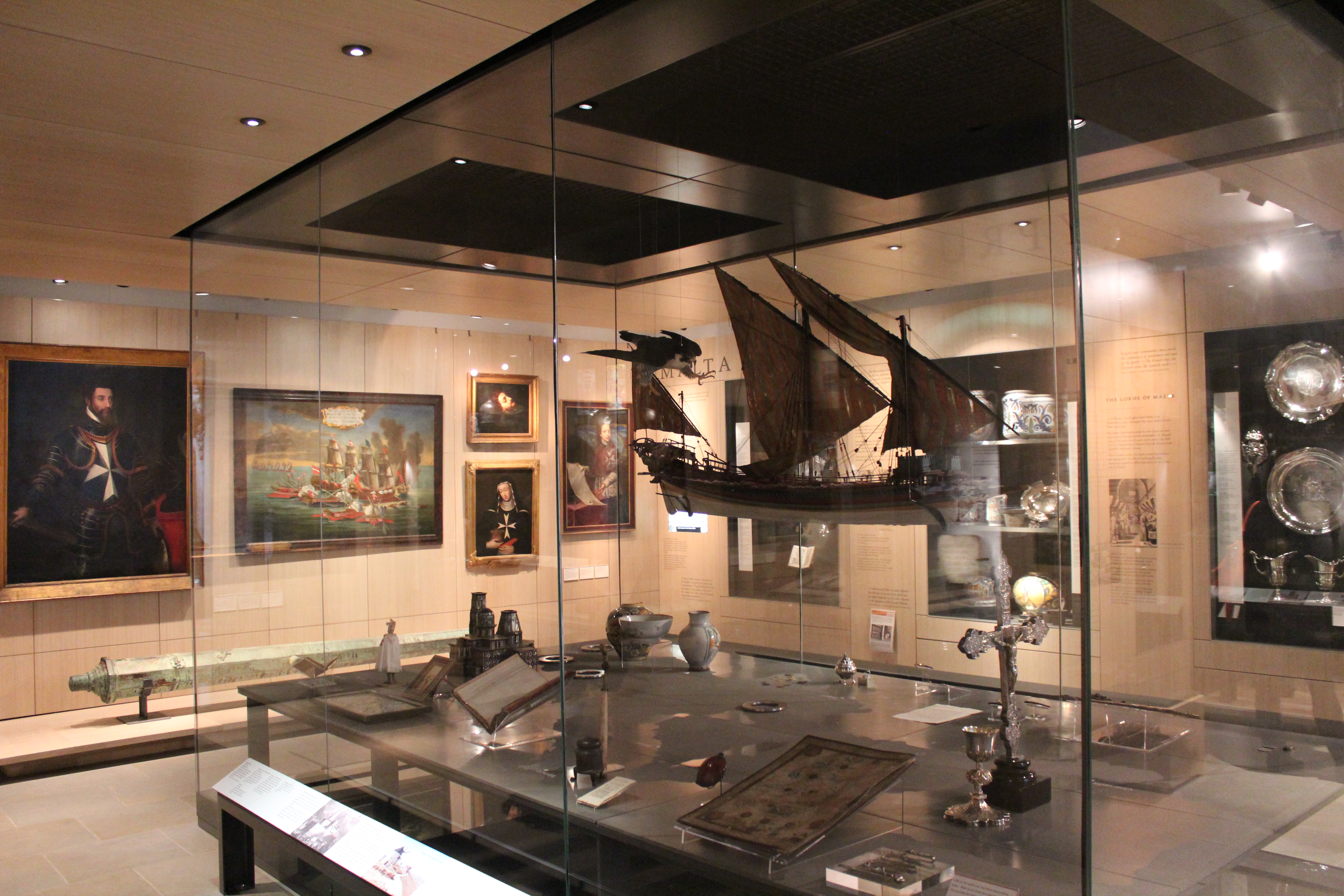
IMG_0013

IMG_0083

Stoke Newington Pumping Station

IMG_9784

When I visited Clissold House last year I was surprised to see a medieval-style castle looming over one end of the park. This architectural oddity is in fact the Stoke Newington Pumping Station – a Victorian era water pumping station built in the Scottish Baronial manner. Although it ceased to operate by 1942 – and is now home to a climbing centre – its turrets and battlements remain thrusting into the sky, a testament to the Victorian zeal for industry and development and a love of all things flamboyant.

IMG_9847

The 1852 Metropolis Water Act requiring drinking water to be filtered and covered prompted its construction by the New River Company between 1852 and 1856, at a cost of £81,500. Although the area was composed mostly of fields at this stage, it’s thought that residents were not keen on the idea of an industrial building in the neighbourhood – hence the magnificent castle design by engineer William Chadwell Mylne and architect Robert William Billings. Possibly based on Stirling Castle (Mylne was Scottish and Billings an expert on historic Scottish buildings) – it’s also been suggested that the design might have been inspired by that of nearby Holloway Prison.

IMG_9832

Its superb position is partly due to the fact that it was built on an artificial mound, to give the sense of a castle within a moat. Although its striking towers and turrets appear quite random, they were each designed with a specific practical function – one housing a chimney shaft, another a water tank – while the turret with the conical roof contains a spiral staircase leading to the roof. The three front buttresses are home to a section of the tower’s flywheels. In a nice touch, Mylne’s name and the date 1855 are spelt out on iron plaques on the side of the buildings (see image below).

IMG_9850

The building was saved from demolition in 1971 following an outcry by local residents, and was Grade II listed in 1974. Despite this, it found itself facing an uncertain future yet again by 1988 with the imminent privatisation of the water industries. In 1994, planning permission was approved for redevelopment by its current tenants – the Castle Climbing Centre – under the proviso that the general appearance and character of the building would be retained and any items removed stored safely for future use. I would highly recommend a peak inside – the day I visited (on a weekend) it looked deserted from the outside, but once through the doors you find yourself in another world of brightly coloured walls covered with enthusiastic climbers. The centre’s plans for further redevelopment of the interior are posted on one of the walls along the main staircase.

If you’d like to visit what must surely be one of London’s more unusual buildings, you can find it at 218 Green Lanes, N4 2HA. Manor House is the closest tube station.

IMG_9812

The view from Richmond Hill

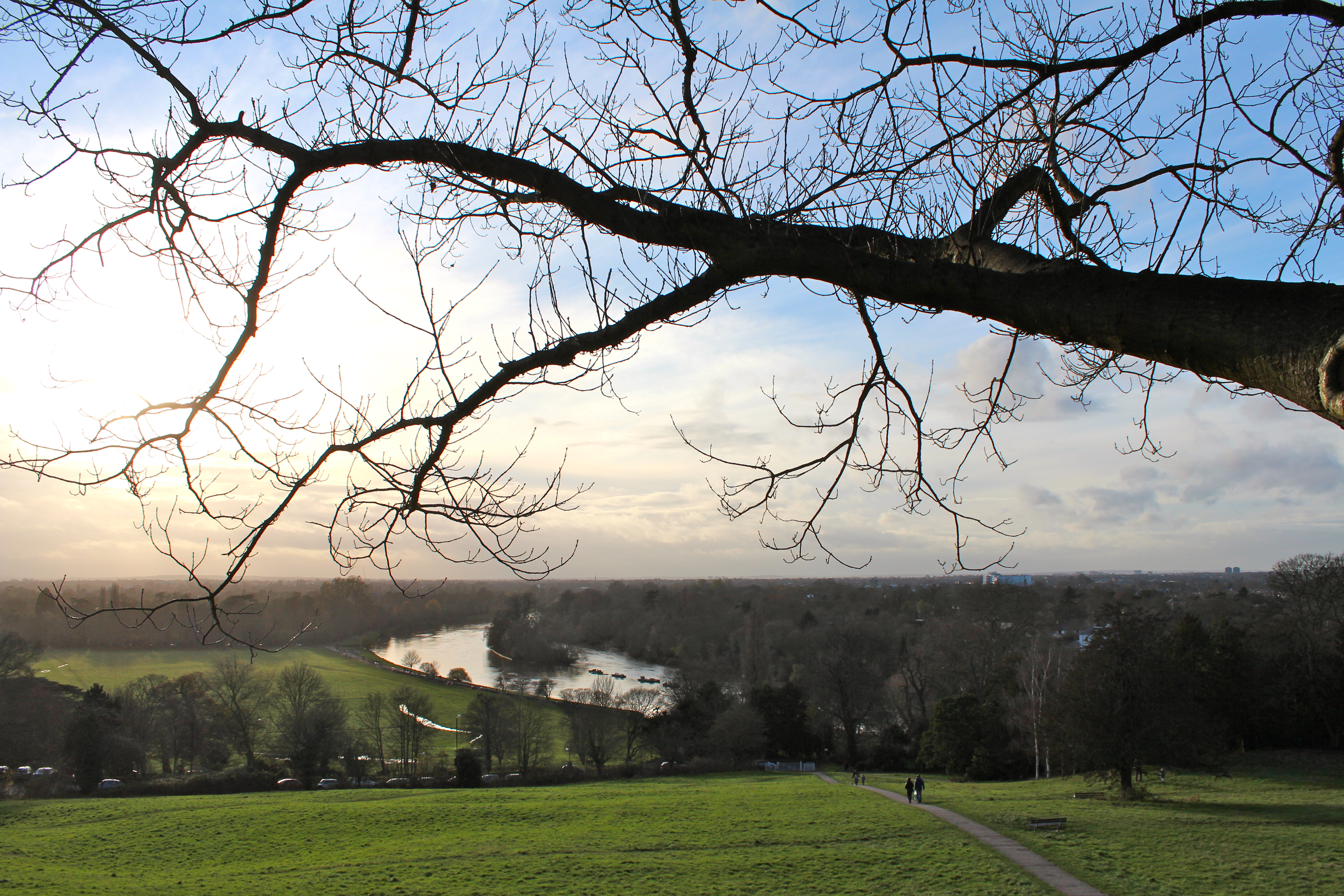
If you had to guess the location of the only view in England that’s protected by an Act of Parliament, somewhere in the Lake District would possibly spring to mind, or perhaps the white cliffs of Dover. In fact it’s right here in London – the view from Richmond Hill. Sir Walter Scott (Heart of Midlothian) and Wordsworth (Sonnet June 1820) wrote about it, and Reynolds and Turner painted it. The view from the hill looks up the Thames towards Twickenham, and includes tiny Glover’s Island. And all to be found in zone four no less!

Turner – who lived nearby at Sandycoombe Lodge for a number of years – returned to this theme time and time again. A number of his paintings and numerous sketches show this view, or views of Richmond Hill itself – many of which can be easily viewed in digital format here on Tate Britain’s website. Reynolds lived on Richmond Hill itself – his 1788 work The Thames from Richmond Hill, can be seen here.

My photographs of the view were taken from the top of Terrace Gardens, which itself is also Grade II* listed and is on land that was originally three large private estates. The local authorities had been buying up various properties – including Glover’s Island – over the years in order to preserve and protect this area and its view. The view from Richmond Hill was officially protected in 1902 by an Act of Parliament known as the Richmond, Ham and Petersham Open Spaces Act. The National Trust took over the protection of the Petersham Meadows (at the bottom of the hill, on the left of these photographs) – and its languidly grazing cattle – in 2010.

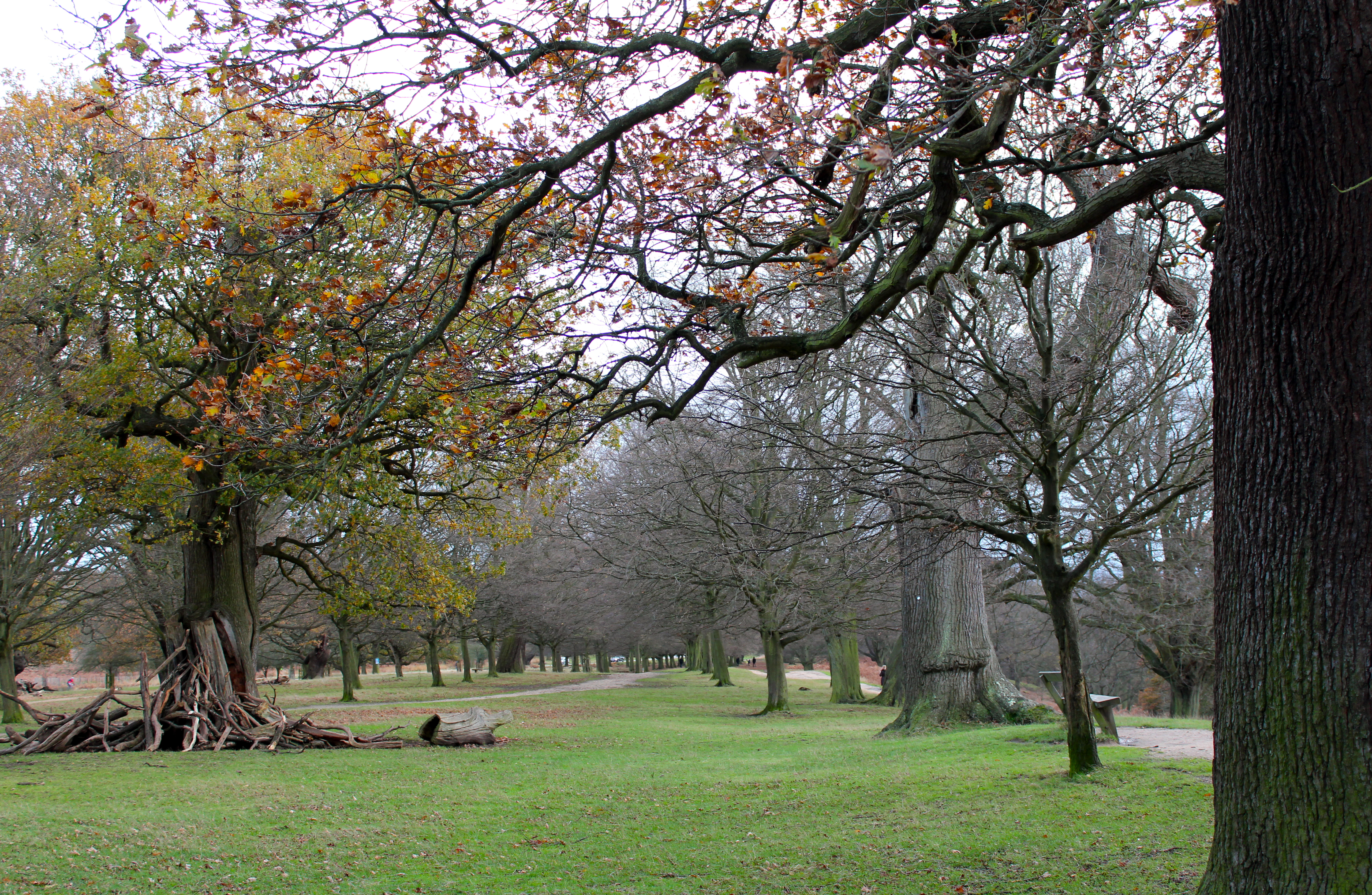
Nearby: You are indeed spoilt for choice in Richmond and surrounds. Next to Richmond Hill is the lovely Richmond Park (pictured below), where you can watch wild deer roam and take tea in Bertrand Russell’s childhood home, Pembroke Lodge. Turner’s old house, Sandycoombe Lodge, will re-open for visits on the first Saturday of the month in April 2013. Nearby grand houses include Ham House (open some weekends in winter) and Marble Hill House (closed until late March 2013, but you can still visit its grounds and grotto).

Vale of Health

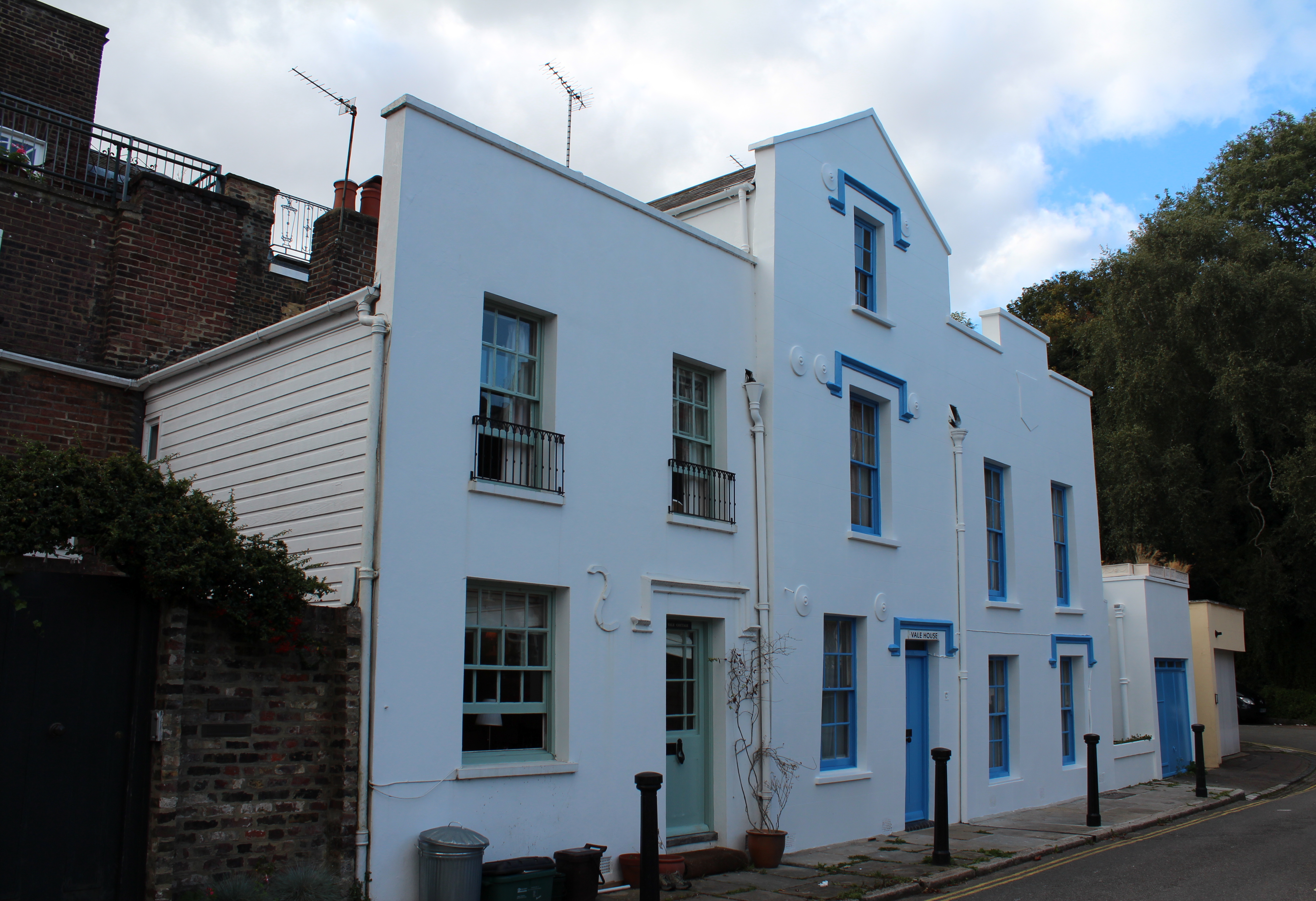
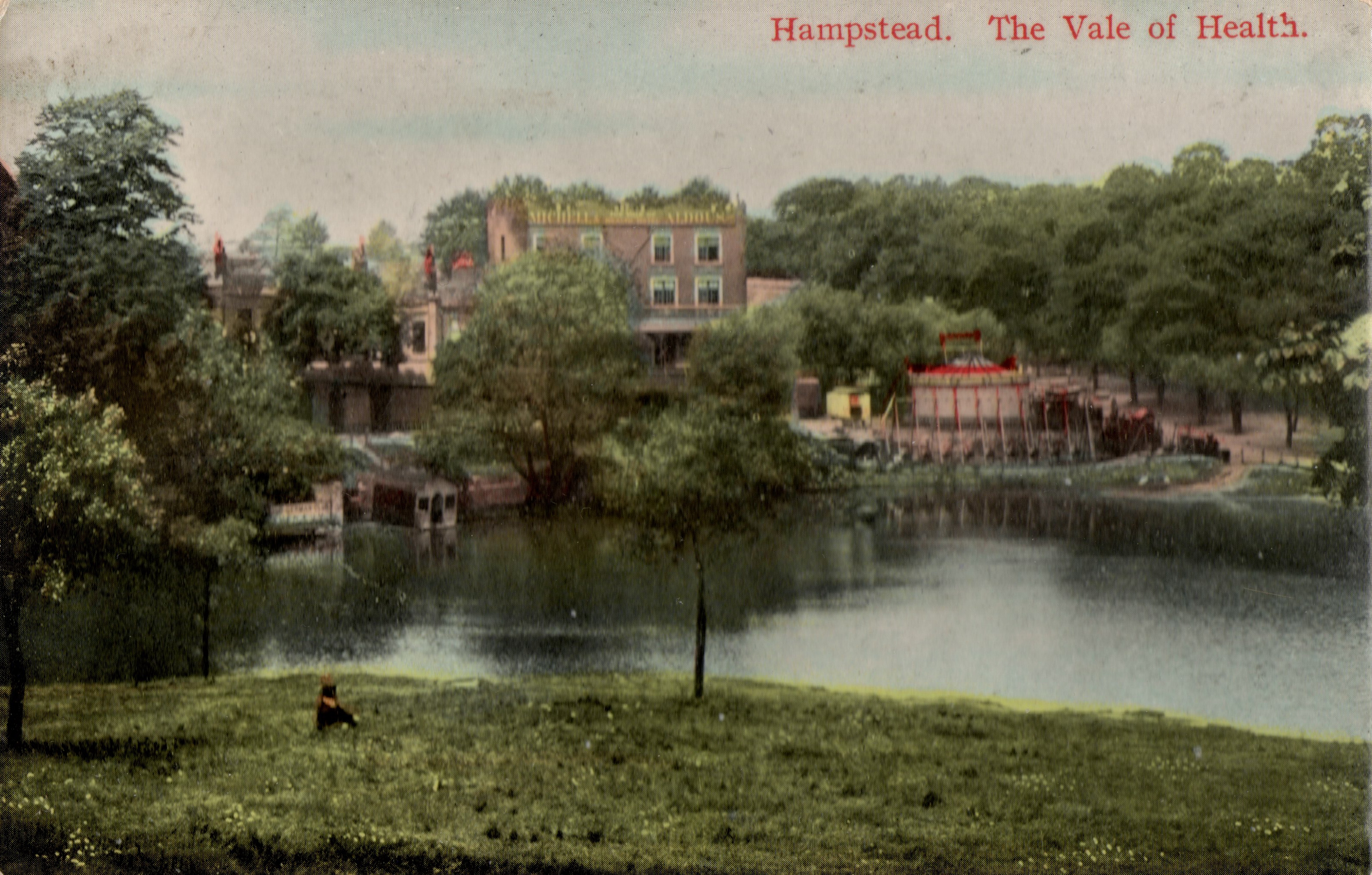
Despite its name and current rarefied status, Hampstead’s mini-neighbourhood the Vale of Health actually started life as a bog variously known as Gangmoor or Hatchett’s Bottom – and was later home to factories, fairgrounds and laundering operations. It’s come a long way since – it is now said to be one of the most expensive residential areas in the world. It’s certainly one of the most exclusive, being composed of just a small hamlet’s worth of houses (and absolutely no amenities) entirely surrounded by Hampstead Heath. And while its name might suggest a former health spa or some such, the reality is that it probably originated as a euphemism or an invention aimed at changing the area’s tarnished image.

Please note the dog in the window.

Certainly the now purely residential nature of the Vale of Health was not always so – along with the odd factory, the area was once particularly popular with day-trippers (especially after the railway came to town) and was home to tea-houses, boat rides, grottoes, arbours and a fairground. Though the merry-go-rounds and slot machines were packed away some time ago, the legacy of these more giddy days continues with the existence of what would otherwise have been one of the least likely caravan parks in London, which abuts the Vale along one edge. Today it is still inhabited by fairground employees, and has been owned by the same family for over a century.

I first stumbled across the Vale of Health by complete accident while exploring Hampstead Heath. I’d remembered it as a quaint semi-village full of white houses. This recollection was only partially correct  – there are indeed a number of white residences but not exclusively so and these share space with two more modern apartment buildings. These flats were built on land once occupied by the two hotels in Vale of Health and have a lovely setting over the pond on one side of the settlement (see the before and after images below). Building in the Vale was severely curtailed in 1872 when the Metropolitan Board of Works bought the heath, limiting construction to the existing area.

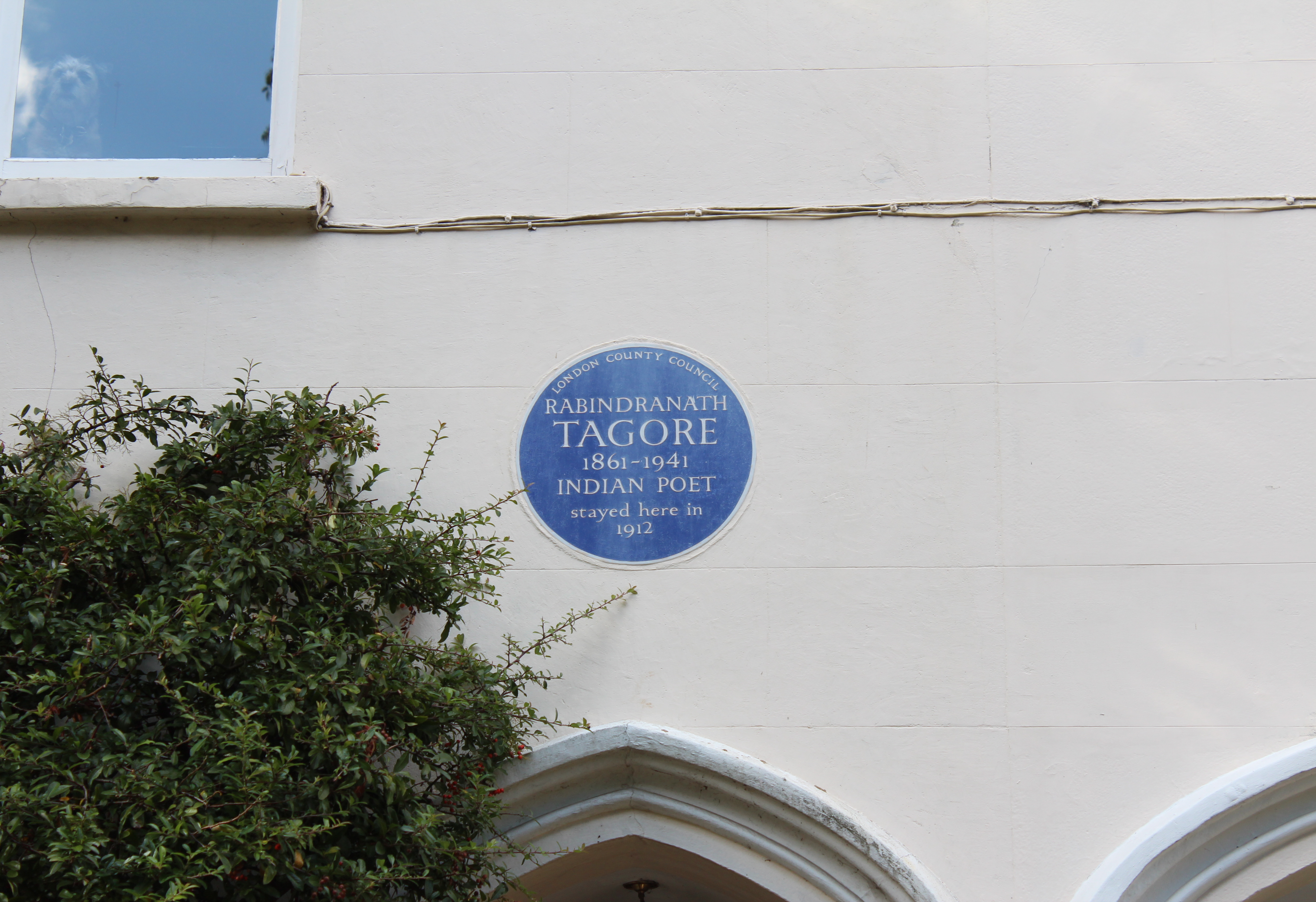
By 1890 there were 53 houses in the area – and it’s much the same today, with the residences strung out along the one main road (called Vale of Health), an unnamed side road (where the apartments are) and a series of interconnecting alleyways behind these. It is a fascinating little area to explore or stumble across, with an unusual history and a number of listed buildings. Two blue plaques can be found for previous residents DH Lawrence and Rabindranath Tagore. It’s well worth a detour when you’re next rambling across the heath.

The Vale of Health can be reached via East Heath Road. The closest tube station is Hampstead Heath on the northern line.

City residential church towers

Fancy living in an old church tower? The towers that have been converted into homes must surely be amongst some of London’s most unusual residential options. The City’s churches have taken quite a battering over the years – once numbering over a hundred, 35 were lost in the Great Fire of 1666, while many of those which were painstakingly rebuilt afterwards were again damaged or destroyed during the Blitz. In between these two catastrophic events, yet more were demolished from the late eighteenth century onwards. The towers of a number of these lost churches were saved and put to new uses – while the conversions into commercial premises are more obvious, some have also been turned into rather intriguing private residences.

Christchurch Greyfriairs on Newgate Street (above) was damaged in the Great Fire and rebuilt by Wren between 1684 and 1704, only to be destroyed during the Blitz. Luckily the tower survived and was restored in 1960, along with the urns that now grace it which had been removed in the nineteenth century. The area that was once part of the body of the church is now a garden, which has been planted to follow the lines of its original layout, pews and pillars. The rebuilt Vestry House adjoining the tower is now a dental practice, while the tower is indeed somebody’s home (with the rather flashy front door at the top of this post) – you can see their dining area from the garden.

No doubt visitors to Wood Street over the years have pondered exactly why there is a lone church tower standing in splendid isolation in what is now the middle of a traffic island (directly across from the police station, you can’t miss it!). St Alban Wood Street (pictured above and below) was also rebuilt by Wren after the Great Fire – sadly it was destroyed on a single night during the Blitz, 29th of December 1940. Wren’s gothic-style tower survived – a glance through its doors reveals an entry foyer (when the wooden doors aren’t locked) and old stairs leading to the residence above.

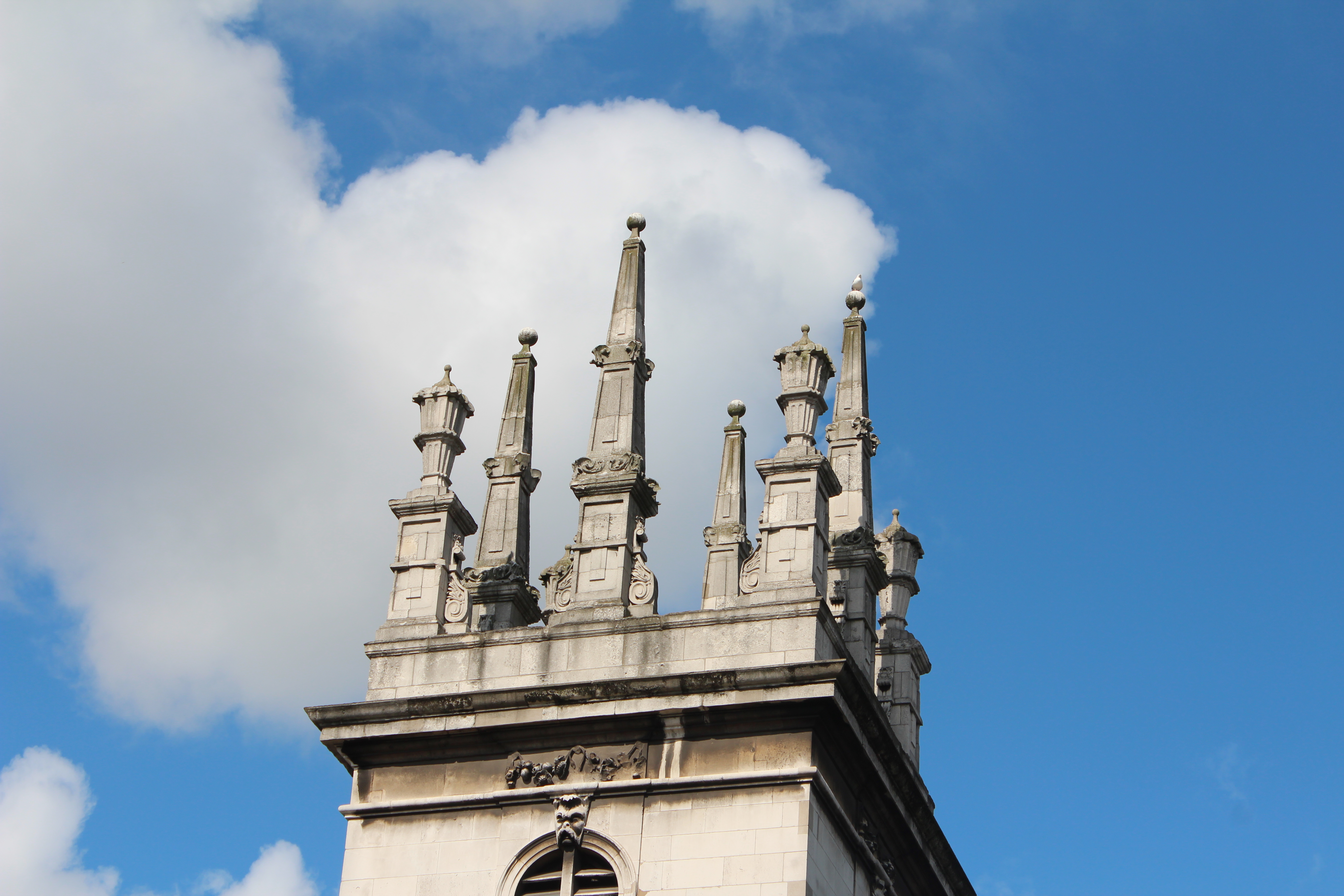
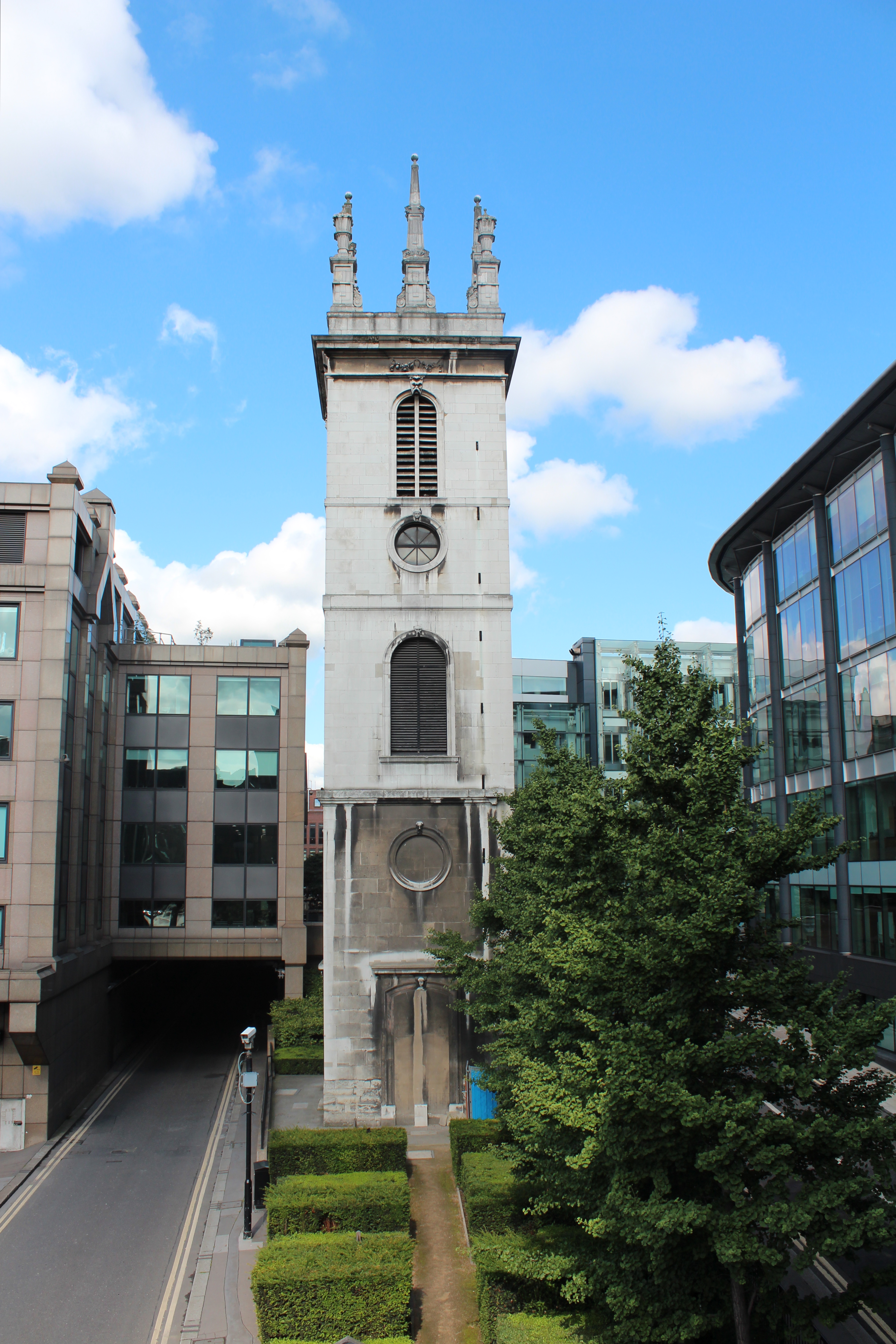
I’ve heard that the tower of St Mary Somerset on Upper Thames Street is also somebody’s home, but I’m not so sure. It looks pretty desolate and boarded up to me. Another church that Wren rebuilt after the devastating fire of 1666, St Mary’s was not a victim of the Blitz. Instead it was scheduled to be demolished in the nineteenth century as it was deemed no longer necessary due to low attendance rates. Fortunately someone recognised the beauty of Wren’s wonderfully intricate Baroque pinnacles (seen below) and the tower was saved. The good news is that there appears to be some work being done on it – so maybe there could be some vacancies coming up…

If you’d like to discover more about the City’s lost churches try Gordon Huelin’s book Vanished Churches of the City of London (available at the Guildhall Library for only £5), which lists 69 vanished churches in total.

St Mary Somerset

Christchurch Greyfriars

Twickenham’s Grottoes Part 2

Marble Hill Park Grotto

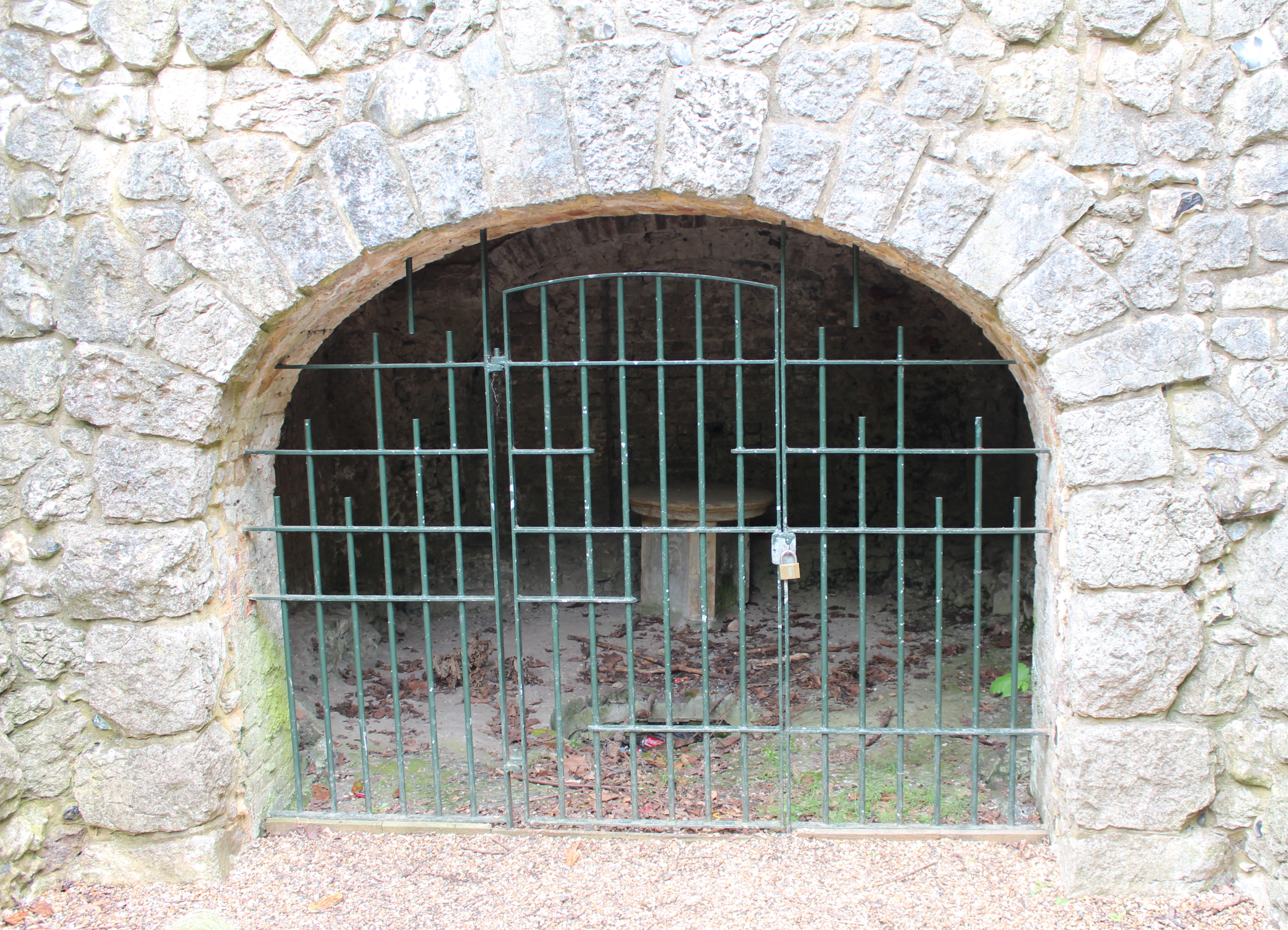
Having explored Alexander Pope’s once magnificent grotto in Part One of this series, we now turn to another grotto in Twickenham with connections to Pope. The grotto located in the grounds of English Heritage’s Marble Hill property – and this one is open to the public – was not only inspired by Pope, but the poet himself helped with the design (and indeed with that of the entire grounds) – ‘assisting’ landscape shaper Charles Bridgeman.

Marble Hill was built between 1724-29 for Henrietta Howard, the mistress of King George II. The Countess of Suffolk, as she was later to become, had visited Pope’s grotto and determined to have one of her very own built in the grounds of her nearby Palladian villa. In fact, it is believed that there were originally two grottoes built in the grounds, and it seems likely that the one you can see today is the smaller of the two. It was first rediscovered after a fallen tree revealed a secret chamber in 1941. It was refilled at this time but in 1983 subsidence on the lawn lead to excavations which saw it uncovered yet again and finally restored.

Like Pope’s own grotto, the Countess’s would have originally been more colourful, containing shells, coral and blue glass. Sadly these decorations were too fragile to be conserved so it is now a much plainer proposition altogether. The small ‘cave’ itself is behind bars, and composed mostly of rather barren stone and brick. A stone table can still be seen, though not in the best condition. The exterior top part of the grotto is not original but has been reconstructed as it is thought to have originally appeared. Today the grotto is approached down a set of stairs – another feature thought to be faithful to its original appearance.

As I approached the grotto from the Thames, it looked like nothing more than a hedge. Shrubbery has been planted around the grotto and its stairs creating this effect (earlier photos show the grotto after its restoration with no shrubbery). Actually this oval ‘hedge’ is in keeping with a description of the larger grotto as containing ‘an Ally of flowering shrubs’. The location of this second, larger grotto remains a mystery.

You can view the Marble Hill grotto during Marble Hill Park’s opening hours, which are standard dawn to dusk times. If you’re considering combining your trip with a visit to the house make sure you check its separate opening hours as these are very limited and it’s usually closed throughout the colder months.

Rotherhithe Tunnel cupolas

At similar points across the Thames in Wapping and Rotherhithe – like sentinels along the river – stand two rather mysterious identical circular red-brick structures. Surely many a passerby over the years has wondered exactly what these buildings are. They are in fact twin ventilation shafts – more romantically known as cupolas and sometimes referred to as the Rotherhithe Rotunda or Rotherhithe Tunnel Shafts – for the Rotherhithe Tunnel, which allows vehicles to travel under the river at this point between the north and south banks.

The cupolas were not built to deal with the noxious fumes produced by cars – as one could be forgiven for assuming – but with those produced by the horses that at the time of the tunnel’s construction were still very much the main form of transport. Likewise, the pathways along the edge of the tunnel itself were not designed for pedestrians but for the men who used to walk the length of the tunnel shovelling horse manure off the road – surely a contender for inclusion in The Worst Jobs in History TV series.

The Rotherhithe cupola in the foreground – you can just see its Wapping twin on the far left on the north bank.

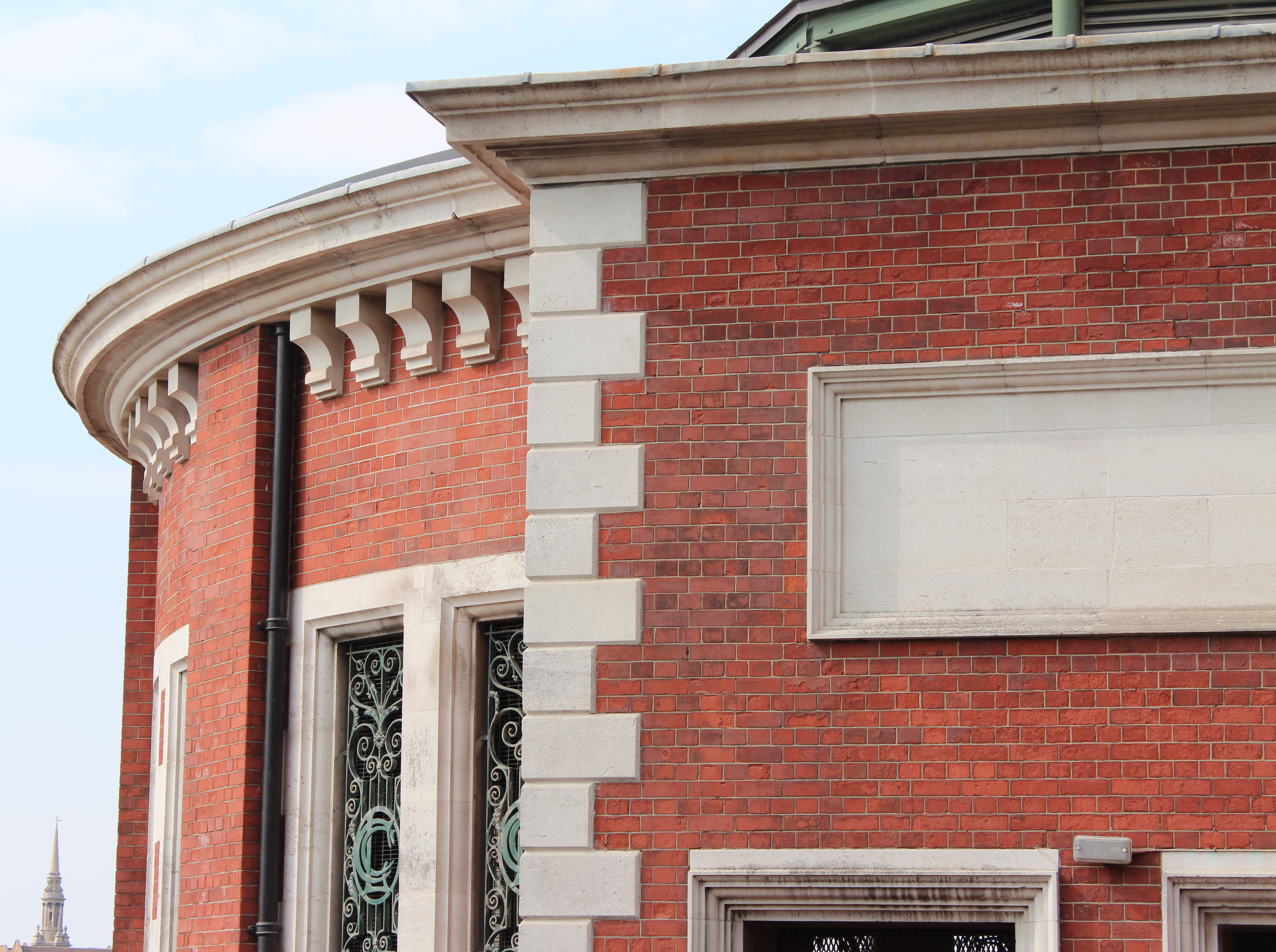
The Rotherhithe Tunnel was constructed between 1904 and 1908 and both the tunnel and the cupolas were designed by the engineer Sir Maurice Fitzmaurice. Made from red brick and Portland stone, each contains a staircase down to the tunnel and four ventilation fans. Their surprisingly ornate iron grilles on the windows spell out the letters ‘LCC’ – for the former London County Council. The cupola on the Rotherhithe side is a little isolated and is fully fenced off with thick red metal bars.

The Wapping cupola is located in the King Edward VII Memorial Park and is more easily viewed as it is not hidden away behind bars. It is signposted as ‘Rotherhithe Tunnel Shaft 3’ – I’m only aware of the two shafts so please get in touch if you know the whereabouts of the other one! You can walk all the way around this cuploa, and enjoy the pretty twin entry doors on the north side (see detail above). Also located on this side is a ceramic and stone memorial erected by the LCC in 1922 to commemorate the sixteenth-century navigators whose voyages into the unknown started from this part of the Docklands.

The Leaning Tower of Rotherhithe

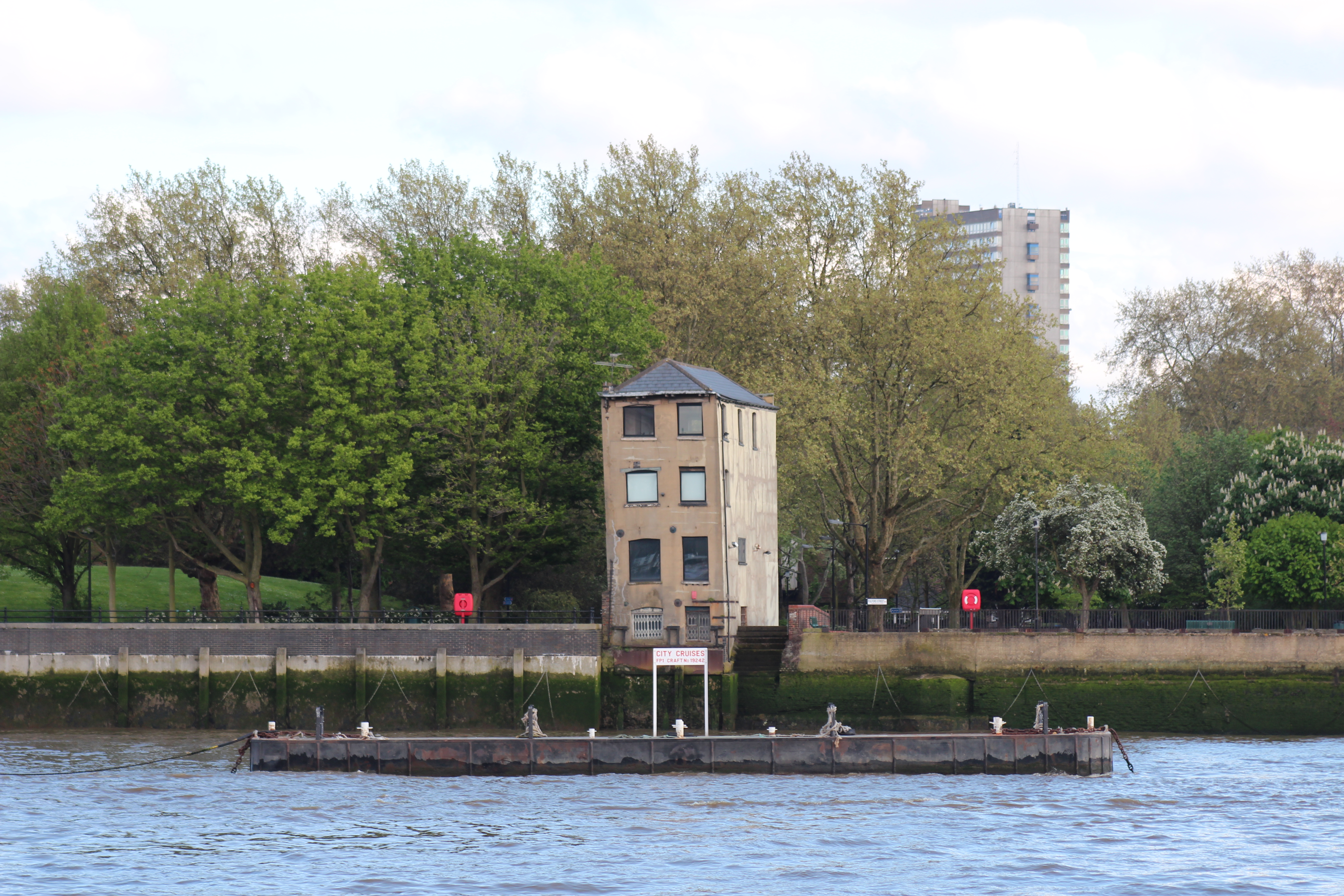
It stands in supreme isolation, alone along this little stretch of the river, like a mouth with but a single tooth. How many travellers along the Thames must have wondered about this funny, narrow little building in Rotherhithe? In fact, the Leaning Tower of Rotherhithe – as it is apparently known locally – was one of several buildings in the area owned by Braithwaite & Dean, a barge company. They were a lighterage firm – lighters being flat-bottomed barges – and their lightermen moved goods between ships and quays (not to be confused with watermen, who carried passengers). This building was their office – and already tilting back in those days – where lightermen would pull up in their boats to collect their wages.

Once this whole stretch of the riverside was covered with buildings, mostly related to shipping, with a few public houses thrown in for good measure. You can see a Museum of London photograph of the area (commissioned by the Port of London Authority as part of their ten-mile panoramic documentation of the river) from 1937 here. The buildings to the west of our leaning tower were purchased in 1939 by Bermondsey Council, who planned to demolish them to build a garden. The Blitz then finished off any work that they had begun to this end.

To the east of the building stood what has been described as ‘a once absurdly picturesque row of largely wooden tenements…seedy in the extreme but vibrantly populated in the 1950s by a bohemian set of artists and writers’. Lord Snowdon lived along this row in a former coal store and is said to have met with Princess Margaret here, as well as hosting celebrities such as Marlene Dietrich and Noel Coward (who entertained him on the piano in his studio flat). In around 1960 he lent his room to John Betjeman (as you do) when his house burnt down.

Betjeman described his time here as ‘the most restful few months I had ever spent in London’, during which he enjoyed the ‘tremendous view’, including that of ‘the wharves and Georgian brick buildings of Wapping’ across the way. He moved the bed to the river-side of the room, going ‘to sleep to the solacing sounds of water’. At low tide he would listen to the sound of the waves rippling over the pebbles below, and described how at high tide ‘after a tug had passed the water made a plopping sound right against my bedroom wall as thought I were in a ship’s hold’. Until the Thames Barrier was built this whole area was of course subject to the risk of flooding; Braithwaite & Dean’s offices were flooded in 1953.

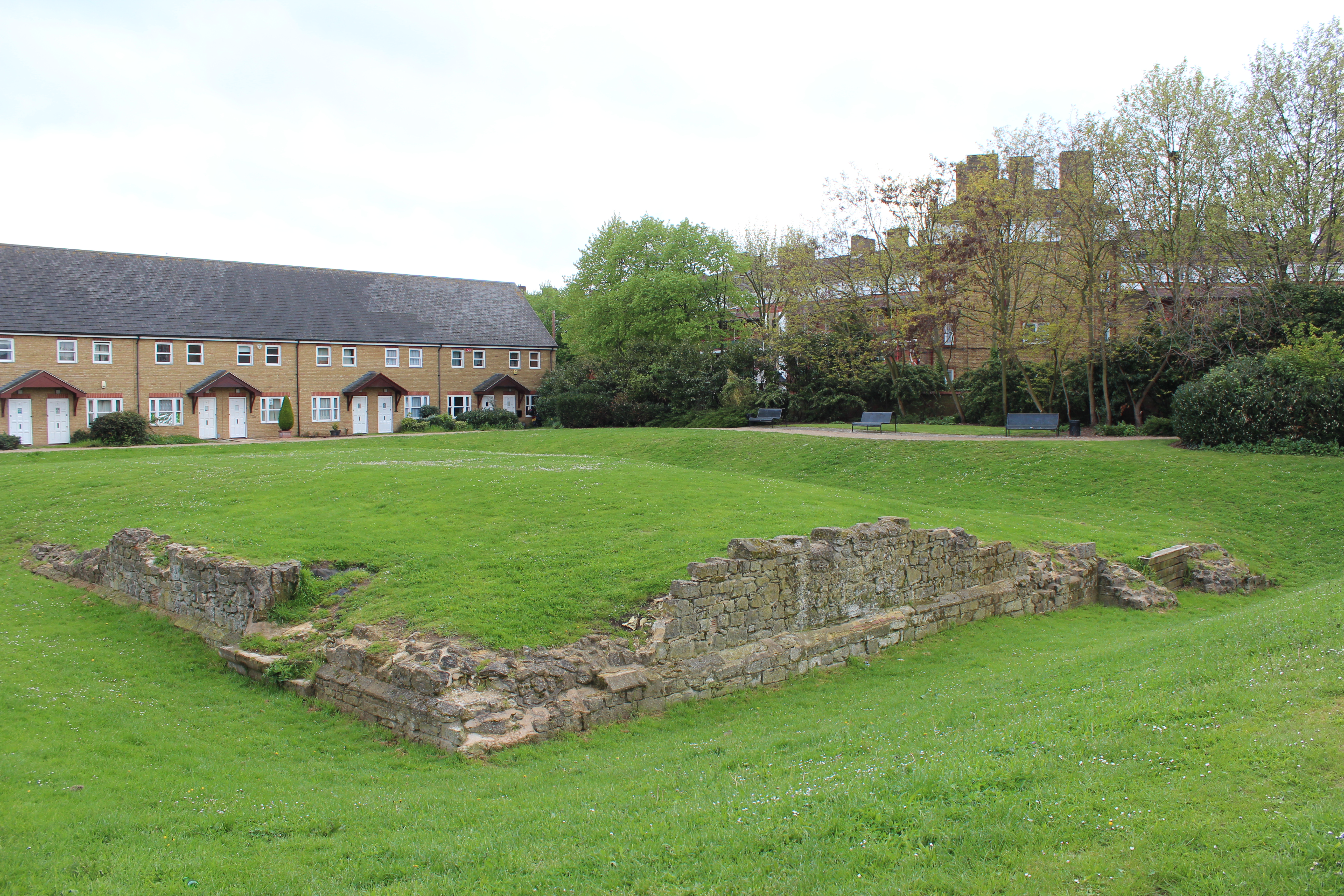
The remains of Edward III’s manor house nearby.

Despite a campaign by both Betjeman and Snowdon, the rather romantic-sounding row of buildings to the east was also pulled down by the local council after being condemned as a health hazard during the 1960s. It’s not known exactly why this particular structure was allowed to remain. It is not of any particular architectural value, though perhaps it was its brickwork that saved it, as many of the other buildings were wooden so arguably less sound structures. The King’s Stairs Gardens were then created here, and contain the remains of what is thought to be King Edward III’s manor house, circa 1353, uncovered by a Museum of London dig in the 1980s. Braithwaite & Dean stayed on in the leaning tower until the early 1990s, and it is now a (very) private residence.

The house is located at the very end of Fulford Street (you can’t miss it!), roughly equidistant between Bermondsey tube station and Rotherhithe overground station. The photograph taken from across the river was shot (with a zoom lens) from Wapping’s Waterside Gardens.

Prince Albert’s Model Cottages

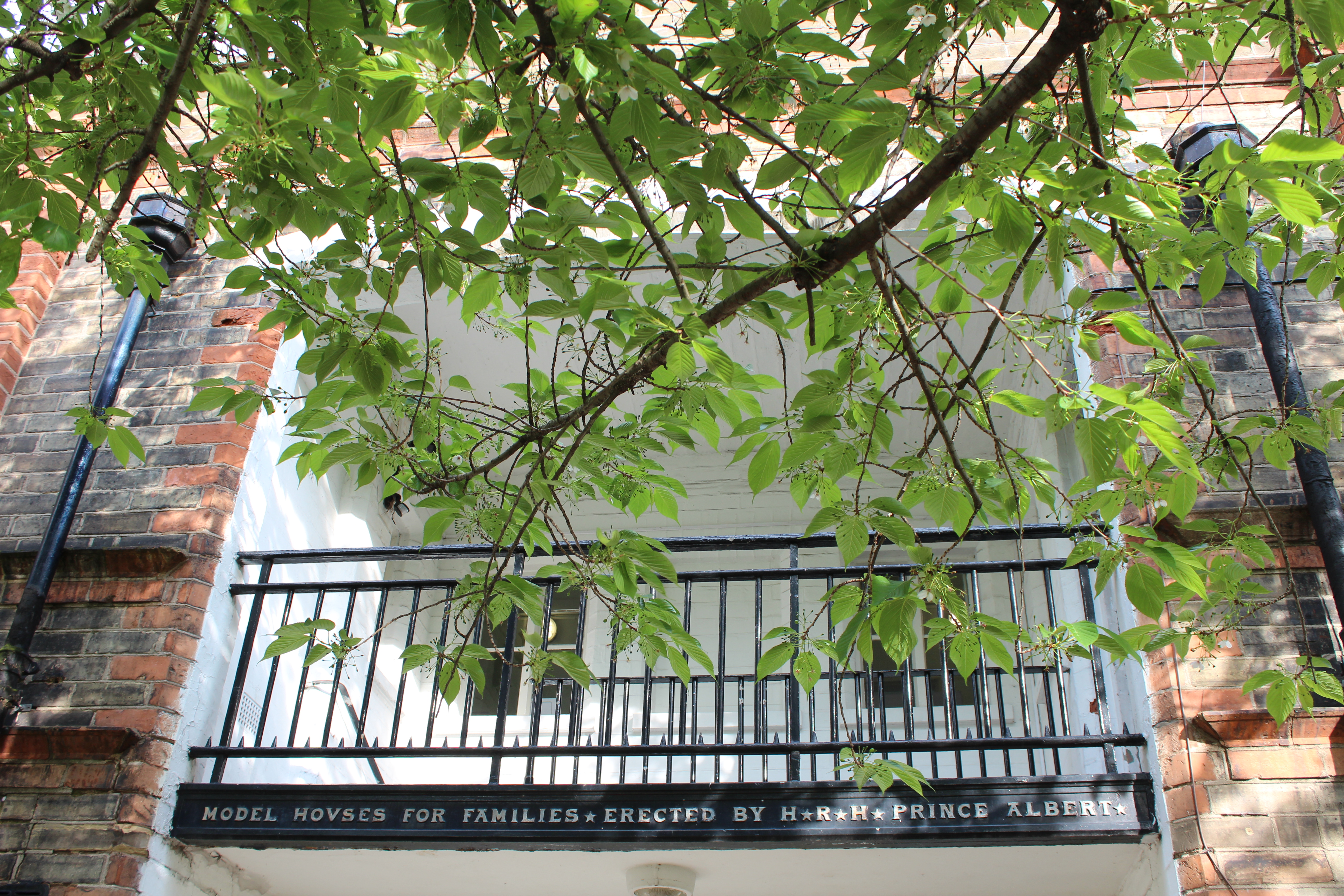
Ever wondered why there is a house in Kennington Park bearing the inscription ‘Model Houses for Families Erected by HRH Prince Albert’? This 2-storey structure was actually one of what has become known as Prince Albert’s Model Cottages or the Prince Consort Model Lodge. Built by the Society for Improving the Conditions of the Labouring Classes (SICLC) – whose name pretty much speaks for itself and of whom Prince Albert was president – for display at the 1851 Great Exhibition in Hyde Park.

The cottage was placed outside of the exhibition’s Crystal Palace so that all could enter for free – and over 250,000 people did so. After the exhibition it was dismantled and re-assembled on the edge of Kennington Park in 1853. At this point, the park was yet to open to the public (after Kennington Common had been fenced off in 1852 following the massive gathering of Chartists seeking electoral reforms there in 1848), and the cottage was the only publicly accessible part. This all changed the following year, when Kennington Park became South London’s first public park in 1854. The gardens around the house were laid out in 1861.

The back of the house - with the added porch.

The back of the house – with the added porch.

The model cottages were designed by Henry Roberts to house four families, with two flats on each level. He envisioned that the cottages would provide suitable accommodation for people from “the class of mechanical and manufacturing operatives who usually reside in towns or in their immediate vicinity”. Each family was designated a living room, kitchen/scullery, three bedrooms and a toilet – but no bathroom, as was still generally the case in houses built in the U.K. at this time.

Source: ‘Plans and Suggestions for Dwellings Adapted to the Working Classes, Including the Model Houses for Families’ (London: the Society for Improving the Condition of the Labouring Classes).

The open staircase provided access to the flats on the upper level – this has since been enclosed, and the doors on the left-hand side side bricked in. A porch had also been added to the back of the cottage when it was moved to Kennington. Along the front of the house, mosaic tiles on the cornices spell out Victoria and Albert’s initials intertwined (and the date 1851), whilst the brickwork on either side of the cottage also features a similar pattern. The house has been the headquarters of Trees for Cities since 2003.

Prince Albert’s Model Cottage is located along the Kennington Park Road side of Kennington Park, between Oval and Kennington tube stations.

http://www.kenningtonpark.org/

Rossetti’s fountain

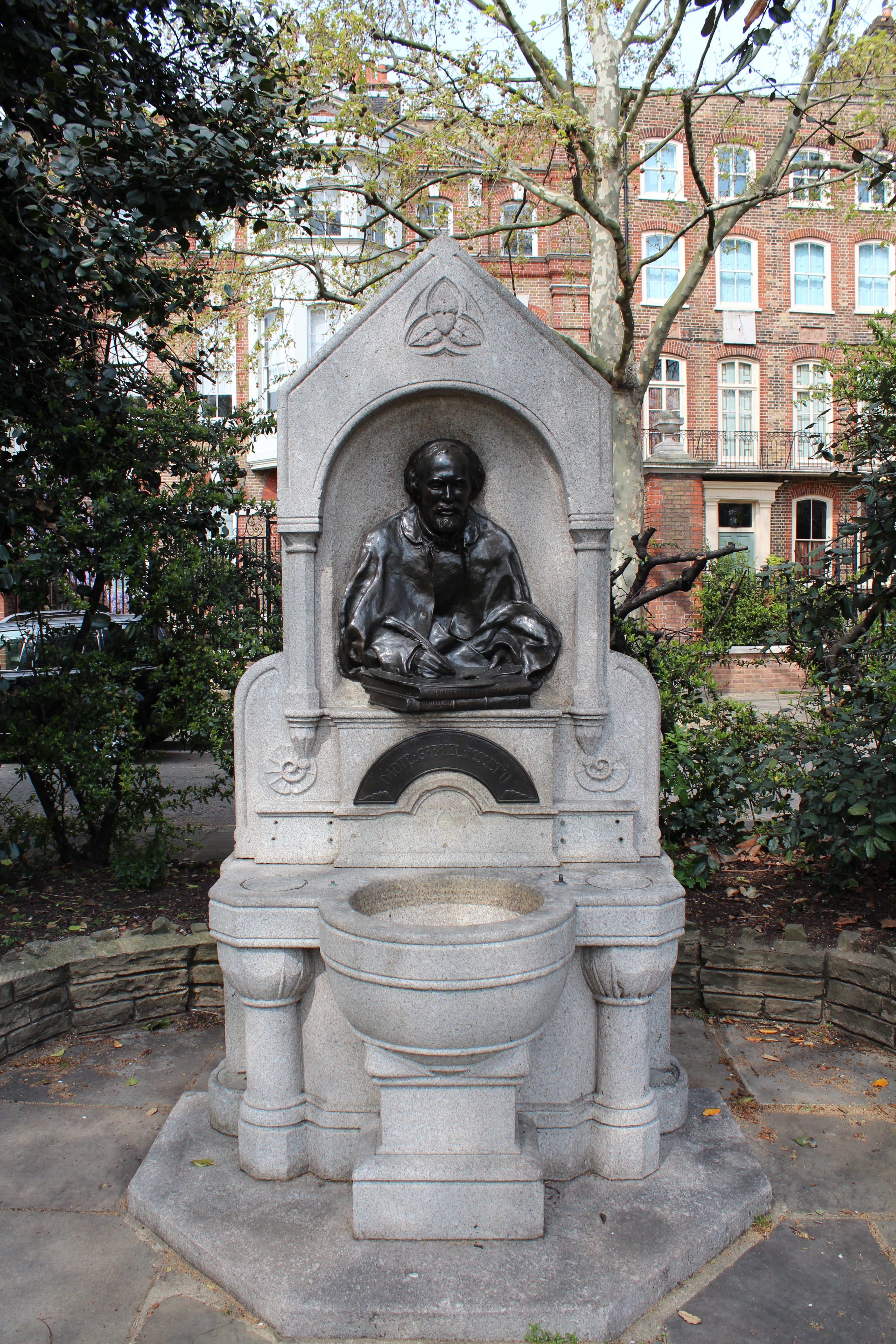
While earlier drinking fountains were often extremely practical in design – such as the drinking troughs explored in an earlier post – they became increasingly more elaborate over time. This was especially the case once the trend of fountains as memorials to individuals (either living or dead) took off, with architects often being employed to provide the design. An interesting example of a memorial drinking fountain is the one in Chelsea that commemorates Dante Gabriel Rossetti, one of the founders of the Pre-Raphaelite Brotherhood.

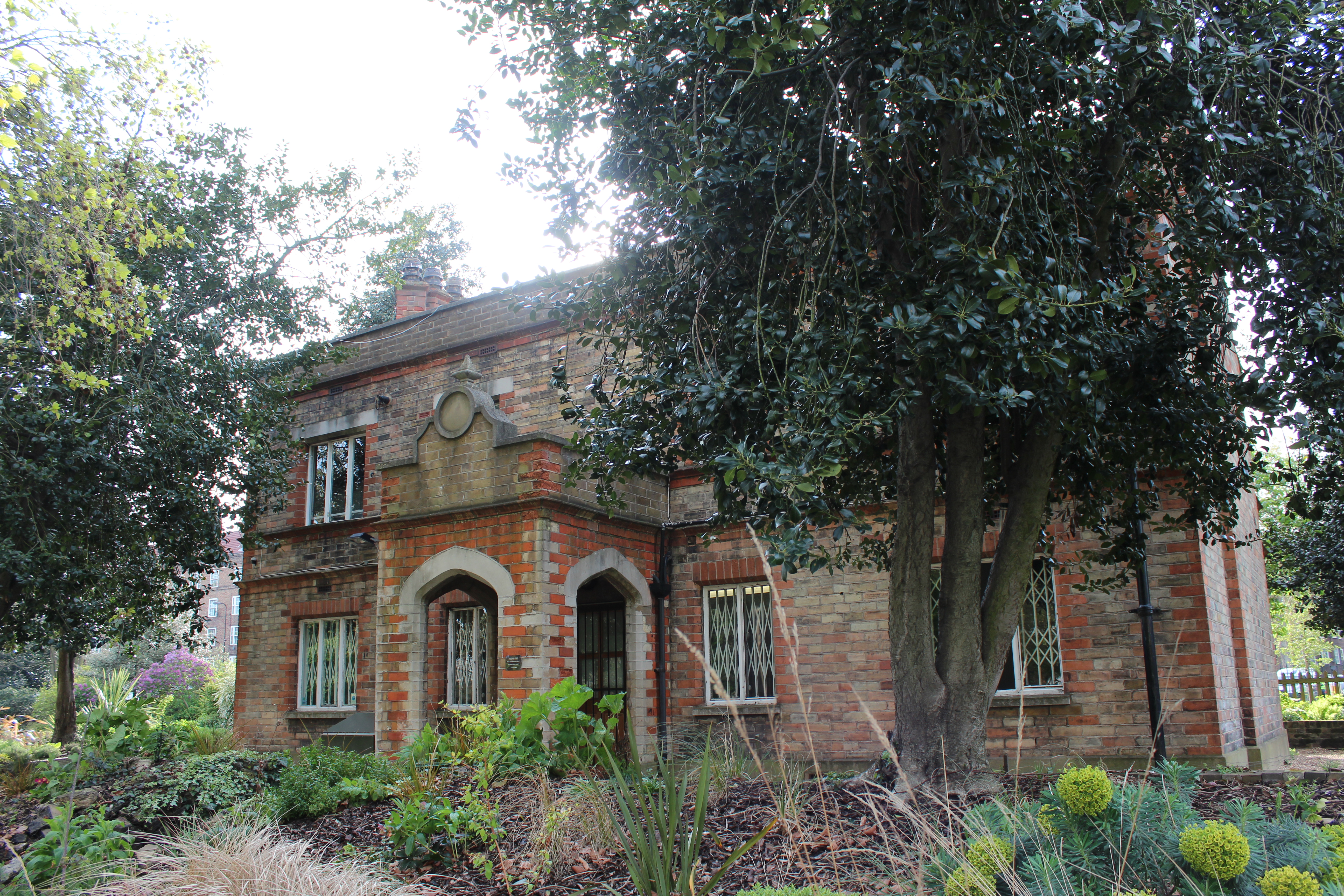
Rossetti's home at 16 Cheyne Walk

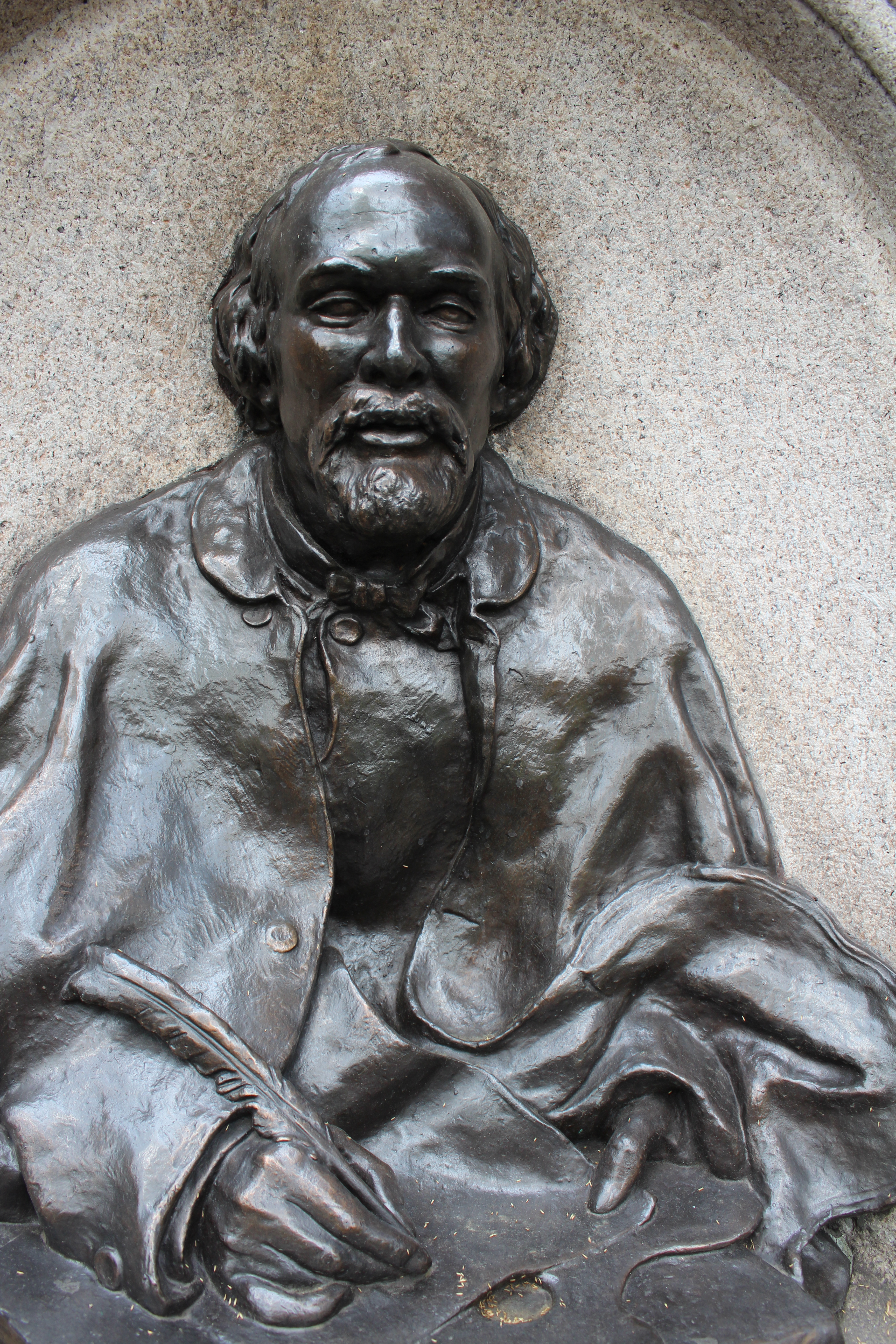
Designed by architect John Pollard Seddon, it features a sculpture in bronze of Rossetti (with writing quill in hand and poised for action) created by no less than Ford Madox Brown. The books Rossetti is depicted with are his own Dante’s Circle and Sonnets and Ballads. The white stone fountain stands in the Chelsea Embankment Gardens, directly in front of number 16 Cheyne Walk, where Rossetti lived between 1862 – after the death of his wife and model Elizabeth Siddal – and his own death in 1882. A fan of exotic furnishings, birds and animals, Rossetti kept a number of unusual pets whilst living at Cheyne Walk, including wombats, a llama and a toucan. After leading a somewhat tumultuous life, he was said to have spent his final years living here in a rather reclusive fashion.

The fountain, with number 16 in the background.

A very impressive list of sponsors is found on a bronze plaque on the back of the fountain. These include fellow Pre-Raphaelite founders William Holman Hunt and John Everett Millais. Although Hunt was asked to give a speech at the unveiling of the fountain in 1887, he had in fact not been in contact with Rossetti for some time. However, for Madox Brown – who also designed Rossetti’s gravestone – the sculpting of his friend’s likeness was said to be a labour of love. He stated poignantly of Rossetti’s death:

“I cannot make out how things are to go on, in so many directions things must be changed”.